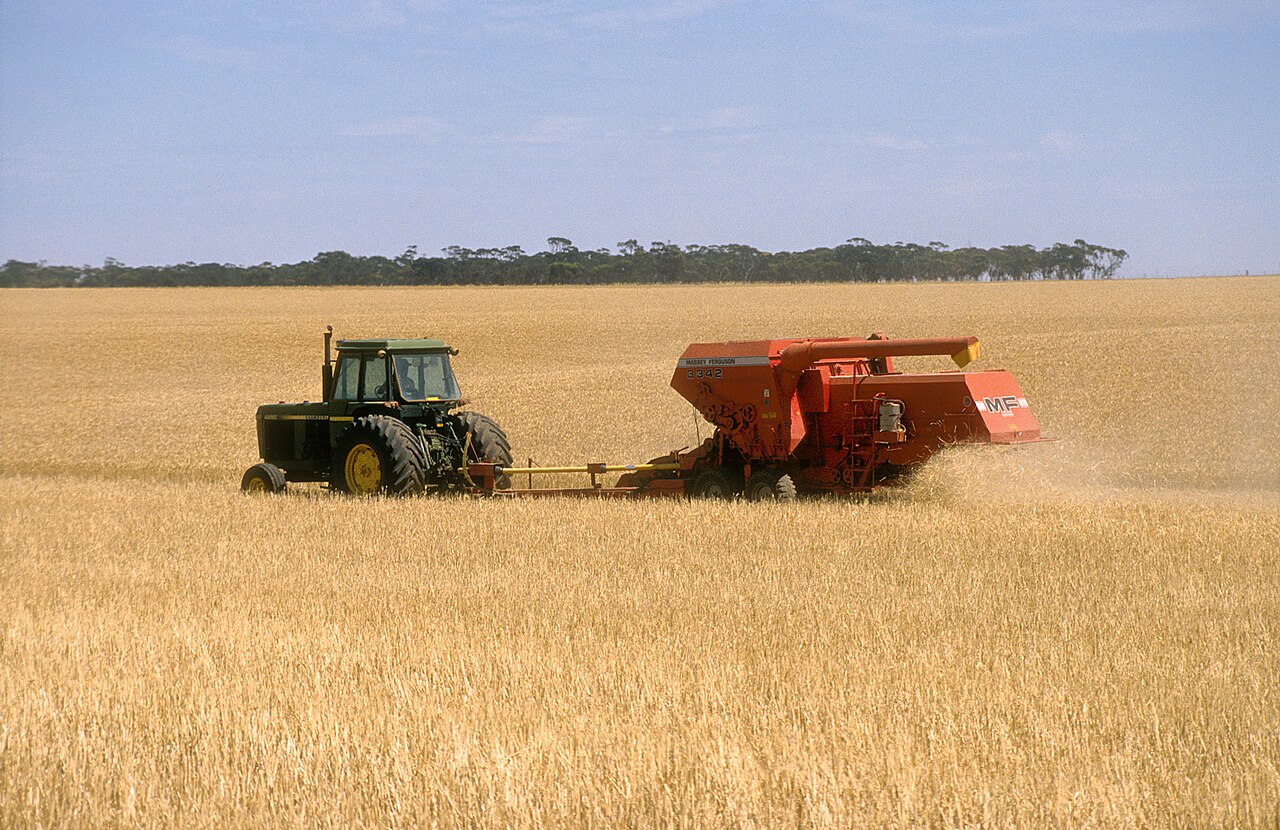
The Wheatbelt of Australia refers to the inland agricultural regions across southern and eastern Australia where wheat cultivation has historically dominated farming. These areas became central to the nation’s early agricultural development, with wheat serving as a staple crop and major export. Today, the Wheatbelt remains a cornerstone of Australia’s agricultural economy, producing not only wheat but also barley, oats, legumes, oilseeds, and coarse grains.
Australia’s wheatbelts are defined by rainfall patterns, soil fertility, and climatic conditions. They are particularly important in Western Australia, South Australia, Victoria, New South Wales, and Queensland, forming the backbone of Australia’s grain production and rural economy.
Climate
The climate of the Wheatbelt is semi-arid to temperate, with rainfall being the most decisive factor for agricultural success.
- Rainfall: Ranges from over 300 mm annually in productive areas to less reliable levels in inland zones.
- Rain dependence: With little underground water, farmers rely almost entirely on seasonal rains.
- Productivity and pricing: Land values and yields are closely linked to annual rainfall variation, making drought a recurring challenge.
This variability makes water management and drought resilience crucial aspects of farming in the Wheatbelt.
Regions
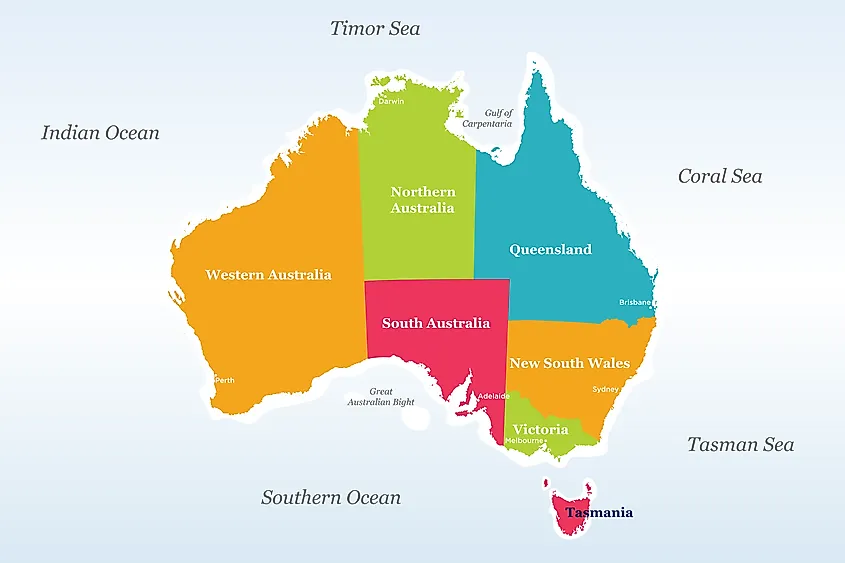
The Wheatbelt stretches across vast areas of inland Australia, each with its own defining boundaries.
- South Australia: The wheatbelt roughly follows Goyder’s Line, a rainfall-based boundary separating arable and pastoral lands. Towns like Orroroo and Minnipa sit on this edge.
- Western Australia: The WA Wheatbelt includes towns such as Southern Cross, with the zone extending across the state’s temperate southwest.
- Victoria: Mildura marks the boundary, representing the state’s northern grain-growing region.
- New South Wales: Extends through towns such as Cobar, Walgett, and Deniliquin, reaching into the Riverina.
- Queensland: The boundary is represented by towns like St George, where wheat and sorghum farming meet cattle grazing regions.
Collectively, these regions make up Australia’s grain belt, spanning from the west coast to the eastern seaboard.
Production
The Wheatbelt is one of the most productive farming regions in Australia, contributing heavily to exports and food security.
- Wheat: The dominant crop, used for both domestic consumption and international trade.
- Coarse grains: Including barley, oats, sorghum, and maize, often rotated with wheat to maintain soil fertility.
- Oilseeds: Such as canola (rapeseed), sunflower, soybean, safflower, and linseed, which support Australia’s edible oils and biofuel industries.
- Legumes: A wide variety including lupins, peanuts, peas, beans, and lentils are grown, often to enrich soil nitrogen and diversify farm income.
These diversified outputs make the Wheatbelt not just a breadbasket of wheat, but a hub for multi-crop farming in Australia.
Economic and Agricultural Significance
The Wheatbelt plays a critical role in Australia’s agribusiness and export economy.
- Wheat exports make Australia a leading global supplier, particularly to markets in Asia and the Middle East.
- Crop rotation and diversification support sustainability and reduce risks from drought or price fluctuations.
- Technological innovation, including precision farming, soil management, and genetic crop improvements, is increasingly vital in Wheatbelt agriculture.
Beyond economics, the Wheatbelt represents the cultural and social fabric of rural Australia, with communities built around farming, grain silos, and regional markets.
Conclusion
Wheatbelt Australia is more than just farmland—it is a region of national importance that underpins the country’s role as a global grain exporter. Its climate challenges, diverse crops, and evolving farming practices highlight the resilience of Australian agriculture. From Western Australia’s vast wheat fields to the grain-growing plains of Queensland and New South Wales, the Wheatbelt continues to define Australia’s rural landscape and agricultural identity.