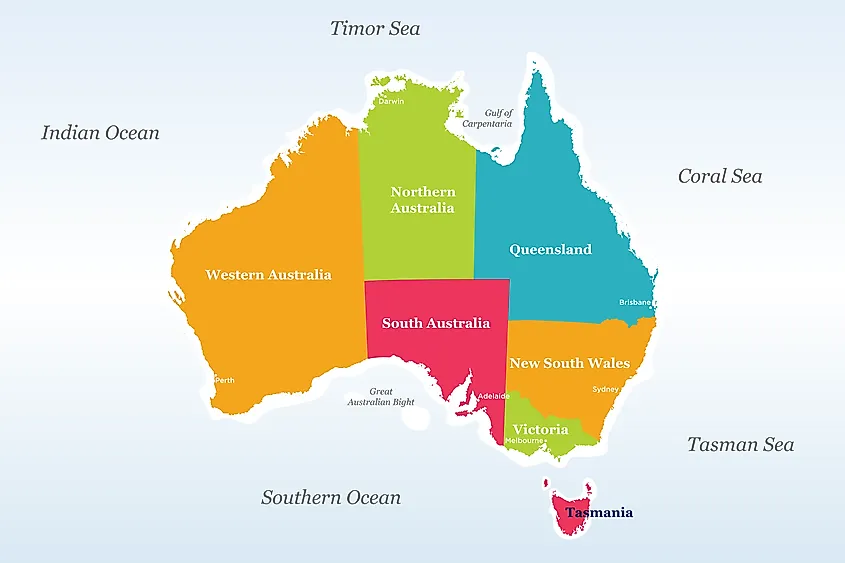
Western Australia (WA) is the largest state in Australia, covering over 2.5 million square kilometres, about one-third of the continent. Bounded by the Indian Ocean, Southern Ocean, Northern Territory, and South Australia, WA is both vast and diverse, ranging from tropical Kimberley landscapes to arid deserts and Mediterranean coastal zones.
With a population of over 3 million (2024), most Western Australians live in the southwest corner, particularly around the capital city Perth, which accounts for nearly 80% of the state’s population. WA is renowned for its mineral wealth, Aboriginal heritage, cultural vibrancy, and biodiversity hotspots, making it both economically powerful and environmentally significant.
History
The Indigenous peoples of Western Australia have lived on the land for more than 50,000 years, developing complex cultural traditions and stewardship of the land. European exploration began in 1616 with Dutch navigator Dirk Hartog, followed by other Dutch, British, and French expeditions.
In 1829, Britain established the Swan River Colony, later renamed Western Australia in 1832. Albany, founded in 1826, was the first European settlement, established partly to block French colonial ambitions.
WA grew slowly until the gold rushes of the 1890s transformed towns like Kalgoorlie and Coolgardie, attracting miners and immigrants. This led to a population surge and the creation of infrastructure like the Goldfields Water Supply Scheme, designed by C.Y. O’Connor.
Granted responsible government in 1890, Western Australia was the last colony to join federation in 1901, after heated debates and strong secessionist sentiment. A notable referendum in 1933 saw 68% vote for secession, but Britain ruled it lacked authority to alter Australia’s constitution without federal consent, leaving WA within the Commonwealth.
Geography and Climate
Western Australia’s geography is shaped by ancient cratons such as the Yilgarn and Pilbara, some of the Earth’s oldest landmasses. It features:
- Deserts: Great Sandy, Gibson, and Great Victoria Deserts.
- Forests and coastal plains: Karri forests, Jarrah woodlands, and biodiverse regions near Margaret River.
- Coastlines: Over 20,000 km of shoreline, with iconic features like Cable Beach and Ningaloo Reef.
The climate varies:
- Tropical north: Monsoonal wet and dry seasons in the Kimberley.
- Interior deserts: Arid, with rainfall under 300 mm annually.
- Southwest: Mediterranean climate, fertile farmland, and vineyards.
WA experiences climatic extremes, from 50.7 °C in Onslow (2022) to rare snowfalls in the Stirling Range.
Demographics
As of 2024, Western Australia’s population is about 3 million. Key features include:
- Urban concentration: Perth metro (2 million+) dominates population distribution.
- Immigration: WA has the highest proportion of UK-born residents in Australia, alongside significant communities from India, New Zealand, South Africa, and China.
- Indigenous Australians: Around 3% of WA’s population identify as Aboriginal or Torres Strait Islander.
- Languages: While 75% speak English at home, Mandarin, Italian, Vietnamese, and Tagalog are common.
- Religion: Christianity remains the largest faith (41% in 2021), but 42.9% now report no religion.
Economy
The WA economy is heavily resource-driven and one of the strongest in the country.
- Mining:
- World’s largest iron ore exporter.
- Significant production of gold, bauxite, alumina, lithium, petroleum, and natural gas.
- Exports account for nearly half of Australia’s total.
- Agriculture:
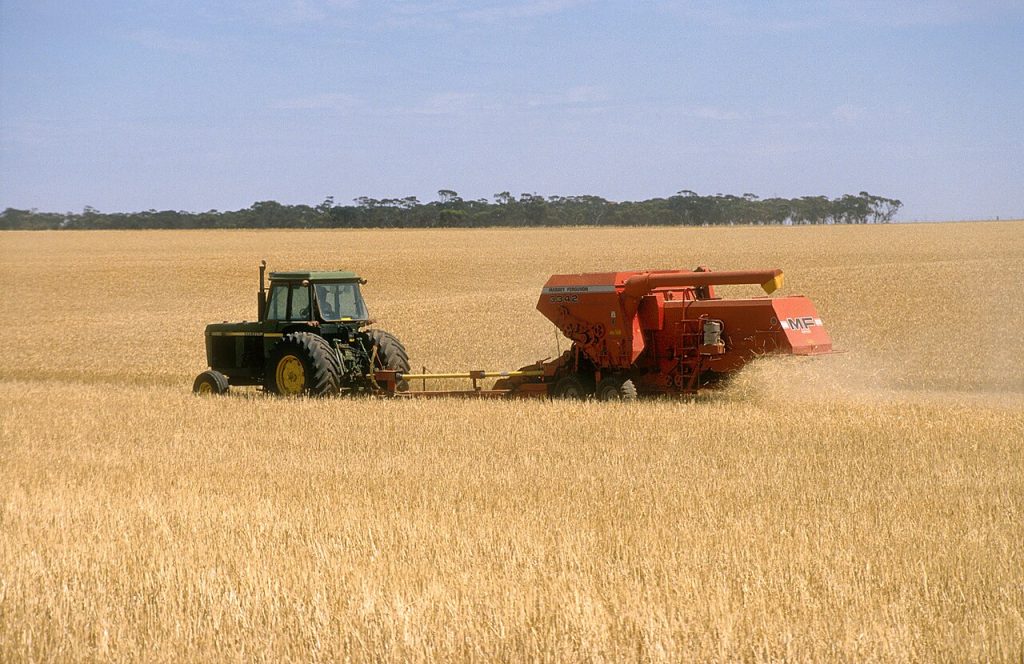
- WA produces half of Australia’s wheat exports, alongside wool, beef, lamb, canola, and pulses.
- Large-scale live cattle exports serve Asia and the Middle East.
- Fishing & Pearling: Western rock lobster, prawns, and pearls contribute significantly.
- Tourism: Contributes over $9 billion annually, driven by attractions like Margaret River wine regions, Broome, and eco-tourism sites.
Culture and Society
Western Australia boasts a rich cultural life:
- Arts: Perth hosts the Art Gallery of WA, WA Museum Boola Bardip, and numerous Indigenous art centres. Authors like Tim Winton and Kim Scott hail from WA, while musicians like Tame Impala and Birds of Tokyo gained international fame.
- Sports: AFL dominates with the West Coast Eagles and Fremantle Dockers. Other key sports include cricket (Perth Scorchers), rugby, basketball (Perth Wildcats), and soccer (Perth Glory).
- Wine industry: WA’s Margaret River and Swan Valley produce premium wines recognised globally.
Government and Education
Western Australia operates under a parliamentary democracy with a bicameral system (Legislative Assembly and Legislative Council). The Premier of WA leads the government, while the monarch of Australia is represented by the Governor.
Education is structured into primary, secondary, and tertiary systems, with notable universities such as:
- University of Western Australia (UWA)
- Curtin University
- Murdoch University
- Edith Cowan University
- University of Notre Dame Australia
Conclusion
Western Australia is a state of vast size, economic power, and cultural richness. Its mining sector underpins the Australian economy, while its unique geography supports world-class biodiversity. From Indigenous heritage and colonial history to modern multicultural growth, WA embodies both the heritage and future of Australia.