The Order of Australia is the highest Australian national honour, recognising individuals for outstanding achievement, merit, and service to the nation or to humanity. Established on 14 February 1975 by Queen Elizabeth II on the advice of Prime Minister Gough Whitlam, the order replaced the reliance on British Imperial honours, which continued in parallel until 1992.
Appointments are made by the Governor-General of Australia with approval of the Sovereign, based on recommendations from the Council for the Order of Australia. The King of Australia is the sovereign head, while the Governor-General serves as the Chancellor and Principal Companion.
As of July 2024, more than 47,800 appointments have been made across all levels.
Structure and Grades
The Order of Australia is divided into the General Division and the Military Division. Its levels, in descending order of seniority, are:
- Knight/Dame of the Order of Australia (AK/AD) – discontinued in 1986, briefly reinstated 2014–2015.
- Companion of the Order of Australia (AC) – eminent achievement and merit of the highest degree.
- Officer of the Order of Australia (AO) – distinguished service of a high degree.
- Member of the Order of Australia (AM) – service in a locality, field, or community group.
- Medal of the Order of Australia (OAM) – service worthy of particular recognition.
Honorary Awards
Non-citizens may receive honorary awards at any level. As of July 2024, 537 honorary awards had been granted, including to prominent figures such as David Petraeus, Sachin Tendulkar, Clive Lloyd, and Terri Irwin.
Insignia and Symbols
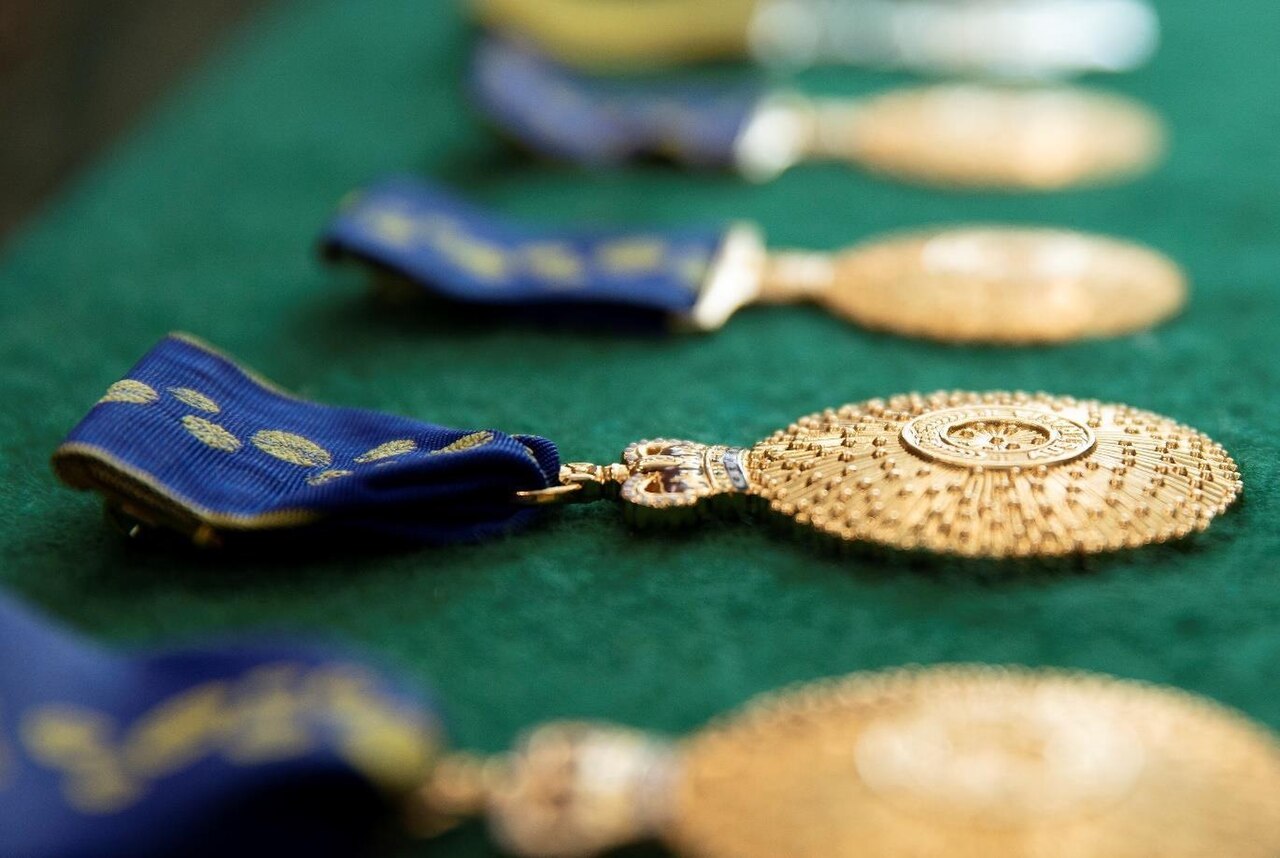
The insignia of the Order was designed by Stuart Devlin.
- Badge: A convex disc symbolising a golden wattle flower with a central ring representing the sea, surmounted by the Crown of St Edward.
- Grades: AC badges are set with citrines, AO and AM feature enamelled crowns, and OAM badges are plain gilt.
- Ribbon: Royal blue with a central stripe of mimosa blossoms; military awards are edged in gold.
- Star for Knights/Dames: A convex golden disc with citrines and an enamelled coat of arms.
Recipients also receive a lapel pin for daily wear.
Nomination and Appointment
Any Australian citizen may nominate a person for the Order. Nominations are submitted to the Honours Secretariat at Government House, Canberra, and reviewed by the Council for the Order of Australia, comprising 19 members, including community representatives and state appointees.
Awards are announced on Australia Day and the King’s Birthday, as well as during special occasions or new gubernatorial appointments. Posthumous appointments are permitted if the nominee was alive at the time of nomination.
Recipients may resign, and awards may be cancelled by the Governor-General on the Council’s advice. All appointments and cancellations are published in the Commonwealth Gazette.
Historical Development
Establishment (1975)
The Order of Australia was founded in 1975 as part of a shift away from the British Imperial Honours system, which critics argued was elitist. The original structure included three grades: Companion, Officer, and Member, with both Civil and Military Divisions.
Expansion (1976)
Under Prime Minister Malcolm Fraser, two additional levels were created: Knight/Dame (AK/AD) and the Medal of the Order (OAM). The Civil Division was renamed the General Division.
Hawke Reforms (1986)
Prime Minister Bob Hawke abolished the Knight/Dame level in 1986. From then, the Order comprised four grades: AC, AO, AM, and OAM.
Abbott Era and Repeal (2014–2015)
In 2014, Prime Minister Tony Abbott controversially reinstated the Knight/Dame grade. Awards were granted to figures such as Quentin Bryce, Peter Cosgrove, Marie Bashir, Angus Houston, and Prince Philip. The latter appointment drew widespread criticism and was cited as a factor in Abbott’s leadership downfall.
In 2015, Prime Minister Malcolm Turnbull secured approval from Queen Elizabeth II to abolish the Knight/Dame grade permanently.
Membership Statistics
As of July 2024, appointments across all levels include:
- Companion (AC): 647
- Officer (AO): 3,615
- Member (AM): 13,169
- Medal (OAM): 30,670
- Knight/Dame (AK/AD): 19
In total, over 47,800 individuals have been recognised.
Gender and Representation
Since 1975, only about 30% of awards have been given to women. However, efforts by advocacy groups such as Honour a Woman and the Workplace Gender Equality Agency have improved representation. In the 2023 Australia Day Honours, women received 47.1% of awards in the General Division—a record high.
Order of Australia Association
Established in 1980, the Order of Australia Association is a registered charity open to award recipients. It promotes citizenship, supports community activities, and encourages nominations. The Association also funds a foundation providing scholarships to tertiary students engaged in leadership and service.
Branches exist across all Australian states and territories, as well as in the United Kingdom and United States.
Significance
The Order of Australia represents the nation’s commitment to recognising citizenship, service, and achievement. While public reactions have ranged from pride to satire—early critics dubbed it “Gough’s Gongs”—the award remains a central pillar of the Australian honours system, symbolising both national identity and civic contribution.