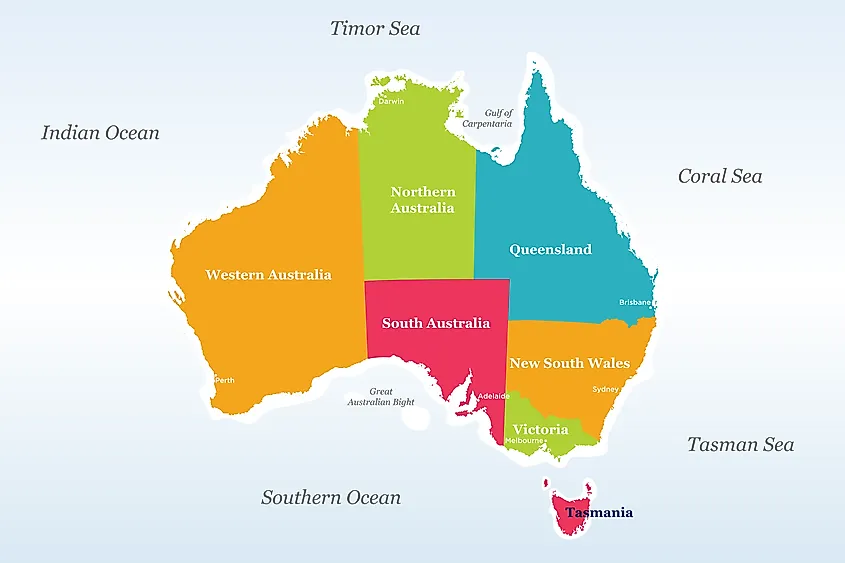
The economy of Australia is a highly developed mixed economy and one of the largest in the world. As of 2025, Australia ranked 14th globally by nominal GDP at US$1.77 trillion and 20th by purchasing power parity (PPP) at US$1.98 trillion. With a GDP per capita of US$64,547 (nominal) and US$72,138 (PPP), Australia is consistently classified as a high-income economy with strong welfare and human development indicators.
The Australian economy is dominated by the services sector, which accounts for more than 62% of GDP and nearly 79% of employment. Other significant contributors include construction, mining, manufacturing, and agriculture. Australia’s economic resilience is underpinned by its natural resources, export capacity, and strong integration into the Asia-Pacific region, particularly with China, Japan, South Korea, India, and the United States.
Key Statistics (2025)
- GDP (nominal): US$1.77 trillion
- GDP (PPP): US$1.98 trillion
- GDP per capita (nominal): US$64,547
- GDP per capita (PPP): US$72,138
- Inflation: 2.6%
- Unemployment: 4.2%
- Main sectors: Services, mining, construction, manufacturing, agriculture
- Main exports: Iron ore, coal, natural gas, gold, beef, aluminium, copper
- Main export partners: China (30%), Japan (12%), South Korea (6.5%), United States (6.2%), India (5.5%)
- Currency: Australian Dollar (AUD)
Economic Structure
Services Sector
The services sector forms the backbone of the economy, with major contributions from:
- Finance and insurance services – home to the “Big Four” banks and Macquarie Group.
- Healthcare and social assistance – Australia’s largest employer by workforce size.
- Tourism and education – both export-driven industries attracting millions of international students and visitors.
- Professional and technical services – expanding IT, legal, and consulting sectors.
Mining and Resources
Australia is one of the world’s largest exporters of minerals and energy, including:
- Iron ore and coal – major drivers of export revenues.
- Gold, bauxite, copper, and uranium – significant global production shares.
- Liquefied natural gas (LNG) – a growing export sector, especially to East Asia.
Mining accounts for around 6% of GDP but a much larger share of exports, particularly during commodity booms.
Agriculture
Although agriculture contributes less than 3% of GDP, it is vital for exports. Key products include wheat, beef, wool, wine, dairy, and pulses. Around 60% of agricultural output is exported, reflecting Australia’s role as a global food supplier.
Manufacturing and Construction
- Manufacturing has declined over decades, from 30% of GDP in the 1960s to less than 6% today, with automotive production ceasing in 2017.
- Construction remains a strong sector, accounting for 7–8% of GDP, driven by urban housing, infrastructure, and mining projects.
Historical Development
Early Growth and 20th Century
Australia’s economy was historically driven by pastoralism, agriculture, and mining booms, including the 19th-century gold rushes. By the mid-20th century, manufacturing and post-war migration expanded the economy.
Liberalisation Era
In the 1980s, under Treasurer Paul Keating, reforms included:
- Floating the Australian dollar in 1983.
- Deregulating financial markets.
- Reducing tariffs and trade barriers.
These steps helped integrate Australia into global markets.
Long Expansion (1991–2020)
From 1991 until 2020, Australia recorded nearly 30 years of uninterrupted GDP growth, avoiding recessions even during the 1997 Asian financial crisis and the 2008 global financial crisis.
2008 Global Financial Crisis
Australia weathered the crisis through:
- A strong mining boom fueled by Chinese demand.
- A government stimulus package of AU$27 billion.
- Effective banking regulation, earning the country recognition for having one of the world’s safest financial systems.
COVID-19 Recession (2020)
Australia entered its first recession in nearly 30 years during the COVID-19 pandemic, with GDP contracting 7% in Q2 2020. The downturn ended by late 2020, but it exposed vulnerabilities in housing affordability, wage growth, and cost of living.
Global Trade and Integration
Australia is heavily trade-oriented, with exports of AU$644 billion (2024) and imports of AU$614 billion.
- Top exports: iron ore, coal, natural gas, beef, gold, and copper.
- Top imports: petroleum, cars, telecommunications equipment, medical supplies, and machinery.
- Key trade partners: China (largest), Japan, South Korea, India, United States.
Australia is a member of APEC, G20, OECD, WTO, CPTPP, and RCEP, with bilateral trade agreements across the Asia-Pacific, Europe, and North America.
Public Finances and Employment
- Government debt: ~51% of GDP (2025), well below many OECD peers.
- Unemployment: 4.2% (July 2025), with youth unemployment at 9.8%.
- Employment distribution: Services (79%), Construction (9%), Manufacturing (7.5%), Agriculture (2.5%), Mining (2%).
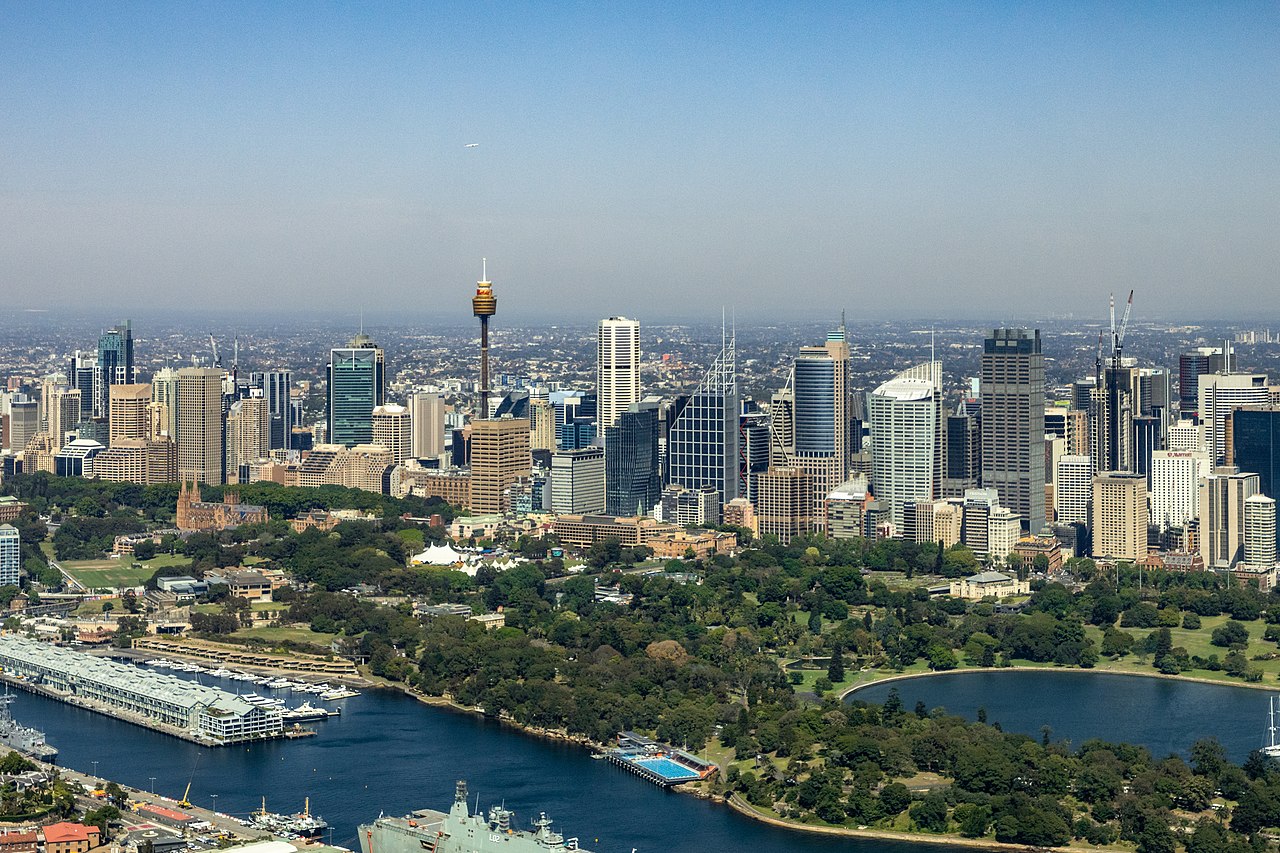
The Australian Securities Exchange (ASX) ranks among the top 20 stock exchanges worldwide, reinforcing Sydney’s role as a financial hub.
Challenges and Outlook
The Economy of Australia faces several challenges in the mid-2020s:
- Housing affordability crisis – demand exceeds supply, with shortfalls of up to 60,000 homes annually.
- Migration and infrastructure strain – net overseas migration has exceeded planned targets, intensifying cost-of-living pressures.
- Declining real household incomes – OECD data show an 8% drop in disposable income per capita from 2022–2024, the steepest fall among advanced economies.
- Climate change and energy transition – as a leading coal and LNG exporter, Australia must balance economic reliance on resources with its renewable energy transition.
Despite these pressures, Australia’s economy remains resilient, resource-rich, and deeply integrated into Asia-Pacific trade, positioning it for continued long-term relevance.