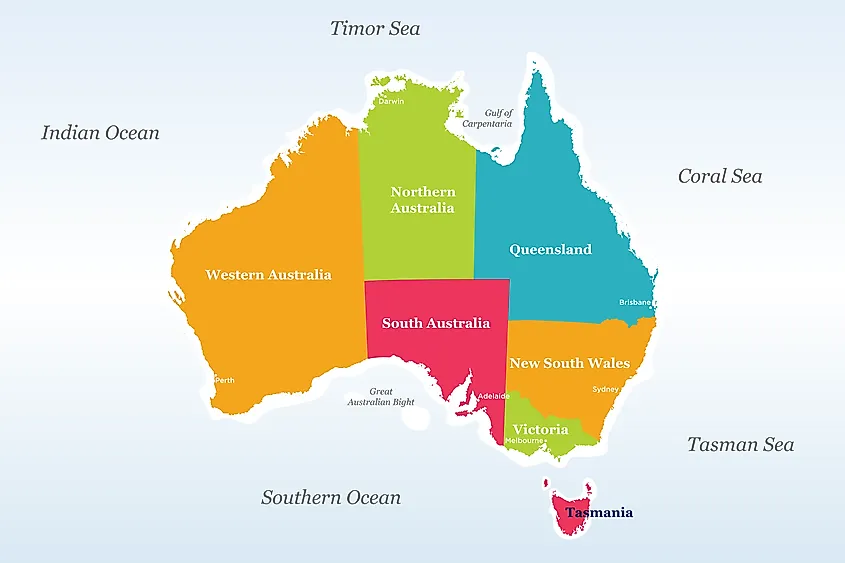
Central Australia, often referred to as the Red Centre, is an expansive inland region located in the Northern Territory of Australia. Its boundaries are not precisely defined, but in its narrowest sense, it refers to the area surrounding Alice Springs and the MacDonnell Ranges. In broader terms, the region extends up to 600 kilometres in every direction from Alice Springs and is sometimes used synonymously with the Australian Outback.
The region is characterised by arid desert landscapes, rich Indigenous culture, and globally recognised natural landmarks such as Uluru and Kata Tjuta. Central Australia has long been a focal point for both cultural heritage and tourism, attracting thousands of visitors annually who seek to experience its remote beauty.
Administrative and Economic Region
The Northern Territory Government defines Central Australia as one of its six major economic planning regions. Alongside Darwin and Palmerston, East Arnhem, Barkly, Big Rivers, and the Top End, Central Australia plays a critical role in servicing both the Northern Territory and neighbouring states.
With an estimated population of around 41,000 (2016 census), the region is serviced primarily by Alice Springs (population 28,000). Alice Springs acts as the central hub for surrounding communities across South Australia, Western Australia, and Queensland. Local government authorities in the region include:
- Alice Springs Town Council
- MacDonnell Regional Council
- Central Desert Regional Council
- Yulara (unincorporated town)
This distribution reflects the wide geographic spread of settlements and the reliance on Alice Springs as the economic, cultural, and administrative centre.
General Usage and Geography
In a broader context, the term Central Australia may be used to describe inland regions of the continent, particularly the Lake Eyre Basin, which stretches across multiple states and territories. For many Australians and international visitors, the concept of Central Australia is closely linked with the idea of the Outback, representing remote, sparsely populated areas with unique ecosystems and cultural heritage.
The region’s landscapes include desert plains, rugged ranges, dry riverbeds, and expansive salt lakes. Landmarks such as Kings Canyon, Simpson Desert, and Uluru-Kata Tjuta National Park make Central Australia one of the country’s most iconic destinations.
Climate
Central Australia has an arid desert climate, with extreme temperature variations between seasons and even between day and night. The region receives an annual average of only 150 millimetres (6 inches) of rainfall, most of which occurs during heavy summer storms.
- Summer (November–April): Long, hot summers with frequent heatwaves and occasional monsoonal rainfall events.
- Winter (May–October): Dry winters with mild to warm days but very cold nights. Frosts can occur during the coldest months, particularly in June and July.
The harsh climate shapes both the flora and fauna of the region, which have adapted to survive in low-water conditions. Iconic desert plants such as spinifex and mulga, as well as animals like dingoes, red kangaroos, and desert reptiles, thrive in this environment.
Culture and Tourism
Central Australia is home to a significant Indigenous population, with many communities maintaining strong connections to land, language, and culture. Sites such as Uluru and Kata Tjuta are of deep spiritual significance to the Anangu people and are recognised as UNESCO World Heritage sites for both their natural and cultural value.
Tourism is a cornerstone of the Central Australian economy, with visitors drawn to the outback landscapes, Aboriginal cultural experiences, and the rugged adventure tourism opportunities of the region. Events like the Camel Cup in Alice Springs and guided desert tours further highlight its unique cultural and environmental heritage.
Summary
Central Australia represents both the geographic heart and the cultural soul of the Australian continent. Known as the Red Centre, it combines striking desert landscapes, Indigenous heritage, and iconic landmarks with a challenging but distinctive climate. Today, it remains one of Australia’s most compelling regions, embodying the essence of the Outback while serving as a key administrative and tourism hub.