The demographics of Australia reflect the nation’s evolution from an Indigenous homeland to one of the most diverse societies in the world. With an estimated population of 28.05 million in September 2025, Australia ranks as the 54th most populous country globally and the most populated in Oceania. Its people are highly urbanised, concentrated in coastal cities such as Sydney, Melbourne, and Brisbane. Australia’s social fabric has been shaped by waves of migration, high life expectancy, and a commitment to multiculturalism.
Population Growth and Density
Australia’s population continues to grow at an annual rate of 1.6% (2023 estimate), driven largely by migration. The birth rate stands at 12.3 births per 1,000 people, while the death rate is 6.77 per 1,000. With a fertility rate of 1.63 children per woman, natural increase is modest, making migration a critical driver of growth.
The nation has one of the lowest population densities in the world at 3.7 persons per square kilometre, a result of its vast arid interior. More than 89% of Australians live in urban areas, highlighting its status as one of the world’s most urbanised countries.
Age Structure and Life Expectancy
Australia has an ageing but healthy population. The median age in 2021 was 38.7 years, rising steadily from 22.5 in 1901. In 2025, life expectancy averages 83.1 years—80.9 for men and 85.3 for women—placing Australians among the longest-lived populations worldwide.
The age distribution reflects demographic transition:
- Children (0–14 years): 18.6%
- Working-age adults (25–44 years): 27.9%
- Seniors (65+ years): 15.8%
This ageing trend presents economic and healthcare challenges, but Australia’s high migration rate helps balance the workforce.
Ethnic Composition
The demographics of Australia showcase a broad mix of ancestries. Historically dominated by European settlement, particularly Anglo-Celtic groups, the population now includes significant Asian, Middle Eastern, African, and Pacific Islander communities.
Key ancestry breakdowns include:
- European: 54.6% (English 33%, Irish 9.5%, Scottish 8.6%, German 4%, Italian 4.4%)
- Asian (excluding Middle East): 17% (Chinese 5.5%, Indian 3.1%, Filipino 1.6%, Vietnamese 1.3%)
- Indigenous Australians: 3.1% (Aboriginal 2.9%, Torres Strait Islanders 0.26%)
- Middle Eastern & North African: 3% (Lebanese 1%, Turkish 0.3%, Iranian 0.3%)
- Pacific Islanders: 1.6% (Māori, Samoan, Fijian, Tongan)
- Sub-Saharan African: 1.6%
Australia’s policy of multiculturalism since the abolition of the White Australia policy in 1973 has encouraged diversity, making the nation a hub of cultural exchange.
Indigenous Population
The Indigenous peoples of Australia trace their roots back at least 40,000–65,000 years, making them one of the world’s oldest continuous cultures. Today, around 3.2% of Australians identify as Aboriginal or Torres Strait Islander.
Key facts include:
- Northern Territory has the highest proportion of Indigenous residents (26%).
- Indigenous fertility rates remain above replacement levels at 2.17 births per woman.
- In 2023, 24,737 Indigenous births were registered, making up 8.6% of national births.
Despite social challenges, Indigenous Australians are playing an increasingly visible role in political, cultural, and academic life.
Immigration and Country of Birth
Immigration has been central to the demographics of Australia. Roughly 30% of the population is foreign-born, one of the highest proportions in the world. The largest overseas-born groups in 2023 were:
- England: 963,650
- India: 916,330
- China: 700,120
- New Zealand: 617,960
- Philippines: 394,380
- Vietnam: 318,760
In 2022–23, net overseas migration reached a record 536,000 people, reflecting Australia’s role as a preferred destination for skilled migrants, students, and refugees.
Languages in Australia
While English is the de facto national language, spoken at home by 72% of Australians, the country is linguistically diverse. Major community languages include:
- Mandarin: 2.7%
- Arabic: 1.4%
- Vietnamese: 1.3%
- Cantonese: 1.2%
- Punjabi: 0.9%
- Greek and Italian: 0.9% each
Australia is also home to over 250 Indigenous languages, though fewer than 20 remain in daily use. Auslan, the national sign language, is spoken by around 16,000 people.
Religion in Australia
Religious affiliation in Australia has shifted dramatically. At the 2021 Census:
- Christianity: 43.9% (Catholic 20%, Anglican 9.8%)
- No religion: 38.9%
- Islam: 3.2%
- Hinduism: 2.7%
- Buddhism: 2.4%
- Sikhism: 0.8%
- Judaism: 0.4%
The steady decline of Christianity contrasts with the rise of secularism and growth in non-Christian religions due to migration. Weekly church attendance sits at around 7.5% of the population.
Demographics by States and Cities
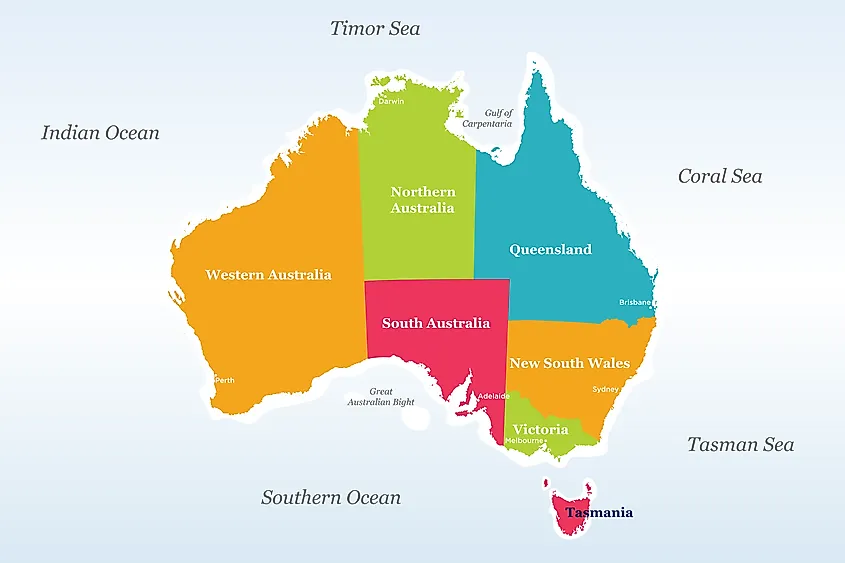
Australia’s population is unevenly distributed across its vast landmass:
- New South Wales: 8.3 million (32% of population)
- Victoria: 6.8 million (26%)
- Queensland: 5.4 million (20%)
- Western Australia: 2.9 million (10%)
- South Australia: 1.9 million (7%)
- Tasmania: 573,000 (2%)
- ACT: 467,000 (2%)
- Northern Territory: 253,000 (1%)
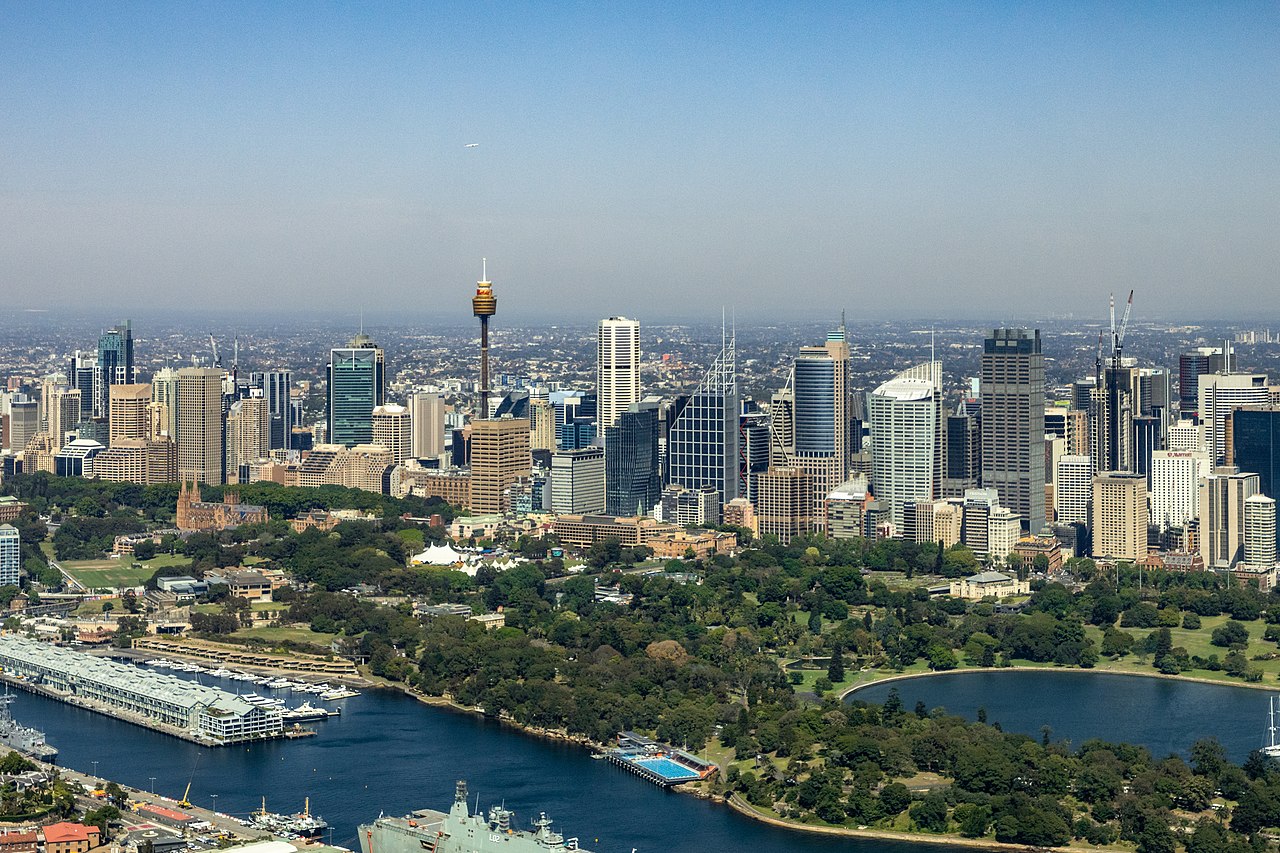
Major cities dominate: Sydney (5.45m), Melbourne (5.2m), Brisbane (2.7m), Perth (2.3m), and Adelaide (1.45m). Together, these five cities house more than two-thirds of Australians.
Fertility, Mortality, and Vital Statistics
Australia’s fertility rate has declined from over 5 children per woman in the 19th century to 1.5 in 2024. This is below replacement level, contributing to an ageing population. Infant mortality remains low at 3.01 deaths per 1,000 live births.
Historically, the post-war baby boom and waves of migration shaped demographic trends. Today, net migration offsets low fertility, ensuring steady population growth.
Economic and Social Indicators
Demographics also tie closely to economic realities:
- Labour force (2025): 14.6 million, employment rate of 64.4%
- Median weekly personal income (2021): AUD $789
- Household income: AUD $1,770
- Government benefits are the main income source for 23% of people
Australia’s economy benefits from its skilled migration intake, but challenges include an ageing population and rising housing demand in major cities.
The Future of Australia’s Demographics
Projections suggest Australia’s population will exceed 30 million by 2029. With declining fertility, the country will rely heavily on immigration to sustain growth. The ethnic balance will continue shifting toward greater Asian representation, while Indigenous Australians will grow demographically due to higher fertility rates.
Religious affiliation is expected to diversify further, with secularism rising. Multilingualism will expand as new migrants settle. Urbanisation will remain dominant, with Sydney and Melbourne likely surpassing 6 million residents each by 2035.
The demographics of Australia ultimately reveal a country defined by diversity, longevity, and dynamic growth, setting it apart as one of the most multicultural nations on Earth.