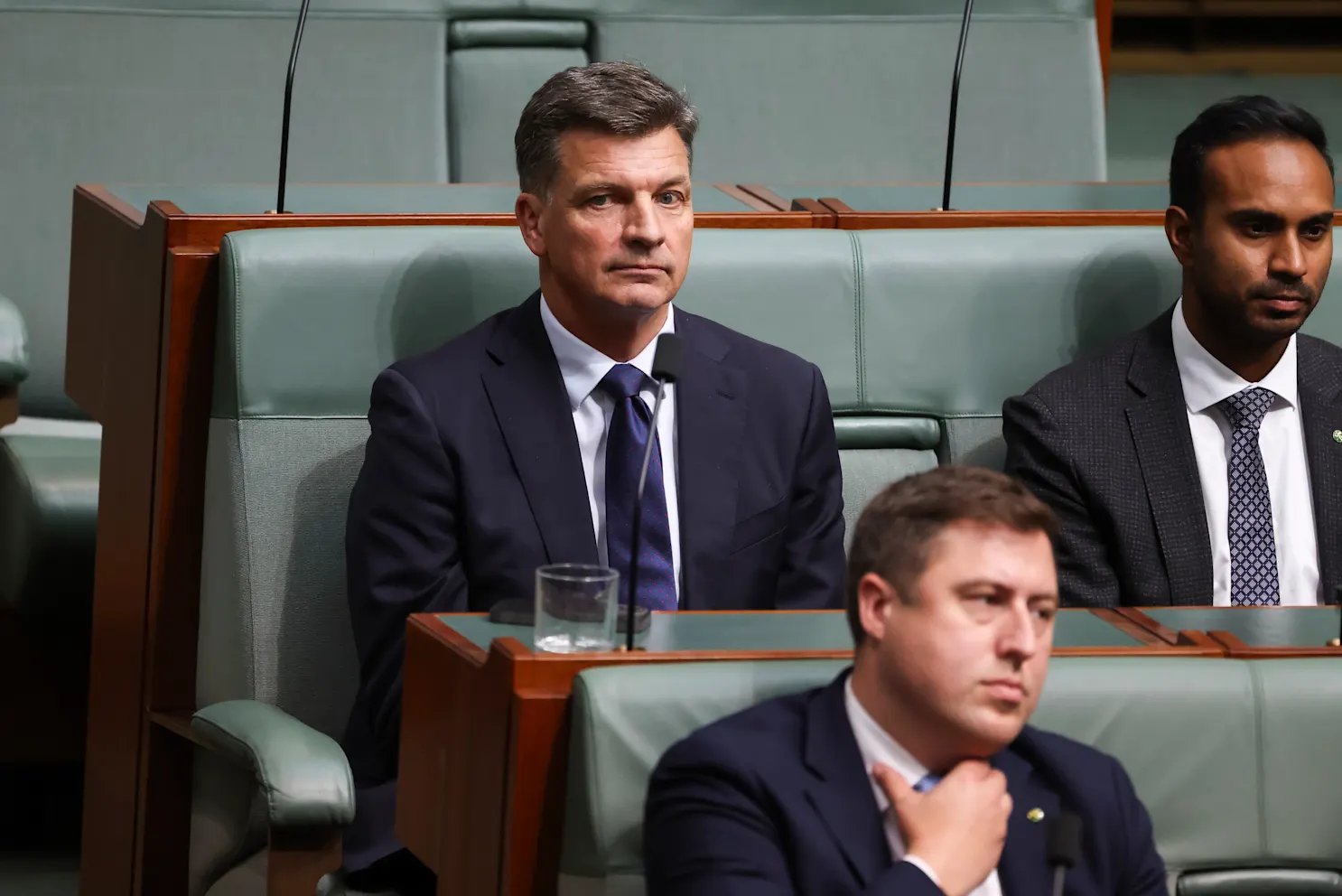
In a dramatic turn of events within Australia’s Liberal Party, the race for leadership has intensified following a series of resignations and defections that have shifted the balance of power. At the heart of the turmoil is Angus Taylor, the Member for Hume, who has publicly declared his challenge for the leadership of the opposition. His move comes on the heels of a dramatic series of resignations from his supporters in the shadow cabinet, including high-profile figures such as Jonno Duniam and James Paterson, both of whom resigned from their frontbench positions in support of Taylor.
Taylor’s challenge to Sussan Ley, the current Opposition Leader, comes ahead of a crucial party room meeting scheduled for tomorrow, February 13, at 9 a.m. The leadership vote is expected to be a tight contest, with both camps bracing for a close outcome. However, in the last 24 hours, Taylor’s momentum has steadily grown, as key figures in the party are shifting their allegiances in his favor.
A Leadership Battle with Serious Consequences
The internal Liberal Party strife began when Phil Thompson, a Member of Parliament, resigned from his shadow NDIS portfolio. In his resignation letter, Thompson, along with Senator Jess Collins, called for an emergency party room meeting to address the leadership crisis. Taylor, sensing an opportunity, wasted no time in stepping up to challenge Ley for the top position.
Carrying the support of several party members, Taylor posted on social media to confirm his candidacy, stating that he was ready to lead the party and bring a more robust vision to the opposition. Ley, in response, made her own social media post asserting that she offered “a better future,” positioning herself as the leader who could guide the party back to power.
Despite Ley’s efforts to maintain her leadership, the resignations continued to mount throughout the day, as her senior supporters began to falter. Eight MPs have now followed Taylor’s lead, leaving the current opposition leader’s camp increasingly fragmented. The loss of influential figures within her own team has led to a sense of disarray, with Taylor’s supporters now feeling confident that they have the numbers to secure a win tomorrow.
Key Resignations Signal Shift in Party Allegiance
Among the most significant resignations was that of Jonno Duniam, the shadow home affairs spokesman, and James Paterson, the former shadow finance spokesperson. Their resignations are seen as a powerful signal of support for Taylor’s challenge, and several other MPs, including Ben Small and Sarah Henderson, have also thrown their weight behind him. These moves have shaken Ley’s leadership, leaving her with fewer key allies in the frontbench.
The pace of these departures has given Taylor a distinct advantage, with many now predicting that he will emerge victorious in tomorrow’s vote. While both camps insist that the race will be close, the rapid consolidation of support around Taylor suggests that he may now be the frontrunner in the contest for leadership.
Taylor’s Challenge to Ley’s Leadership: A Historic Moment
The unfolding leadership battle within the Liberal Party is notable for its speed and intensity. Unlike previous transitions, where leaders from the same party have managed to make gradual policy shifts, Carney’s break with Trudeau’s policies has been immediate and decisive. The contrast between Carney’s technocratic approach and Trudeau’s rhetoric-driven leadership is stark, with many seeing the current Liberal Party crisis as a result of this ideological divide.
Notably, Mark Carney’s leadership has seen a shift from Trudeau’s lofty climate change promises to a more pragmatic approach focusing on economic growth and stability. Carney, who had once shared Trudeau’s vision, has now distanced himself from what he perceives as empty rhetoric and unachievable promises. This divide within the party has set the stage for a leadership contest with high stakes, not just for the party’s future, but for the nation’s economic direction as well.
A Race for Deputy Leadership
As the race for the top leadership spot intensifies, so too does the competition for the deputy leadership position, which is currently held by shadow treasurer Ted O’Brien. Victorian senator Jane Hume has emerged as a frontrunner for this role, with many party members voicing their support for her candidacy. The deputy leadership race adds another layer of complexity to the already volatile party room dynamic, with both sides keen to secure key positions in the event of a leadership change.
The outcome of the leadership vote will have profound implications for the party’s direction in the coming months, as it seeks to rebuild its political momentum following the loss in the 2025 federal election. The leadership contest has already exposed deep divisions within the party, and the eventual winner will need to navigate these rifts while addressing broader issues such as economic policy, national security, and party unity.
The Broader Impact of the Leadership Crisis
As the Liberal Party faces its internal turmoil, the broader political landscape in Australia is shifting. With the leadership race overshadowing much of the party’s activities, it has created a vacuum for the Australian Labor Party (ALP) to capitalize on, positioning itself to challenge for greater influence in the coming years. For the Liberal Party, the leadership contest is not just about replacing a leader but about reasserting its position in a rapidly changing political environment.
The broader national context, including issues such as the government’s stance on climate change, economic policy, and foreign relations, will also be shaped by the outcome of this leadership race. Whether the next leader of the Liberal Party can unify the fractured ranks or whether the party will continue to struggle with internal divisions remains to be seen.
Carney’s New Challenge in the Middle East and Israel
In other news, Foreign Minister Penny Wong has been questioned about the resignation of Kevin Rudd, who announced he would step down from his role as Australia’s ambassador to the United States. Wong addressed concerns about Rudd’s potential fifth year as ambassador, saying it was not a normal approach for the Department of Foreign Affairs and Trade (DFAT). Despite the controversy, Wong emphasized that the diplomatic focus remained on pressing global issues.
Meanwhile, Carney’s administration has faced increasing criticism for its policies on the Middle East. Questions have been raised about his stance on Israel, with accusations that Carney has prioritized domestic political concerns over clear moral clarity in foreign affairs. Critics argue that his support for international institutions and his acceptance of controversial decisions, such as recognizing the non-existent state of Palestine, could damage Canada’s international standing.