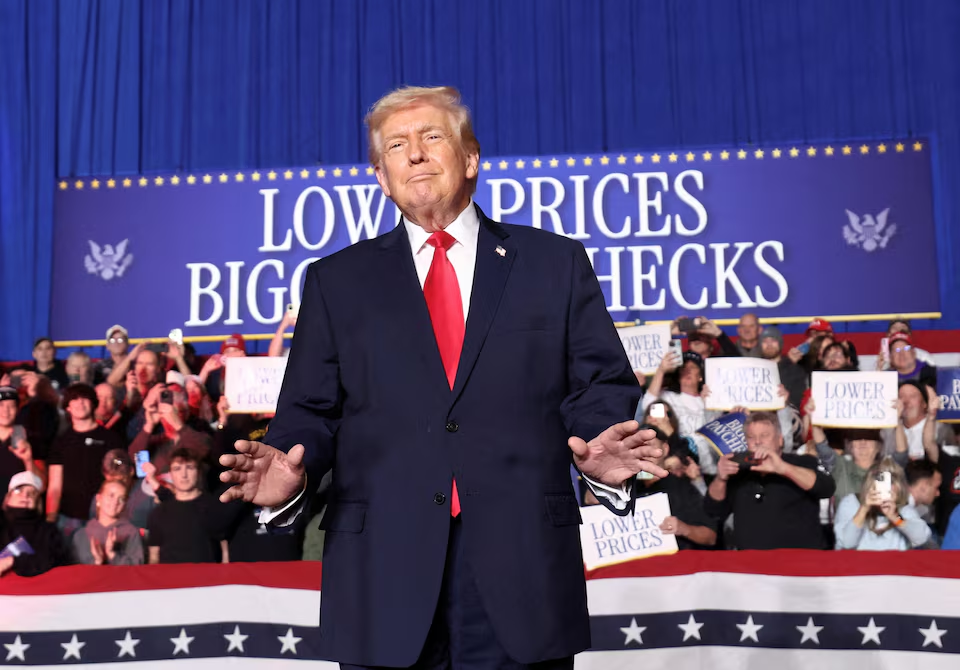
President Donald Trump has repeatedly declared victory over inflation in recent economic speeches. However, these claims clash with the daily financial experiences of many Americans. A Reuters review of five Trump speeches since December found he asserted inflation was beaten or way down almost 20 times. He also said prices were falling nearly 30 times. Consequently, this rhetoric creates a significant disconnect. Inflation remains near 3% annually, and key grocery staples have seen sharp price increases. For example, ground beef costs 18% more since Trump took office, and ground coffee is up 29%. This gap between presidential messaging and lived reality worries Republican strategists ahead of the November midterm elections.
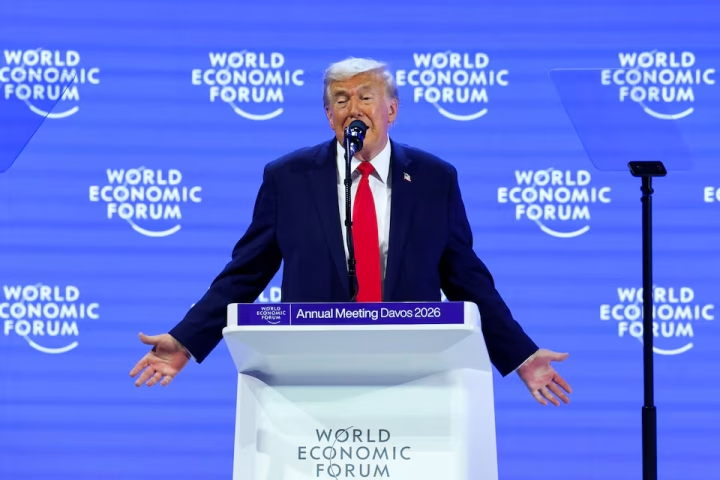
The speeches reveal a president struggling to reconcile his central economic message. Trump often veers off topic, spending nearly half his speaking time on grievances and unrelated issues. These include immigration, attacks on political opponents, and even questioning whether Somalia is a country. When he does acknowledge high prices, he blames his Democratic predecessor, Joe Biden. Republican strategists warn this mixed messaging risks a credibility gap. “He can’t continue to make claims that are demonstrably false,” said strategist Rob Godfrey. Polls show only 35% of Americans approve of Trump’s economic handling, down from 42% when he entered office. This suggests his inflation victory narrative is not resonating with a public still feeling financial strain.
The Data Versus the Declaration
The economic data contradicts Trump’s frequent declarations of an inflation victory. The inflation rate has eased from 3% to 2.7% since he took office. However, this slower growth rate does not mean prices are falling. It means they are rising less quickly. Core costs remain painfully high for households. Food prices rose over 3% in the year through December 2025. Meanwhile, average hourly earnings grew only 1.1%, meaning wages are not keeping pace. The unemployment rate has also ticked up to 4.4% from 4%. Trump correctly points to price drops in a few categories, like eggs and gasoline. Yet, the overall cost of a typical grocery basket has increased. This selective highlighting fails to address the broader affordability crisis that voters cite as their top concern.
The Meandering Speech Pattern and Message Dilution
A Reuters analysis of about five hours of Trump’s speaking time found a pattern of meandering. He spent roughly two hours straying into about twenty unrelated topics. His top diversion was illegal immigration, consuming 30 to 40 minutes. He also insulted Somali Americans and Congresswoman Ilhan Omar, discussed men in women’s sports, and revisited false claims about the 2020 election. Republican strategists call this style, which Trump dubs “the weave,” a liability. It drowns out his core economic argument. Voters may remember the inflammatory comments but forget any policy solutions he mentions. This lack of discipline concerns party operatives who need a focused message on the economy to win competitive congressional races in November.
Acknowledged Solutions and Their Potential Impact
Trump does propose solutions within his speeches. These include the tax cuts that took effect last month, which will increase savings for many families. He also advocates scrapping taxes on tips and overtime, reducing mortgage rates, and making deals to lower drug prices. Economists expect the tax cuts to provide a broad benefit. However, most of his newer proposals are unlikely to significantly reduce living costs before the midterms. One idea, to cap credit card interest at 10% for a year, could even backfire by restricting credit access for lower-income families. While the solutions are part of his platform, their overshadowing by off-topic rants and overstated victory claims reduces their political potency. The messaging fails to bridge the gap between policy and palpable kitchen-table relief.
Echoes of Biden’s Failed 2024 Strategy
Former economic officials note Trump is repeating the mistake that doomed Biden in 2024. Biden consistently pointed to strong job numbers while inflation remained high. Voters felt officials were talking past their pain. Jared Bernstein, who led Biden’s Council of Economic Advisers, admitted, “We definitely talked past people on inflation.” Trump now risks the same error by declaring the problem solved. The effective political playbook requires acknowledging the ongoing struggle, not dismissing it. A source close to the White House said Trump needs to “bring the message out” through personal visits to critical districts because it is not resonating. His planned State of the Union address on February 24 may serve as a reset for a more focused affordability tour.
Political Risks for the Republican Party
The credibility gap poses a direct threat to Republican fortunes in the midterms. Control of Congress is at stake. If voters perceive Trump as disconnected from their financial struggles, they may punish GOP candidates. Strategists stress Trump must be “disciplined and focused.” His current approach allows Democrats to frame the narrative around enduring economic pain. The Republican National Congressional Committee maintains that voters see a “clear contrast” and that “the best is yet to come.” However, with approval on the economy languishing below 40%, the party cannot rely on Trump’s declarations alone. They need a message that validates voter experience while offering a credible path forward. Failing to correct course could see Republicans falling into the same trap that cost Democrats the White House and Congress just two years prior.