At rush hour in Dubai, the city becomes a theater of movement.
Metro trains glide beneath towers of steel and mirrored glass. Digital billboards pulse above Sheikh Zayed Road. Taxi rooftops flicker with animated campaigns while mall screens compete for the attention of millions moving through climate-controlled corridors of commerce. In the United Arab Emirates, advertising is not confined to walls or screens. It has become part of the architecture itself — woven into the rhythm of urban life.
But as conversations around sustainability, environmental responsibility and smart-city development intensify across the Gulf, the role of advertising is beginning to change.
In May 2026, OutdoorAdvertisingUAE.com, operated by Dubai-based EDS FZCO, announced the launch of its “Green Advertising” initiative across Dubai and the wider UAE, introducing a model of outdoor media designed to merge commercial visibility with environmental engagement and public participation.
The initiative represents a broader shift unfolding across the global advertising industry, where companies are increasingly being asked not only to sell products, but also to demonstrate social awareness, sustainability commitments and civic relevance.
The newly launched platform is now live at:
Green Advertising in Dubai & UAE
For decades, outdoor advertising was largely defined by visibility and scale. The most successful campaigns were often the largest, brightest or most strategically placed. But in many cities around the world — particularly technologically advanced urban centers like Dubai — visibility alone is no longer considered enough.
Modern audiences, especially younger and digitally connected consumers, increasingly expect brands to participate in conversations surrounding sustainability, urban responsibility and environmental stewardship.
Green Advertising attempts to position itself within that transition.
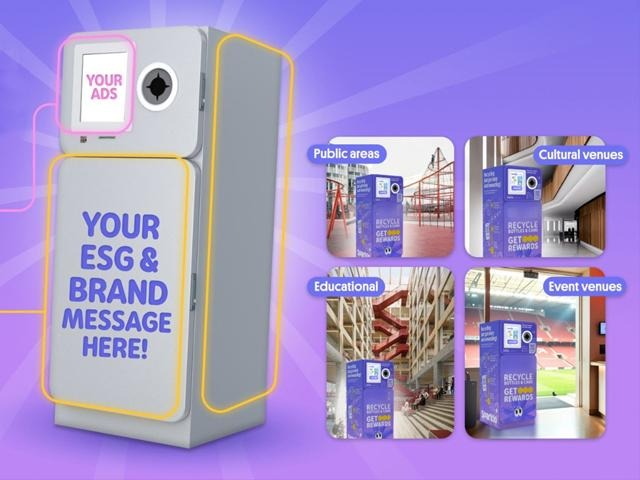
According to EDS, the initiative introduces a range of eco-conscious advertising solutions that integrate sustainability messaging with interactive digital engagement systems and recycling-focused public participation.
The project combines several components under one umbrella:
smart recycling engagement systems, interactive digital outdoor advertising, consumer participation experiences, reward-driven engagement tools and environmentally focused branding campaigns.
Unlike traditional billboard campaigns that operate as one-directional messaging platforms, the Green Advertising model is designed to encourage interaction between brands and the public.
The initiative imagines outdoor advertising not simply as visual exposure, but as an experience tied to behavior, participation and civic awareness.
In practical terms, this could include digitally interactive installations, sustainability-themed media activations or public recycling engagement campaigns integrated into high-footfall urban environments.
Read Also: Top Graphic Design Companies in Dubai
The concept arrives at a moment when sustainability has become central to the UAE’s national identity and future planning.
Over the last decade, the Emirates has invested heavily in renewable energy projects, smart-city infrastructure, green mobility programs and circular economy initiatives. Sustainability is no longer treated solely as environmental policy; it has become part of the country’s broader economic and technological vision.
Dubai in particular has increasingly positioned itself as a laboratory for future urban systems — a place where artificial intelligence, smart transportation, clean energy and digitally connected infrastructure converge in public life.
Advertising, once viewed primarily as a commercial industry operating alongside cities, is now gradually being absorbed into that wider ecosystem of technological and environmental transformation.
EDS says its Green Advertising platform aligns with those evolving national priorities by encouraging environmentally responsible behavior while providing advertisers with highly interactive public engagement opportunities.
The company plans to deploy the initiative across a range of strategically selected locations throughout Dubai and the UAE.
These include shopping malls, business districts, metro and transit networks, residential communities, universities, schools, exhibition venues and other high-density public spaces where consumer interaction is naturally concentrated.
The selection of these locations reflects a growing understanding within the advertising industry that physical public spaces remain deeply influential, even in an age dominated by smartphones and personalized digital algorithms.
Despite the expansion of online advertising, out-of-home media continues to retain a unique ability to shape collective urban experience. People encounter it simultaneously, in shared spaces, often during moments of transit, leisure or routine movement through the city.
Green Advertising appears to build on that strength while attempting to modernize its social function.
Read Also: Top Digital Marketing Agencies in Dubai
The initiative is expected to draw attention from sectors including retail, telecommunications, real estate, banking, hospitality, healthcare, FMCG companies and government-linked organizations — industries increasingly under pressure to demonstrate measurable ESG commitments.
Around the world, environmental, social and governance standards have evolved from internal corporate frameworks into highly visible public benchmarks. Consumers increasingly evaluate not only the products companies sell, but also the values they project and the societal roles they appear to play.
As a result, marketing itself has become more politically, socially and environmentally conscious.
Advertising campaigns are now frequently expected to communicate responsibility as much as aspiration.
EDS argues that sustainability-linked outdoor campaigns may help brands create deeper emotional engagement with audiences by connecting commercial messaging to environmental participation and public benefit.
The company also says the initiative can provide advertisers with stronger ESG positioning, increased audience interaction and expanded corporate social responsibility visibility.
“Green Advertising represents the future of outdoor media,” said Manish Gupta, Chief Executive Officer of EDS.
“Today’s audiences expect brands to contribute positively to society and the environment. Through this initiative, we are helping businesses create impactful campaigns that not only increase visibility but also support sustainability and public engagement.”
The launch also reflects the continuing evolution of the Gulf’s broader outdoor advertising industry.
OutdoorAdvertisingUAE.com, operated by EDS FZCO, has worked since 2006 across multiple segments of out-of-home media, including billboards, transit advertising, taxi branding, digital-out-of-home campaigns, metro advertising, mall media and integrated OOH solutions across the UAE and GCC region.
Over the years, the region’s advertising infrastructure has expanded alongside rapid urbanization and population growth. Dubai’s skyline, transportation systems and commercial districts have increasingly become canvases for technologically advanced media formats.
Yet the emergence of Green Advertising suggests a deeper transformation may now be underway — one where advertising becomes less about occupying space and more about participating in the social identity of the city itself.
In that sense, the initiative reflects a larger question facing modern urban environments:
What role should advertising play in cities increasingly shaped by sustainability goals, environmental accountability and digitally connected public life?
For decades, outdoor media often symbolized consumption and excess — giant screens urging citizens to buy more, travel more, upgrade more.
Now, at least in concept, parts of the industry are attempting to reposition advertising as something more integrated with civic responsibility and environmental consciousness.
Whether Green Advertising becomes a defining model for future urban media remains uncertain. But its arrival underscores how rapidly the relationship between technology, sustainability and public space is evolving in cities like Dubai.
And in a metropolis built on the promise of the future, even the billboards are beginning to change.