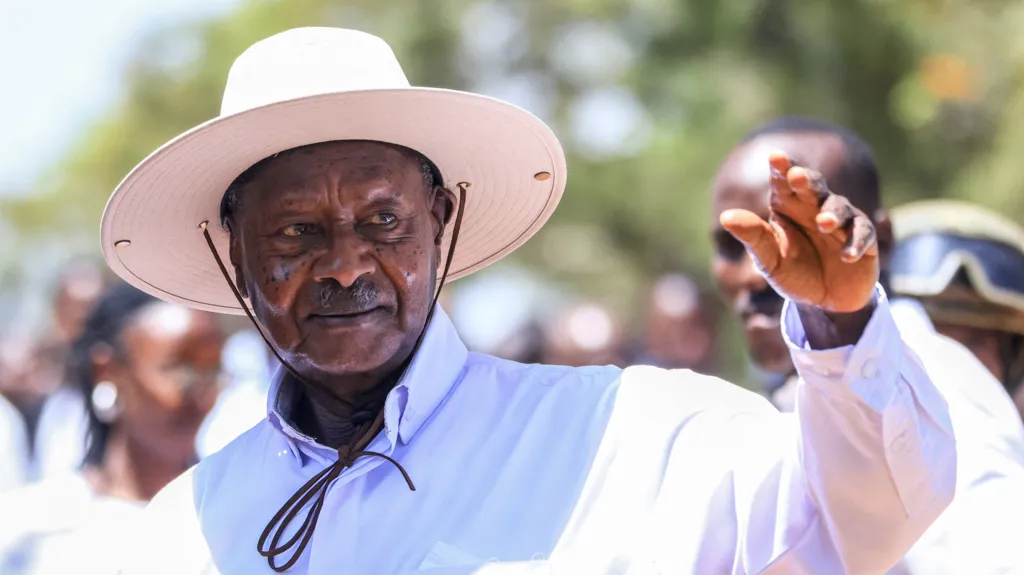
Kampala, Uganda: Yoweri Museveni has been declared the winner of Uganda’s presidential election, extending his rule beyond four decades and setting the stage for another five-year term in office. The announcement by the electoral authorities places Museveni at the center of a fresh political storm, with opposition leaders rejecting the outcome and raising concerns about the credibility of the vote.
According to official results released by the election commission, Museveni secured a commanding majority of the ballots cast, while his main challenger, Bobi Wine, finished a distant second. The declaration immediately triggered sharp reactions from opposition supporters, who argue that the process failed to meet basic democratic standards and did not reflect the will of voters.
The disputed outcome follows a tense campaign period marked by heightened security, sporadic violence, and widespread restrictions on political activity. Museveni, now in his eighties, first took power in 1986 after leading a rebel movement and has since dominated Uganda’s political landscape through successive elections.
Election officials said Museveni won with more than two-thirds of the total votes cast, while Bobi Wine garnered roughly a quarter of the vote. Wine has dismissed the figures as fabricated and accused authorities of ballot manipulation, although he has yet to publicly release evidence to support the claims. The government has not issued a detailed response to the allegations.
In the hours following the announcement, Wine urged his supporters to engage only in peaceful demonstrations, insisting that non-violent resistance was the most effective way to challenge the results. His call came amid reports of fatalities linked to election-related unrest, with opposition sources citing a higher death toll than figures acknowledged by the authorities.
Independent verification of events has been complicated by a nationwide internet shutdown imposed days before the vote. The government said the blackout was intended to curb the spread of false information and prevent unrest. However, the move drew criticism from international observers, including the United Nations Human Rights Office, which described the restrictions as deeply troubling and harmful to transparency.
Tensions escalated further after Wine’s party claimed that security forces attempted to detain him at his residence in the capital. Police denied any abduction, stating instead that his movements were limited because his neighborhood had been designated a sensitive security zone. Wine later said he had avoided a night-time raid and was temporarily in hiding, adding to uncertainty over his situation.
Throughout the campaign, Wine positioned himself as the voice of Uganda’s youth, highlighting unemployment, corruption, and governance reforms as central issues. His message resonated strongly with younger voters in a country where a majority of the population is under 30. Museveni, by contrast, framed himself as the guarantor of stability, pointing to Uganda’s past conflicts and arguing that continuity in leadership remains essential.
Six other candidates took part in the race but failed to make a significant impact, each receiving a small share of the vote. Official turnout stood just above half of registered voters, reflecting voter fatigue and the restrictive environment surrounding the polls.
As Uganda moves forward under another Museveni term, the disputed election is expected to intensify domestic political tensions and attract sustained international scrutiny. The coming days will be critical in determining whether dialogue, protest, or further confrontation shapes the country’s immediate political future.