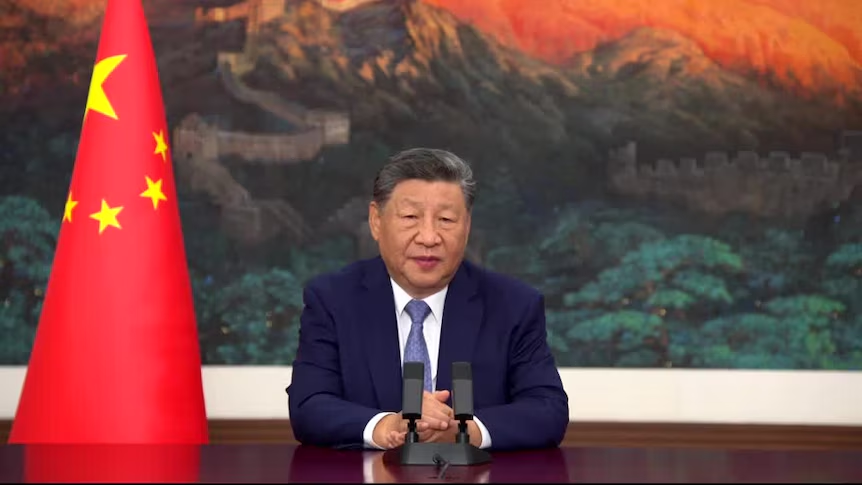
China has unveiled its most ambitious climate target to date, with President Xi Jinping committing to reduce carbon emissions by 7–10% by 2035. The pledge, delivered by video link to the UN Climate Summit in New York, positions Beijing as a global leader in climate action at a time when the United States is retreating from the Paris Agreement.
Beijing Steps Ahead
Xi declared that China would raise the share of renewables — including solar, wind and hydropower — to more than 30% of its power mix over the next decade. He also vowed to make new energy vehicles mainstream in the domestic auto market, underscoring China’s push to become what analysts call the world’s first “electrostate.”
“Green and low-carbon transition is the trend of our time,” Xi told delegates, pointedly adding that “some countries are against” that shift — a veiled swipe at U.S. President Donald Trump, who just one day earlier called climate change “the greatest con job ever perpetrated.”
Global Ripple Effects
China’s commitment carries weight: the country is the world’s largest emitter of greenhouse gases. A 2035 peak and decline in emissions could reshape global climate diplomacy and energy markets, particularly for coal and liquefied natural gas exporters such as Australia.
Australian Prime Minister Anthony Albanese, who also addressed the summit, welcomed the Chinese target while pressing Beijing to halt new coal projects. Australia has pledged a 62–70% emissions reduction by 2035, outpacing peers such as Japan, Canada and New Zealand.
The European Union has yet to formalize its 2035 target but is working toward a 2040 commitment of up to 90% cuts, aiming for climate neutrality by mid-century.
The Decisive Decade
Experts say China’s embrace of renewables may already be driving emissions lower, a signal that its carbon output could have peaked. Xi’s announcement arrives 10 years after the Paris Agreement and just weeks before the next UN climate conference in Brazil, where nations are expected to lock in their updated commitments.
“This is the decisive decade,” Albanese said. “The consequences of inaction are clear, but so are the opportunities in clean energy.”