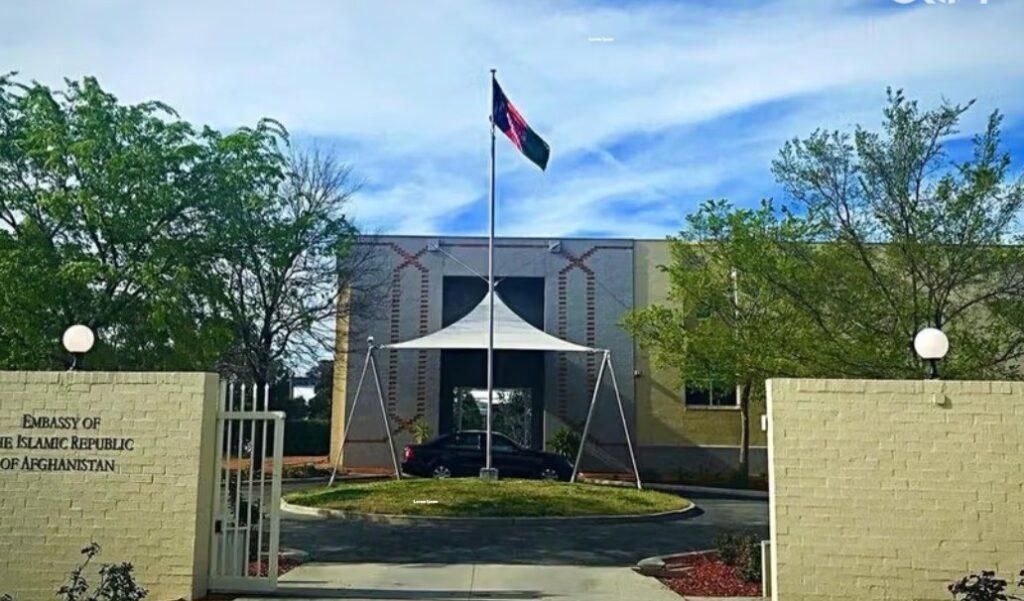
The Australian government has confirmed the impending closure of the Embassy of the Islamic Republic of Afghanistan in Canberra, marking the end of a significant chapter for the nation’s Afghan diaspora. The mission, which has operated in exile since the Taliban’s takeover of Afghanistan in 2021, will officially shut its doors on June 30, 2026. This decision finalizes a drawn-out diplomatic process and follows reports that Canberra advised the sitting ambassador, Wahidullah Waissi, that his credentials would not be renewed. For many in the community, the shuttering of the Afghan embassy represents far more than the loss of a bureaucratic office; it signifies the erosion of a vital cultural and symbolic bridge to their homeland.
The move comes amid sustained pressure from the Taliban regime in Kabul, which has demanded the closure of all embassies still representing the former republican government. While the Australian Department of Foreign Affairs and Trade (DFAT) maintains it does not recognize the Taliban as Afghanistan’s legitimate government, experts argue the closure aligns with the group’s ultimatum. This action creates a complex dilemma, balancing practical diplomatic realities against a principled stance on human rights, particularly concerning the Taliban’s systematic oppression of women and girls. The closure leaves thousands of Afghan Australians in a state of uncertainty regarding future consular services and communal representation.
Community reactions reflect a deep divide. Some pragmatists note the mission’s services had already been severely curtailed after the Taliban invalidated its documents in 2024, reducing its function to a largely symbolic one. For others, especially women and advocates, the Afghan embassy was a unique secular space for connection, identity, and advocacy—a platform now lost without a clear replacement. The Australian government faces pressing questions about how it will fill this void and support one of its most recently resettled and traumatized communities.
Also read: Afghanistan Embassy in Australia to Suspend Operations in Mid-2026, No Taliban Handover
The Practical and Symbolic Void for the Diaspora
For years, the embassy served as a critical lifeline, issuing and verifying passports, identity documents, and visas for Afghan citizens residing in Australia. Its closure creates immediate practical hurdles for those needing to renew travel documents or authenticate personal records for legal and administrative purposes within Australia. While services had been inconsistent, the mission’s existence offered a thread of official continuity. The Australian government has not yet detailed a plan to provide these essential consular functions, leaving many in the community anxious about how to manage basic bureaucratic tasks.
Also read: Australian PM Calls for Full Prosecution of Man Who Allegedly Tried to Bomb Indigenous Rally
Beyond paperwork, the symbolic impact is profound. Community leaders like Maryam Zahid of Afghan Women on the Move describe the embassy as a “place of connection and identity,” particularly for elders and women. It was a neutral, non-religious hub that facilitated cultural events, connected community groups with government agencies, and served as a tangible piece of homeland on Australian soil. Its absence, advocates warn, risks further fragmenting a community already grappling with the trauma of displacement and the distress of watching the Taliban erase gains made over two decades. For many, the closure feels like a second loss of Afghanistan—this time in exile.
Geopolitical Pressures and Human Rights Contradictions
The decision underscores the difficult diplomatic tightrope Australia and other nations walk regarding Afghanistan. Professor William Maley, a diplomacy expert at the Australian National University, directly links the closure to the Taliban’s campaign to eliminate remaining vestiges of the republic. He argues that acceding to this pressure, even indirectly, damages Australia’s credibility when condemning the regime’s human rights abuses. It sends a message, he suggests, that practical diplomatic consolidation may be quietly prioritized over consistent moral stance, a perception that could dismay Afghan allies and Australian veterans alike.
DFAT’s statement is carefully worded, asserting that Australia “does not recognise the Taliban” and “has no intention” of accepting a Taliban-appointed representative. However, as Professor Maley notes, this language leaves future options open. The possibility, however distant, of some form of consular arrangement with Kabul in the future is a source of deep concern for many exiles, especially women’s rights defenders. For them, accepting any Taliban-linked figurehead on Australian soil would be an unacceptable betrayal, lending legitimacy to a regime that denies basic rights to half its population.
Divergent Voices Within the Community
The Afghan diaspora in Australia is not monolithic, and perspectives on the closure vary significantly. Some, like former diplomat Fazal Katawazai, advocate for pragmatic engagement. They argue that establishing some form of limited consular relationship is necessary to solve the very real document and travel problems that will worsen after June 30. This view prioritizes practical daily needs for families with ongoing ties to Afghanistan over political symbolism.
This stance is fiercely opposed by others like Erfan Abidi, founder of an underground girls’ school network, who sees the embassy as the “only official space” where Afghan women in exile could raise their voices. For this segment of the community, the principle is paramount. The Afghan embassy represented the ideals of the republic—however flawed—and its closure is seen as another concession to the Taliban’s vision for the country. They call on the Australian government to invest directly in community-led platforms to fill the social and cultural gap, ensuring support flows through secular, inclusive channels rather than religious or politically factional ones.
The Path Forward Without an Embassy
The confirmed closure of the Afghan embassy presents a clear challenge for Australian policymakers. The immediate task is to establish a transparent and accessible process for handling the consular void, potentially through special arrangements with like-minded governments or international bodies. The longer-term, more complex challenge is to support the diaspora’s social cohesion and mental wellbeing. This could involve funding neutral, community-governed cultural hubs and ensuring diaspora voices are included in shaping Australia’s ongoing Afghanistan policy.
Ultimately, this moment forces a reckoning. It highlights the painful limbo of exile communities when their homeland undergoes radical transformation. As one community member poignantly stated, the closure feels like watching Afghanistan fall again, but from afar. How Australia responds to the practical and symbolic needs of its Afghan community in the coming months will be a telling measure of its commitment to the people it once sought to assist, long after the soldiers have come home.