The Spectacle and Skill Behind the Smoke
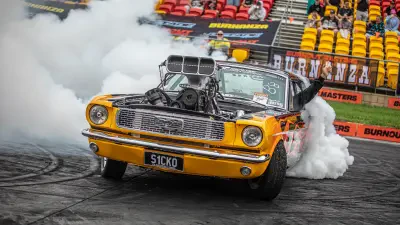
Thick plumes of white smoke, the deafening roar of high-horsepower engines, and the piercing screech of tortured tires—this is the visceral spectacle that defines a burnout competition. To the uninitiated, events like Sydney’s annual ‘Burnanza’ might appear as mere displays of automotive excess, a gathering for so-called “hoons” to mindlessly destroy rubber. However, a closer look reveals a deeply nuanced and technically demanding motorsport that has cultivated a passionate subculture. This is not simply about noise and chaos; it is a calculated performance that marries raw mechanical power with precise driver control.
The ‘Burnanza’ event, a highlight on the Australian motorsport calendar, draws enthusiasts and skilled competitors from across the country. They come not just to witness tires turned into smoke, but to celebrate a unique form of automotive expression that balances artistry with engineering. Competitors are judged on criteria such as the density and consistency of their smoke, the stability of their vehicle’s stance, the duration of the burnout, and the overall style and aggression of their presentation. It is a sport where physics and flair collide, demanding an intimate understanding of vehicle dynamics, weight transfer, and throttle modulation.
Beneath the seemingly destructive nature of the sport lies a community built on respect for craftsmanship and mechanical knowledge. The cars, often classic Australian muscle cars like Holden Commodores and Ford Falcons, are meticulously prepared and engineered for this singular purpose. Participants invest countless hours and significant resources into building engines that can sustain extreme stress and transmissions that can handle relentless punishment. The burnout competition, therefore, is the dazzling finale to a long process of preparation, a public test of private dedication.
The Technical Mastery of Controlled Chaos
Dismissing burnout competitions as “dumb” overlooks the profound technical skill required to execute a winning run. A successful burnout is a delicate balancing act. The driver must apply enough power to break the tires loose and generate smoke, while maintaining precise steering control to keep the vehicle within a defined boundary, often a marked “box.” Too little throttle, and the smoke fizzles; too much, and the car can lurch unpredictably or “bog down,” losing momentum. The goal is to achieve a “rolling burnout,” where the car moves slowly and steadily, creating a perfect, continuous smoke cloud.
This control extends to managing the vehicle’s mechanical systems under extreme duress. Competitors must monitor engine temperatures to prevent overheating, manage differential and transmission stress, and understand how tire pressure and compound affect smoke generation and longevity. The use of a “line locker,” a device that locks the front brakes while allowing the rear wheels to spin freely, is a standard but critical tool that illustrates the sport’s technical nature. What looks like chaotic abandonment is, in reality, a highly disciplined display of vehicle control and mechanical sympathy pushed to its absolute limit.
Cultural Significance and Community Spirit
Beyond the technical execution, events like ‘Burnanza’ serve as a vibrant hub for Australian automotive culture. They are gatherings where generations connect over a shared passion for locally built muscle cars and homegrown engineering. The atmosphere is one of camaraderie, where competitors share tips and spectators admire the dedication poured into each machine. For many, these competitions are a celebration of Australian automotive identity, keeping the spirit of iconic brands alive through loud and proud expression.
The community also operates with a strong emphasis on safety and sanctioned environments. Organized events provide a controlled, legal outlet for an activity that, when performed on public streets, is dangerous and illegal. By channeling this passion into a structured sport with rules, safety barriers, and emergency services on standby, the culture promotes responsible enjoyment. The burnout competition scene argues that it offers a legitimate sporting pursuit that requires skill, rewards practice, and fosters a tight-knit community, all while putting on a breathtaking show that continues to draw awe and intrigue.
The Future of a Misunderstood Motorsport
As automotive technology shifts toward electrification and noise regulation increases, the future of combustion-based motorsports like burnout competitions faces questions. Yet, this very pressure has galvanized the community, reinforcing its role as a guardian of a specific, roaring chapter of automotive history. The sport continues to evolve, with competitors adopting modern fuel injection, advanced tuning, and sophisticated driveline components to push the boundaries of what’s possible within a cloud of smoke.
Also read: Indra Brown Takes Top Spot in Women’s Freeski Halfpipe World Cup
The enduring appeal of a burnout competition lies in its primal simplicity and its complex execution. It is an accessible spectacle—the basic concept is instantly understandable—yet it rewards deep knowledge and practiced skill. Events like ‘Burnanza’ challenge preconceptions, demonstrating that within what some deem mindless destruction, there exists a respected sport of art, science, and community. It is, as enthusiasts contend, perhaps the smartest dumb sport in the country, a testament to the fact that sometimes the most profound skills are hidden in the most spectacular clouds of smoke.