Israel has carried out several airstrikes in southern Lebanon, targeting what it claims are Hezbollah infrastructure sites. These strikes come as a deadline for the Lebanese army to disarm the group nears, with Israel intensifying its military and rhetorical pressure. The strikes, which took place early Wednesday morning, are the latest violation of the year-long ceasefire agreement that ended a 13-month war between Israel and Hezbollah in 2024.
The situation in southern Lebanon remains tense, as Israeli forces continue to strike at Hezbollah sites, while Lebanon insists it has made significant progress in disarming the group. As the deadline approaches, the dynamics between Israel, Lebanon, and Hezbollah are growing increasingly volatile.
Israel’s Airstrikes: Targeting Hezbollah Infrastructure
On Wednesday morning, Israeli warplanes bombed several valleys in southern Lebanon, including Houmin, Wadi Azza, and Nimeiriya, located in the southern Nabatieh area. These areas have been identified by Israel as sites containing Hezbollah military infrastructure, including launching sites and weapons depots. The Israeli military has labeled Hezbollah’s continued presence in southern Lebanon a violation of the understandings reached between Israel and Lebanon.
The strikes are part of a broader Israeli campaign aimed at neutralizing Hezbollah’s military capabilities in the region. Israeli drones continued to hover over southern Lebanon and its eastern Bekaa Valley after the airstrikes, indicating ongoing surveillance and a possible preparation for further attacks.
Israel’s military operations in southern Lebanon are not new. Over the past year, Israel has carried out regular airstrikes, violating the ceasefire agreement. According to the Armed Conflict Location & Event Data Project (ACLED), Israel has bombed Lebanon once every four hours, on average, since the ceasefire was established. These attacks have continued despite the ceasefire, with Hezbollah retaliating once during the first week of the ceasefire in December 2024.
Growing Rhetoric and the Disarmament Deadline
Israel’s airstrikes come at a time when both military actions and political rhetoric are intensifying. As the new year’s deadline approaches, Israel has made it clear that it expects the Lebanese army to disarm Hezbollah in the south of the country. The US-backed plan requires the Lebanese army to remove all Hezbollah weapons and military infrastructure south of the Litani River, about 20 miles from Israel’s border, by the end of the year.
Israel’s Defence Minister, Israel Katz, has emphasized that “there will be no calm in Beirut, nor order and stability in Lebanon, until the security of the state of Israel is guaranteed.” This statement reflects Israel’s firm stance on disarming Hezbollah, asserting that peace in Lebanon hinges on the group’s removal from the southern regions.
In contrast, Hezbollah, as well as Lebanese officials, have repeatedly argued that Hezbollah remains a crucial component of Lebanon’s national defense against Israeli aggression. The Lebanese government claims to have made significant progress in disarming Hezbollah in the south, although Israel insists that Hezbollah continues to rebuild its military presence along the border.
Israeli Drone Strikes and Accusations of Hezbollah Rebuilding
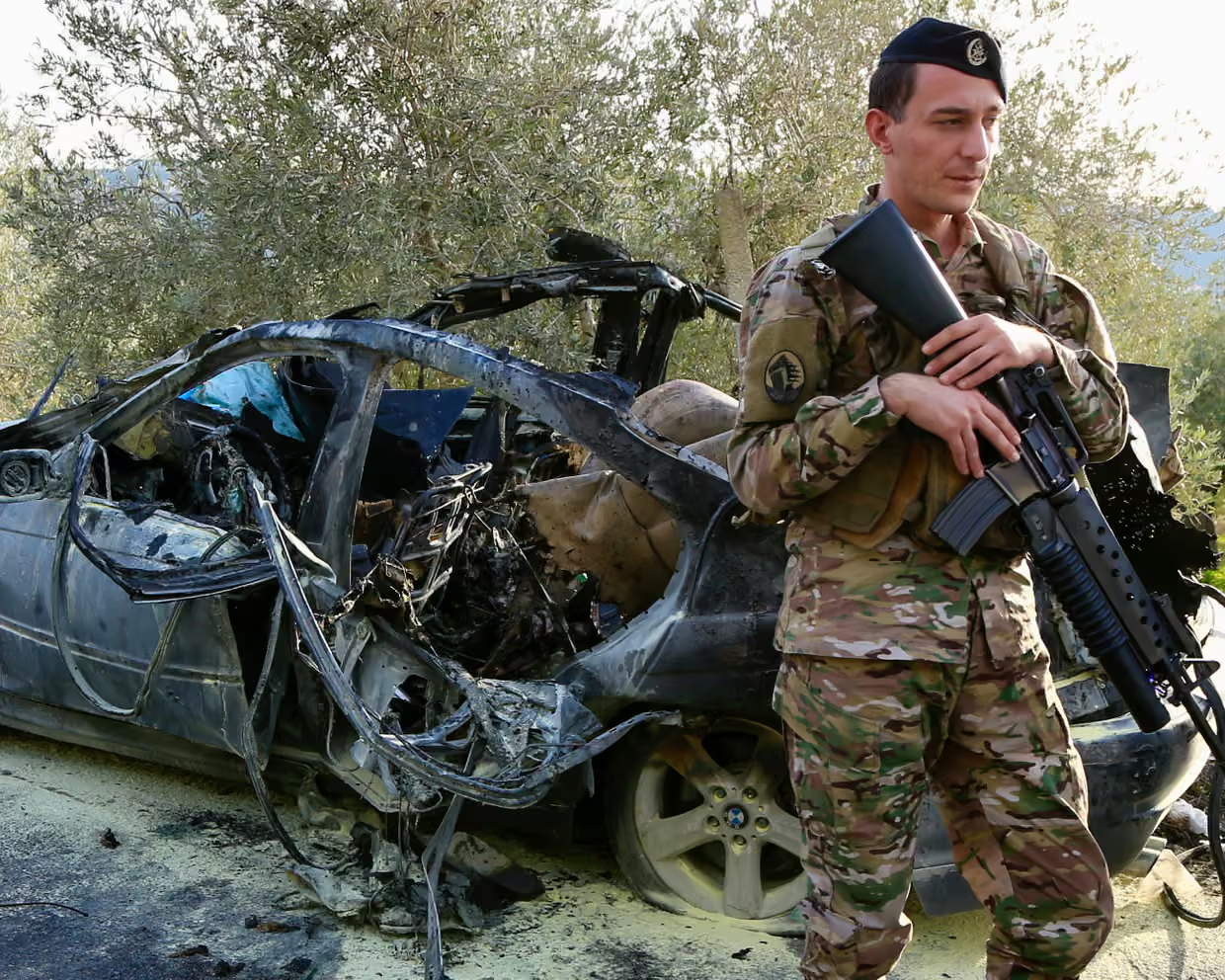
A recent Israeli drone strike in Lebanon on December 22 targeted a vehicle near the Lebanese city of Saida, killing three individuals. Israel claimed that one of the victims, a Lebanese army officer, was also a Hezbollah member involved in planning attacks on Israel. This incident has sparked further controversy, with the Lebanese army and Hezbollah denying any connection between the officer and Hezbollah. Lebanese Defence Minister Michel Menassa called the accusation a “malicious attack” on Lebanon’s military forces.
Israel continues to point to Hezbollah’s presence within the Lebanese army as evidence that Lebanon is not doing enough to dismantle the group. However, Lebanese officials maintain that Hezbollah is no longer as active in the south, pointing to efforts to destroy old weapons caches as proof of the disarmament process.
Diplomatic Talks and Civilian Involvement
Alongside military operations, Israel and Lebanon have engaged in diplomatic discussions regarding the ceasefire. Negotiations have taken place in the southern Lebanese town of Naqoura, where both sides have attempted to address the status of the ceasefire and other nonmilitary issues. For the second time, civilian representatives from both countries have attended the talks, which has stirred controversy in Lebanon. The inclusion of civilians, especially in nonmilitary discussions, is viewed as an implicit recognition of Israel, a position that many Lebanese leaders oppose.
Despite the controversy, Israel views these talks as an essential step in engaging with the Lebanese state, separate from its military actions. Israel continues to push forward with its strategy on both fronts, maintaining pressure on Hezbollah through airstrikes while pursuing diplomatic channels to address broader regional issues.
Lebanon’s Appeal to the International Community
Lebanese officials have consistently appealed to the international community for help in stopping Israel’s frequent airstrikes, calling them violations of Lebanon’s sovereignty. The Lebanese government has emphasized its commitment to the ceasefire and insists that it is upholding its end of the agreement. However, Israel’s ongoing military actions and accusations against Hezbollah have made it difficult for Lebanon to address the situation internally.
As the deadline to disarm Hezbollah approaches, Lebanon faces mounting pressure from both Israel and the international community to take decisive action. At the same time, the Lebanese government must balance the demands for national security with the political realities on the ground, where Hezbollah remains a powerful force.
Conclusion: A Fragile Peace and an Uncertain Future
Israel’s airstrikes on southern Lebanon and the looming deadline for Hezbollah’s disarmament underscore the fragile state of the ceasefire between the two nations. While Israel continues its military actions, Lebanon maintains that it is fulfilling its commitments to disarm Hezbollah in the south. However, Israel’s ongoing violations of the ceasefire and Hezbollah’s entrenched position in Lebanon create a volatile and uncertain situation.
As both sides continue to meet and negotiate, the future of peace in Lebanon remains in question. Israel’s diplomatic and military strategies indicate that tensions will likely remain high in the coming months, especially as the disarmament deadline approaches. The international community’s response to this ongoing conflict will be crucial in determining whether Lebanon can maintain stability and sovereignty amid the pressure from both Hezbollah and Israel.