What is this “new” type of warfare?
Over the last decade, especially since the Ukraine crisis and Russia’s incursion into Crimea, there has been a growing recognition that warfare isn’t just about tanks, ships and air strikes. Instead, states (and non-state actors) are increasingly using a mix of:
- Cyber-attacks (on infrastructure, networks, data systems)
- Disinformation campaigns and manipulation of social media, elections and public sentiment
- Covert economic or political coercion (sanctions, sabotage, corruption, interference)
- Hybrid/integrated operations combining military, paramilitary, intelligence and sub‐threshold actions (i.e., not officially “war” but still aggressive).
For example, one academic piece describes how information warfare and cyber operations allow actors to “gain control over an adversary’s politics, society and sometimes even territory” without overt military invasions.
This type of conflict is sometimes called “hybrid warfare” or “political warfare” (for example: the so-called Gerasimov Doctrine) though experts debate the exact labels.
Because the threats operate across domains (cyber, information, political, economic) and often below the threshold of open war, traditional defence-only responses are less effective. The challenge: how do you build resilience, deterrence and defence when the “battlefield” is partly in the society, media, economy and digital networks?
How the EU is responding
The EU has taken a number of steps to strengthen its ability to counter these hybrid threats. Key features:
1. Strategic policy frameworks
In 2025 the EU adopted conclusions calling for enhanced common action in countering hybrid threats—defining them as “a wide range of methods … by hostile state or non-state actors … to target the vulnerabilities of democratic states and institutions, while remaining below the threshold of formally declared warfare.”
The EU’s “International Digital Strategy” (June 2025) also emphasises cybersecurity, resilience, transparency of algorithms, foreign‐information manipulation (FIMI) and the building of secure digital infrastructure.
2. Institutions & cooperation
The EU collaborates with partner organisations to address hybrid threats. One example: the European Centre of Excellence for Countering Hybrid Threats (HCoE) in Helsinki—an autonomous body formally opened in 2017 that brings together whole-of-government and whole-of-society approaches.
3. Focus on resilience
Rather than solely deterrence via force, the EU emphasises resilience—making critical infrastructure (digital networks, energy, transport, space) more robust, improving information literacy in societies, protecting electoral integrity, and improving coordination among defence/civil society/information sectors.
4. External partnerships
The EU is also looking outward, linking up with like-minded states in cyber, defence industry, maritime security, counter-terrorism etc. For example, discussions with Australia about a security and defence partnership show the EU’s interest in broadening its global security architecture.
How NATO is responding
NATO, given its foundational military defence role, is adapting to address these hybrid, cross-domain threats as well.
1. Recognition of hybrid threats
NATO’s Strategic Concept from its 2022 Summit underlined that Russia’s move beyond traditional force into annexation, sabotage, subversion, and coercion is a core threat.
NATO also states that terrorism, cyber threats and hybrid actions “are the most direct asymmetric threats” to member states.
2. Enhanced defence spending & capabilities
One recent push: the EU’s partner alliance NATO is urging members to increase defence spending significantly to deal with emerging threats. A news item noted NATO’s boss Mark Rutte setting out a new benchmark of 5 % of GDP on defence expenditure.
The rationale is that hybrid warfare still may lead up to open military conflict, so strong defence posture remains important.
3. Inter-agency / cross‐domain coordination
NATO is working to broaden its scope: not just military, but civilian resilience, infrastructure protection, information operations. For example, NATO and the EU have discussed cooperation on defence against hybrid warfare (including cyber-attacks, disinformation, election interference) and sharing real‐time warnings.
4. Global/Indo-Pacific outreach
NATO increasingly treats the Indo-Pacific as part of the global security architecture rather than strictly a European theatre. It is building partnerships with Australia, Japan, Korea, New Zealand, etc to address interconnected threats (including from China) beyond just Russia.
What this means in practice: tactics & examples
Here are some practical manifestations of the EU/NATO approach.
- Cyber resilience and warning systems: Through coordination between states, alliances and centres of excellence, member states are improving ability to identify, warn, and respond to intrusions, malware campaigns and sabotage attempts.
- Information operations & election defence: Building awareness of disinformation campaigns (often foreign‐state backed), improving media literacy, strengthening the integrity of electoral processes.
- Hybrid threat training and exercises: The alliances conduct simulations, scenario‐planning of hybrid/gray-zone operations (including sabotage of critical infrastructure, coordinated cyber and physical attacks).
- Integration of defence and civil society: Because hybrid warfare doesn’t only target military forces, responses include emergency services, telecoms, transport sectors, media, election authorities—whole-of-government & whole-of-society.
- Partnership building: As hybrid threats are trans-national, alliances are seeking to widen partnerships beyond Europe (Australia, Asia-Pacific) so that responses are global rather than siloed.
- Defence investment as deterrence: While hybrid threats are lower intensity, they can escalate. Demonstrating strong defence capacity (e.g., air defence, missile defence, rapid deployment) is still part of deterrence.
Why this matters for Australia & the Indo-Pacific
From an Australian perspective (and broader Indo-Pacific), this evolution in warfare and the responses by EU/NATO are relevant for several reasons:
- The threats are global and interconnected: Cyber and information attacks don’t respect geography. A campaign launched in Europe could have resonance in the Indo-Pacific, and vice-versa.
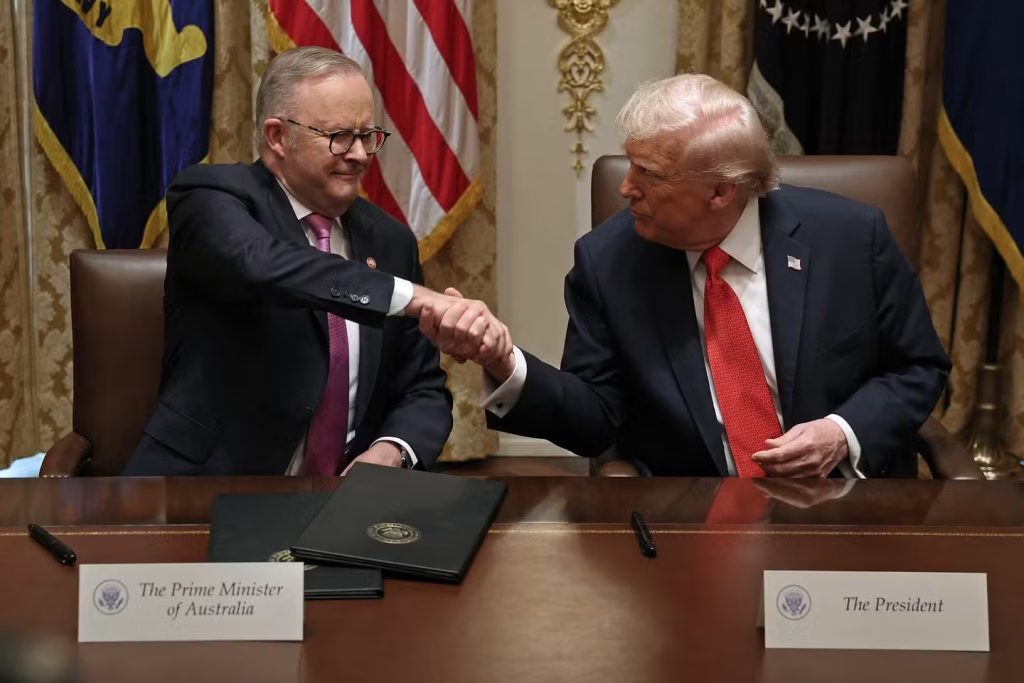
- Australia is deepening its security ties: Australia is negotiating a security and defence partnership with the EU (in June 2025 talks commenced) which includes defence industry, cyber, counter-terrorism and hybrid threats.
- Lessons in resilience: The EU/NATO playbook on hybrid resilience (e.g., infrastructure protection, disinformation defence) provides useful models for Australia as it tackles its own vulnerabilities.
- Strategic signalling: Partnerships between Australia and Europe/NATO signal a broader democratic axis of cooperation in a more contested international environment (especially given China’s rise, Russia’s activity). For example, one article argues the Indo-Pacific should study Europe’s counter-hybrid playbook.
- Budget and capability implications: As we see NATO pushing members to higher defence spending (to address both conventional and hybrid threats), Australia may face similar pressures or need to adapt its own spending and capability mix (including cyber, information resilience, defence industry).
Challenges & Critiques
Despite the progress, there are several formidable challenges:
- Complexity of hybrid threats: Because they operate across domains and often below the threshold of open war, detecting and attributing them is hard. Responses must be multi-layered and fast.
- Civil-military integration: Mixing defence, intelligence, infrastructure, media and civil society functions is organizationally difficult, especially across national borders.
- Resource constraints: Many states are still oriented to “traditional” warfighting. Increasing spending and building new capabilities takes time (and political will).
- Coordination between EU & NATO: While cooperation has improved, institutional overlaps and different mandates sometimes hamper effectiveness. For example, an article noted that a new “hybrid centre of excellence” for the Indo-Pacific is being considered (with Australia as a candidate) to help bridge gaps.
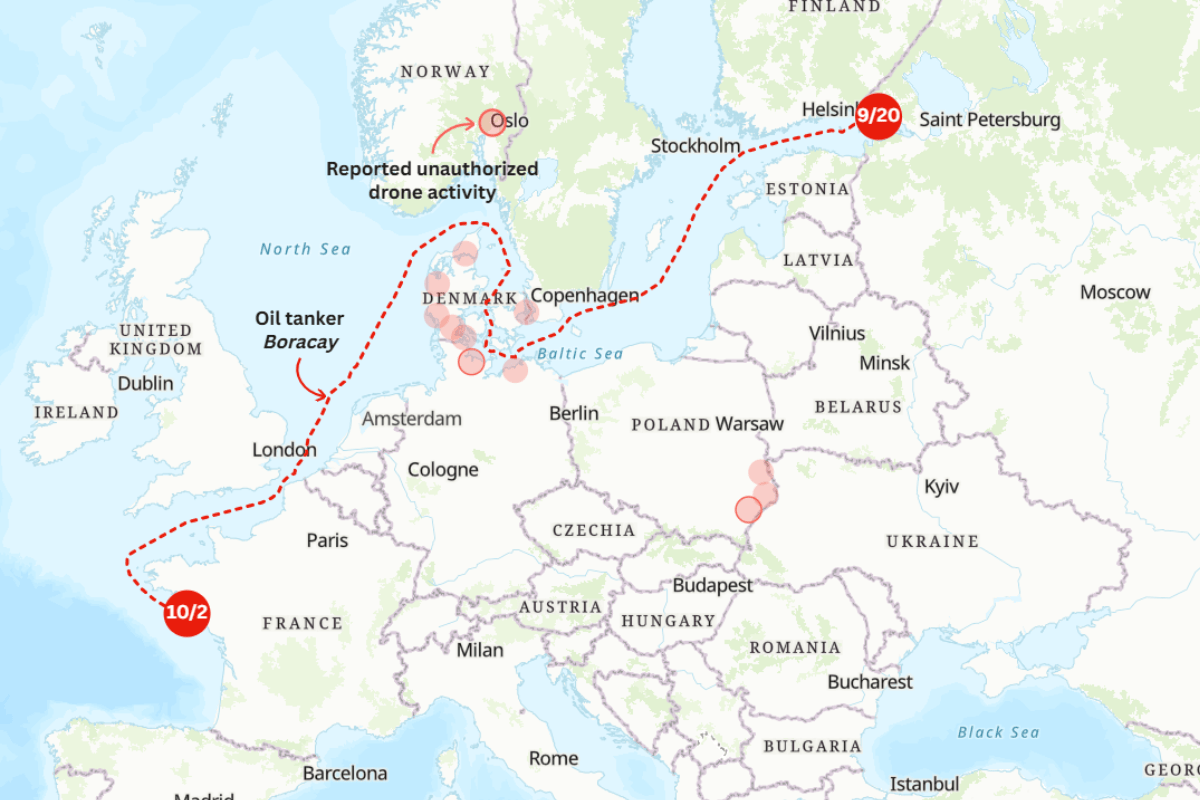
- Globalisation of threats: Hybrid actors are opportunistic and innovative (cyber, drones, information operations). Alliances must constantly evolve.
- Avoiding escalation: One risk is that responses to hybrid attacks could inadvertently escalate into conventional conflict. Balancing deterrence and restraint is tricky.
Looking ahead: key trends to watch
- Greater investment in digital resilience & AI: Cyber, AI, big-data approaches will become even more important. The EU’s International Digital Strategy is a sign of this.
- More formalised partnerships beyond traditional geography: The Indo-Pacific will increasingly be integrated into Euro-Atlantic security frameworks (not just Europe and North America).
- Fusing defence procurement and supply chains: Shared procurement (e.g., defence-industry cooperation) will help build interoperability and cost efficiencies. Australia’s link-ups with Europe are a case in point.
- Elevated role of deterrence in the information domain: It’s not just about preventing the physical attack but deterring malign influence operations, economic coercion and infrastructure sabotage.
- Civil society’s role: A strong theme is that defence isn’t just military; resilience means informed citizens, secure infrastructure, trustworthy media.
- Faster response cycles: Hybrid threats evolve quickly. Alliances will push for real-time sharing of intelligence, threat warnings, rapid coordination.
- More visible signalling: Defence spending benchmarks (like NATO’s 5 % GDP target) send a political message as much as they build capabilities.
What Australia might consider
For Australia’s policymakers, civil-service and security apparatus, the EU/NATO experience suggests a few takeaways:
- Treat cyber, information and hybrid domains as front-line zones of conflict: They merit equal attention as land/sea/air.
- Build resilience across society, not just the military: Media literacy, election protection, infrastructure security, critical supply chains—all matter.
- Deepen interoperability with allied networks: Australia’s partnerships with the EU, NATO, and other democracies help leverage shared intelligence, best practices, procurement economies.
- Maintain balance between deterrence and adaptation: Conventional forces remain important, but the investment mix might shift (cyber-defence teams, rapid deployables, drones, intelligence).
- Ensure whole-of-government coordination: Defence alone won’t fix hybrid threats. Coordinated efforts from foreign affairs, home affairs, finance, media regulation must align.
- Focus on forward-looking threats: Don’t only look at past forms of warfare; anticipate next-gen threats (AI-powered disinfo, drone swarms, supply-chain infiltration).
In summary
The EU and NATO have recognised the changing nature of conflict: the “battlefield” increasingly includes digital networks, information spaces, infrastructure and societies. Both have adapted by emphasising hybrid-threat resilience, strategic partnerships, cross-domain capabilities, and integration of civil and military tools.
For Australia, this evolution is highly relevant. The security landscape in the Indo-Pacific is increasingly connected to Euro-Atlantic dynamics, meaning that cooperation, shared capabilities and lessons from Europe matter. The partnership talks between Australia and the EU underscore this.
Moving forward, success will depend on agility, coordination, investment in resilience, and the ability to respond to threats that are less visible, more insidious, and faster-moving than traditional war. Australia, by aligning with these evolving architectures, can strengthen its own defences and contribute meaningfully to the broader global effort against hybrid warfare.