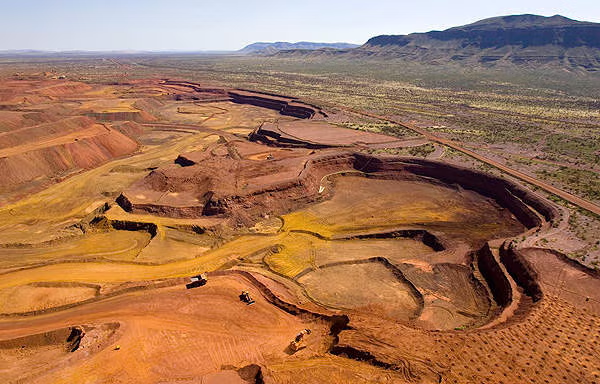
Australia’s Pilbara region hosts some of the world’s largest and most economically significant iron ore deposits. For decades, geologists believed that high-grade iron ore in the Hamersley Province, a key mining hub, formed over 2.2 billion years ago. This assumption shaped scientific understanding and mining strategies across Australia. However, a recent study published in the Proceedings of the National Academy of Sciences (PNAS) overturns this belief. The study shows that these iron ore deposits formed between 1.4 and 1.1 billion years ago, making them up to a billion years younger than previously thought. This finding has far-reaching implications for geology, mineral exploration, and the global mining industry.
The Pilbara region has long been a cornerstone of Australia’s mining sector. Its iron ore deposits fuel domestic steel production and serve as a major export commodity, particularly to industrializing nations in Asia, including China, Japan, and South Korea. Knowing the exact formation process and age of these deposits is crucial for geologists, mining companies, investors, and policymakers. This knowledge informs exploration strategies, resource valuation, and long-term mining plans.
Revealing the True Age of Pilbara Iron Ore
The study was led by geologist Liam Courtney-Davies from Curtin University. His team applied uranium-lead (U-Pb) geochronology, a precise dating method, to iron oxide minerals such as hematite, and accessory minerals like monazite and apatite. They analyzed drill cores from nine deposits across the Pilbara region, including those at active Rio Tinto mines. This direct dating method allowed them to build an accurate timeline of when these iron-rich deposits formed.
Before this research, scientists estimated the age indirectly. They relied on hematite clasts in conglomerate beds or phosphate mineral dating. These methods gave age ranges from 2.5 billion to 541 million years. Such wide estimates created uncertainty in geological models and mining strategies. The new data confirms that the most significant mineralization occurred during the formation of the supercontinent Rodinia, between 1.4 and 1.1 billion years ago. This discovery not only revises a long-held assumption in geology but also enhances our understanding of Earth’s Precambrian history—a critical period for the planet’s crust and mineral resources.
Geological Significance and Implications
The revised timeline has major geological implications. The formation of Pilbara’s iron ore coincides with a period of tectonic activity when the supercontinent Columbia broke apart, and Rodinia began to form. Tectonic shifts, sediment deposition, and chemical processes likely concentrated iron in the region. Understanding these mechanisms is essential for geologists searching for similar deposits elsewhere, both in Australia and globally.
Pilbara iron ore occurs mainly in banded iron formations (BIFs). These sedimentary rocks have alternating layers of iron-rich minerals and silica. Many BIFs contain over 60% iron, making them high-grade deposits. Hematite from Pilbara is particularly prized due to its high purity and ease of extraction. This combination makes it attractive to steel producers worldwide. The new dating shows that these deposits formed under very specific geological conditions. This insight can guide exploration teams toward areas with similar tectonic histories, potentially uncovering new resources.
Economic and Strategic Implications
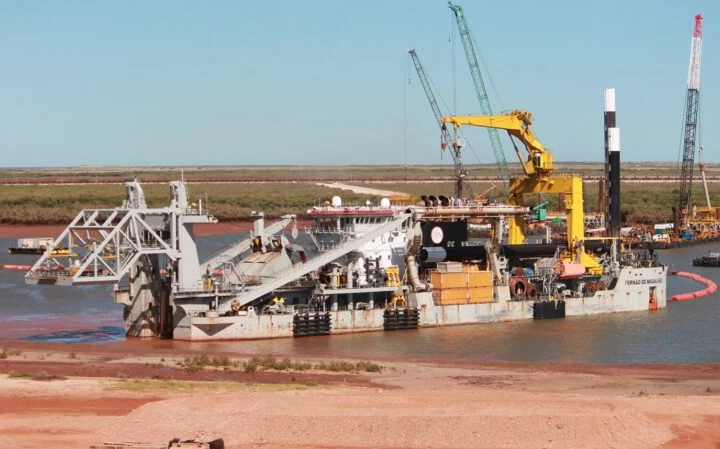
Australia’s iron ore industry is a major economic driver, contributing roughly A$124 billion annually to the national economy. Pilbara supplies a significant portion of this output, making it central to regional and national economic growth. Major projects, such as Rio Tinto’s Brockman Syncline 1 and Hancock Iron Ore’s McPhee, are expected to boost production further. These projects reinforce Pilbara’s role as a global iron ore supplier.
The geological insights from the new study also influence economic strategy. Mining companies can refine exploration models and focus on regions with similar tectonic and sedimentary conditions. This approach may help discover deposits previously considered unprofitable. Combining geological knowledge with modern exploration and extraction technologies can reduce investment risks and optimize operations.
Pilbara iron ore also supports local communities and regional economies. Mining operations have created thousands of direct and indirect jobs, including roles for engineers, geologists, truck drivers, and local suppliers. The industry also generates substantial export revenue, strengthening Australia’s trade balance and reinforcing its position as a global supplier of high-quality iron ore.
Environmental and Sustainability Considerations
As the world focuses on climate change, the Pilbara iron ore industry faces growing scrutiny over environmental impacts. Companies invest in renewable energy and long-term sustainability programs to balance growth with environmental protection. For instance, Rio Tinto’s East Pilbara Strategic Proposal sets an 80-year plan to expand mining while protecting heritage sites, water resources, and local ecosystems.
The industry is also exploring low-emission steel production technologies. Hydrogen-based steelmaking, for example, can reduce greenhouse gas emissions. These innovations align with global decarbonization trends and ensure Australia remains competitive in the steel market. Companies increasingly integrate strategies to minimize waste, conserve water, and reduce carbon emissions, reflecting both regulatory requirements and social responsibility.
Recent Developments in Pilbara Mining
Several key projects highlight the region’s ongoing growth:
- Rio Tinto’s Brockman Syncline 1 Project: A $1.8 billion investment set to begin production by 2027, adding significant output to Australia’s iron ore exports.
- Hancock Iron Ore’s McPhee Project: Created through Gina Rinehart’s merger of Roy Hill and Atlas Iron, the $600 million project will start production in 2025–26, boosting both domestic output and exports.
- Rio Tinto’s East Pilbara Strategic Proposal: An ambitious 80-year plan to expand mining operations, develop new mines, integrate renewable energy, and maintain environmental compliance. The proposal is under review by state and federal authorities, with plans extending through 2105.
These initiatives demonstrate the Pilbara region’s resilience, driven by advanced technology, strategic planning, and sustainable resource management.
Global Context
Global demand for steel continues to rise, fueled by industrialization and infrastructure projects, particularly in Asia. Australia’s high-quality Pilbara iron ore plays a critical role in meeting this demand. The discovery that these deposits are younger than previously thought may prompt geologists to re-examine similar formations worldwide. This could open new opportunities for exploration in areas once considered depleted or less promising.
Conclusion
The revelation that Pilbara’s iron ore formed significantly later than believed reshapes our understanding of Earth’s geological history. It also creates opportunities for the mining industry, allowing companies to refine exploration strategies and potentially discover new deposits.
As steel demand grows worldwide, the Pilbara region will remain central to Australia’s mining sector. By combining scientific research, economic strategy, and environmental stewardship, the region can continue to support the nation’s mining industry for generations. Pilbara’s story demonstrates the intersection of science, economics, and sustainability. Continuous research, innovation, and responsible resource management ensure that Australia maximizes its natural resources while protecting the environment and supporting communities, securing a sustainable future for the industry and the country.