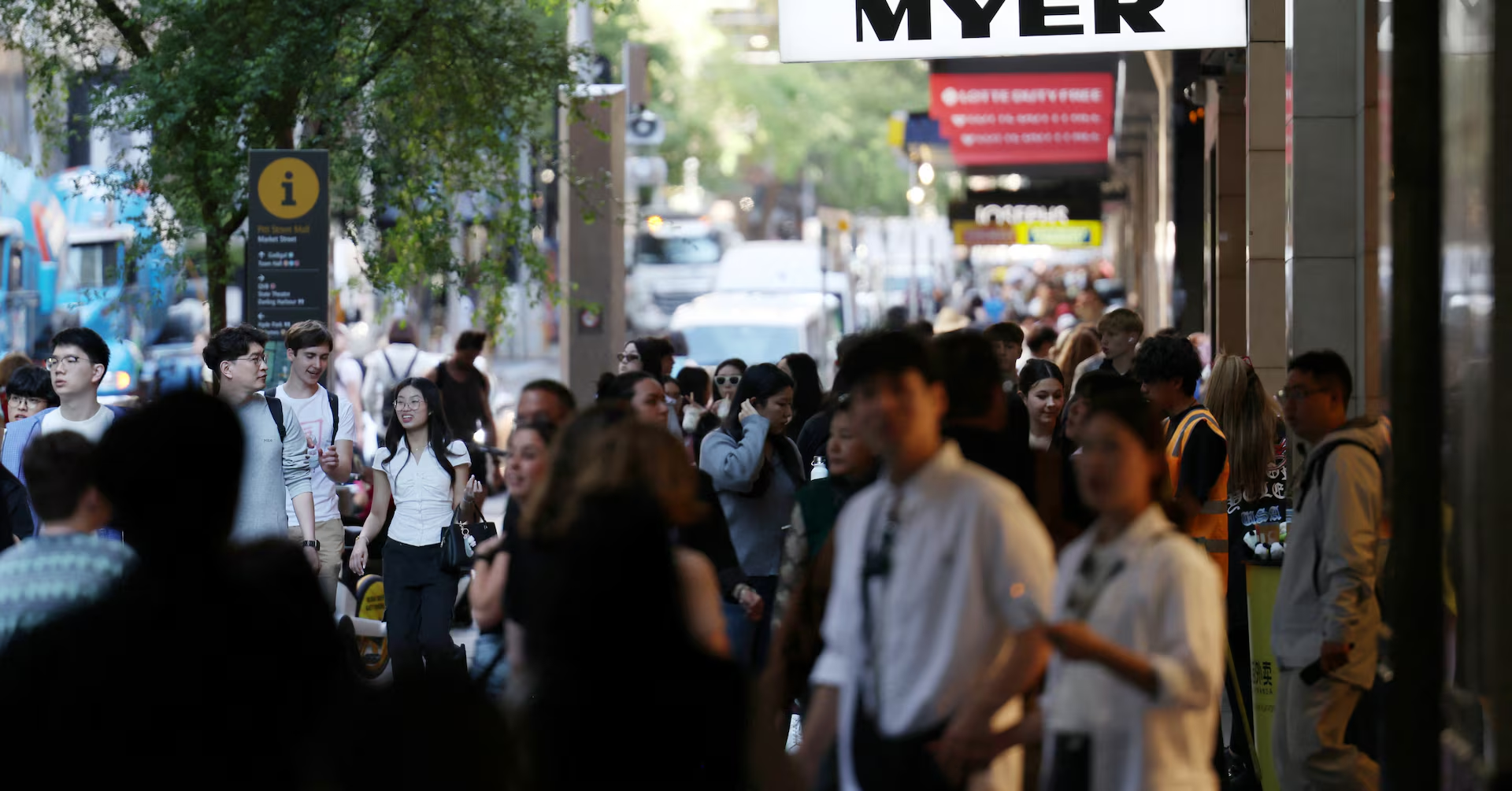
Household spending in Australia rose slightly in September, showing that consumers remain cautious despite modest growth. Data from the Australian Bureau of Statistics (ABS) reveal mixed results across categories, suggesting that inflation and weak wage growth continue to restrain household demand.
What the Data Show
The monthly household spending indicator (MHSI) rose by 0.2% in September, following no change in August.
Annual growth improved slightly to 5.1%, up from 4.9% the month before.
In real, inflation-adjusted terms, spending for the September quarter grew only 0.2%, down from 0.9% in the June quarter.
Goods spending such as food and fuel increased by about 0.4%, while service spending was almost unchanged.
Within services, households spent more on essentials like food and healthcare but less on travel and accommodation.
The ABS also noted a small downward bias in total spending due to unrecorded illegal cigarette and tobacco sales, which may reduce quarterly spending by around 0.2 percentage points.
Why the Picture Is Patchy
While the headline numbers show growth, several signs point to fragile consumer demand.
- Real growth is weak. A 0.2% increase adds less than 0.1 percentage point to GDP growth.
- Spending is shifting. Households are prioritising essential goods over discretionary items.
- Service spending is stagnant. The rebound in dining, travel, and accommodation remains limited.
- Labour conditions are softening. Rising unemployment and slower wage growth are weighing on confidence.
- Policy uncertainty persists. The modest spending pattern complicates decisions for the Reserve Bank of Australia (RBA), which is juggling sticky inflation and sluggish growth.
Why It Matters
Consumer spending makes up a large share of Australia’s GDP. When households cut back, economic growth slows.
Weak real spending means limited contribution to national output. Businesses in retail, travel, and entertainment face lower demand and may delay hiring or investment.
For policymakers, it’s a balancing act. The RBA must control inflation without stalling the economy. These figures suggest rate cuts are unlikely in the short term.
Investors are also watching closely. Slower consumption could reduce corporate earnings and weigh on confidence in Australia’s domestic market.
Broader Context and Drivers
- Inflation pressure: High prices continue to erode purchasing power. Even with higher wages, real income growth is weak.
- Housing wealth: Rising home prices in October could support future spending, though the effect is limited so far.
- Savings and debt: Pandemic-era savings buffers are shrinking, leaving households with less financial cushion.
- Global and local risks: Slower global growth and domestic cost-of-living pressures dampen optimism.
- Data gaps: Some consumption is missing from official records, especially illegal tobacco sales, which slightly distort the picture.
What to Watch Ahead
- Consumer confidence: Further declines could lead to weaker spending.
- Employment and wages: Rising unemployment and slower pay growth remain key risks.
- Inflation trends: Lower inflation could restore real income and boost consumption.
- Interest rates: The RBA’s cash rate, around 3.6%, may stay unchanged until next year. High borrowing costs limit spending recovery.
- Spending categories: Growth in discretionary areas like travel and recreation will signal a stronger recovery.
- External shocks: Global downturns or trade disruptions could further dampen demand.
Summary
Australian household spending rose 0.2% in September, with yearly growth at 5.1%. Yet real consumption growth remains weak. Essentials drove most of the increase, while discretionary and service spending stalled.
Consumers are cautious, held back by inflation, modest wage growth, and job insecurity. For the RBA, the data reinforce a fragile outlook—one that discourages immediate policy easing.
Australia’s economy is stable but subdued. The consumer engine is running, but only at idle speed.