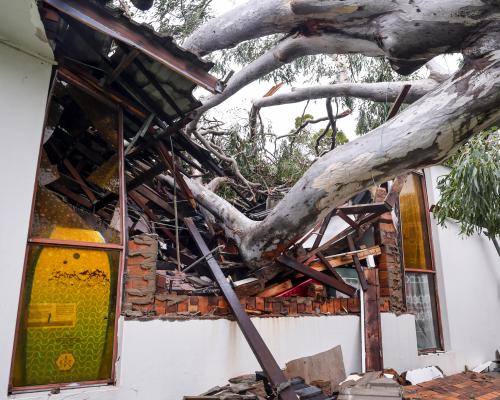
Australia is now experiencing a dramatic rise in economic losses due to extreme weather. The Insurance Council of Australia (ICA) has estimated that the country now incurs about AUD 4.5 billion annually from weather-related events — nearly three times the cost seen in the 1990s.
Major natural disasters in 2025 alone have already produced nearly AUD 2 billion in insurance claims. These included the fallout from Cyclone Alfred, floods in Queensland, and damage in New South Wales. Many smaller, non-declared events have added cumulatively to this mounting cost.
The ICA’s analysis points to several driving forces behind the surge. First, climate change is amplifying the intensity and frequency of extreme weather events. Second, population growth and urban expansion into vulnerable zones increase exposure and damage potential. Third, ageing public infrastructure and inadequate resilience raise repair and recovery costs.
Notably, about half of the weather-related losses are uninsured — meaning many households and businesses bear the burden directly. Low-income communities are especially exposed: for flood-prone regions, as many as 70 percent of homes lack insurance coverage.
Australia’s per-capita weather-related losses now outrank those of France, Germany, and Canada. If current trends continue, the ICA warns that national weather-driven economic costs could escalate to AUD 40 billion annually by 2050.
The ICA has called for government intervention: it urges removal of state insurance levies that artificially inflate premiums and proposes direct support for resilience and adaptation measures. The pressure on public resources may intensify as private coverage declines.
The economic impact of rising natural disasters extends beyond insurance claims. Infrastructure repairs — roads, bridges, drainage systems — will demand substantial public expenditure. Recurrent rebuilding costs may crowd out other capital investment, delaying growth in other sectors.
Productivity is also threatened: frequent disruptions from floods, storms, and heatwaves can hamper transportation, supply chains, and logistics, raising operating costs for firms. Sectors such as agriculture, mining, and energy generation may suffer from volatility in inputs and output.
Risks to property markets are evident. If insurance becomes unaffordable or unavailable in high-risk zones, property valuations may decline. Mortgage lenders may adjust risk assessments and pricing, potentially raising borrowing costs in exposed areas. Homeowners may struggle to insure, reducing credit access.
From a fiscal stance, governments at federal and state levels may face increasing liabilities. Emergency funding, disaster relief, and infrastructure restoration will draw on budgets. The allocation to resilience measures and adaptation may compete with other priorities like health, education, and welfare.
Business sectors must adapt. Insurers may withdraw or limit coverage in high-risk zones, forcing markets to evolve with innovations like parametric insurance, resilience bonds, or risk pooling. Firms in construction, engineering, and climate adaptation may see opportunities to grow.
The ICA urges reform to encourage resilience. Scrapping state-level insurance levies would lower premiums. Incentivizing private investment in flood defences, levees, and climate-proof infrastructure would reduce losses. Policies such as land-use planning, stricter building codes, and climate-adapted urban design will be crucial.
Longer term, the threat underscores how climate change is now a core economic risk, not just an environmental issue. For Australia, which depends heavily on primary sectors vulnerable to extremes, the economic resilience of the nation is increasingly tied to climate resilience.
In conclusion, Australia is facing a turning point: the mounting costs of extreme weather — now at AUD 4.5 billion annually — pose significant economic, fiscal, and social challenges. To manage this rising risk, strong policy, investment in resilience, and insurance innovation will be essential.