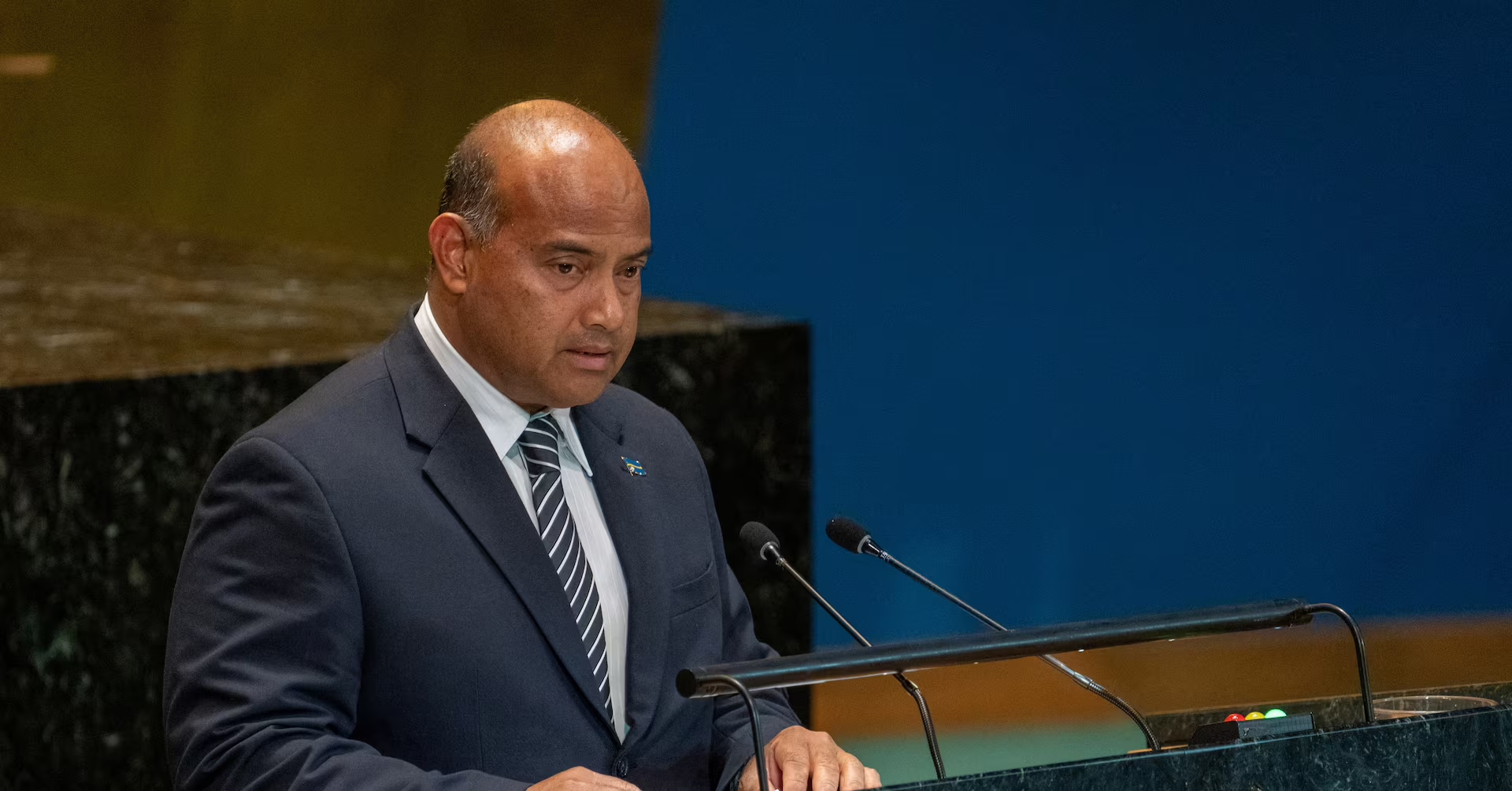
Australia has begun deporting foreign-born former detainees to Nauru under a new and highly controversial agreement that could cost taxpayers more than A$2.5 billion. The transfer marks the start of a major shift in the country’s immigration and detention policies and has drawn criticism from human rights advocates, legal experts, and opposition leaders.
Background: The NZYQ Cohort
This move concerns a group known as the “NZYQ v Minister for Immigration” cohort. The group includes non-citizens living in Australia whose visas were cancelled due to criminal convictions or character grounds. Their home countries either refused to accept them or posed serious risks if they returned.
In November 2023, the High Court of Australia ruled that keeping these individuals in indefinite detention was unlawful when there was “no real prospect” of removal in the foreseeable future. As a result, immigration authorities released dozens of detainees into the community on bridging or temporary visas. The government then faced a serious policy dilemma: how to manage people they could not deport but did not wish to keep in Australia.
To solve this, officials began searching for a third-country option where these individuals could legally reside.
The New Agreement with Nauru
In August 2025, the Australian government signed a Memorandum of Understanding (MoU) with Nauru, a tiny Pacific island nation that has long been part of Australia’s offshore detention network. Under the new deal, Australia agreed to pay an upfront A$408 million once the first deportee arrived in Nauru. This included A$20 million for initial costs and A$388 million for a joint trust fund managed by both governments.
Additionally, Australia will make annual payments of up to A$70 million, depending on the number of transferred individuals, over the agreement’s 30-year lifespan. If all approximately 350 people in the NZYQ cohort are relocated, analysts estimate the total cost could exceed A$2.5 billion.
Unlike previous offshore detention programs, this arrangement allows deportees to live and work freely in Nauru. They receive 30-year visas and the right to integrate with Nauru’s small population of about 12,000 people.
In October 2025, authorities completed the first transfer, sending one former detainee to Nauru. Home Affairs Minister Tony Burke defended the action, saying, “When someone’s visa is cancelled, they should leave the country.”
Why the Deal Is Controversial
1. Secrecy and Lack of Transparency
The government has not released the full MoU or detailed the number of people expected to be deported. Journalists and human rights groups have accused Canberra of operating the agreement under a veil of secrecy. The Australian Human Rights Commissioner expressed “serious concern” about the lack of transparency, warning that secrecy could undermine accountability and oversight.
2. High Cost and Ethical Concerns
Critics argue that Australia is outsourcing its moral responsibility by paying Nauru to host unwanted non-citizens. Some analysts describe the deal as “a continuation of Australia’s cynical history of exploiting Nauru’s economic vulnerability.” The cost also alarms taxpayers: if the total reaches A$2.5 billion, each transferred person could effectively cost the public over A$7 million.
Supporters within the government claim that the agreement protects community safety and enforces visa laws without breaching the High Court’s ruling. However, opponents say it sets a dangerous precedent for wealthy nations paying smaller countries to take their rejected residents.
3. Human Rights Responsibilities
Australia’s international human rights obligations remain in force, even when it relocates people elsewhere. The UN Human Rights Committee has repeatedly ruled that transferring individuals to third countries does not absolve Australia of responsibility for their welfare.
Legal experts warn that if deportees in Nauru experience poor healthcare, unsafe living conditions, or secondary deportation to danger zones, Australia could still face legal consequences. Several lawyers have already filed court challenges, arguing that the transfers breach international treaties.
4. Political and Domestic Fallout
The move has also intensified domestic political debate. Opposition parties have accused the Labor government of hiding key details, while conservative commentators praise it for taking a “firm stance” on border control.
Human rights advocates argue the plan targets vulnerable people unfairly, as many deportees have already served prison sentences in Australia. They claim the deal violates basic principles of rehabilitation and reintegration.
Meanwhile, community groups express safety concerns, noting that some individuals in the cohort have criminal records. The government insists that each case undergoes individual risk assessment before transfer.
What Happens Next
The Home Affairs Department has not confirmed how many people will follow the first deportee or when additional transfers might occur. Ongoing court cases could delay the process. Parliament is expected to demand further disclosure of the deal’s terms, while watchdog organisations continue to monitor human rights conditions on Nauru.
Internationally, observers see this agreement as a test case for future migration policies. If successful, it may encourage other countries to negotiate similar third-country deals. However, if legal or humanitarian issues arise, the plan could damage Australia’s global reputation.
Broader Implications
For Australia
The Nauru arrangement helps Canberra resolve a legal impasse left by the High Court decision. It shifts the burden of responsibility from Australia to another nation, allowing the government to claim it upholds both public safety and international law. Yet the high cost and moral questions leave many wondering whether it represents good governance or political expediency.
For Nauru
For Nauru, the deal provides huge financial gains. The island’s economy relies heavily on Australian aid, and the new funding could support infrastructure, healthcare, and education. Still, some Nauruans fear the social consequences of welcoming hundreds of outsiders into a small and fragile society. They worry about limited resources, cultural clashes, and long-term sustainability.
For International Law and Human Rights
This case pushes the boundaries of third-country resettlement and tests whether a country can legally outsource its migration obligations. If conditions on Nauru deteriorate, Australia may face renewed scrutiny from the United Nations and human rights courts.
For the Migrants
For the deportees themselves, life on Nauru represents both freedom and isolation. They escape indefinite detention but must start anew in a remote island nation far from their families. Many still hope to return home someday, yet that path remains uncertain.
Key Facts and Figures
- Cohort size: About 350–358 people affected by the 2023 High Court decision.
- Upfront cost: A$408 million paid when the first person was sent to Nauru.
- Annual payments: Up to A$70 million depending on the number of transfers.
- Total projected cost: As high as A$2.5 billion over 30 years.
- First transfer: Completed in late October 2025.
Final Thoughts
Australia’s decision to deport foreign-born former detainees to Nauru reflects both political pragmatism and moral controversy. The government argues that it enforces immigration law and protects the community. Critics counter that it abandons vulnerable people and exports human rights problems to a poorer neighbour.
The coming months will reveal whether this unprecedented policy achieves stability or sparks further division. For now, the world watches closely as Australia redefines the limits of immigration control — and as Nauru once again becomes the stage for a debate about justice, sovereignty, and humanity.