Nearly $40 billion worth of mergers and acquisitions (M&A) have collapsed in Australia this year, marking the highest failure rate since 2010, as regulatory hurdles and valuation disputes create a “maze of uncertainty” for dealmakers.
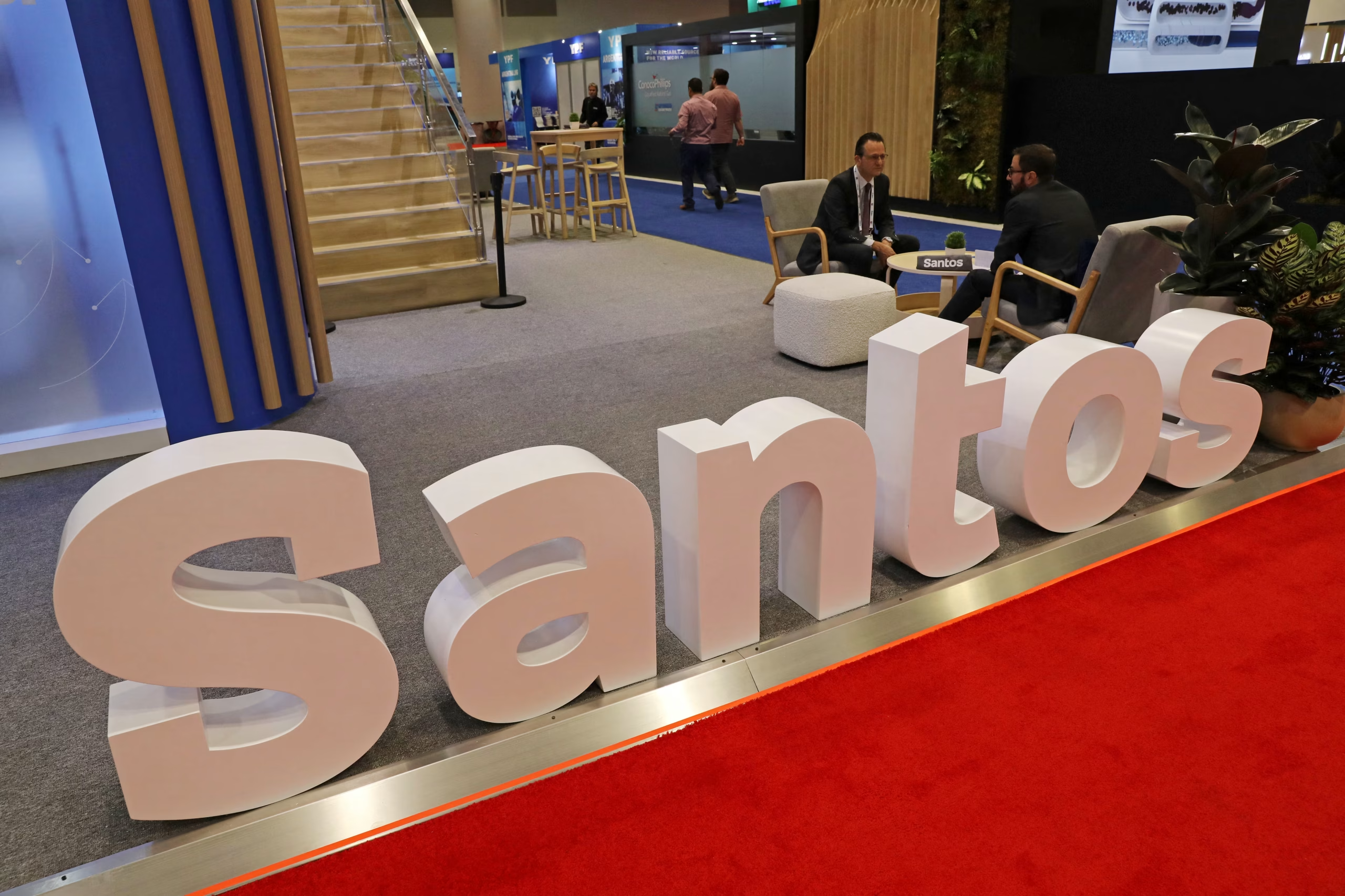
The most high-profile casualty came with Abu Dhabi’s ADNOC-led consortium abandoning its $18.7 billion bid for Santos, Australia’s second-largest gas producer. Disagreements over potential capital gains tax liabilities and likely challenges from the Foreign Investment Review Board (FIRB) ultimately derailed what would have been the largest all-cash takeover in Australian history.
Regulatory Pressure Mounts
Advisers say Australia’s increasingly stringent oversight regime, led by the Australian Competition and Consumer Commission (ACCC) and FIRB, is reshaping deal dynamics. New rules effective January 1, 2025, require mandatory regulatory pre-approval for most acquisitions, adding significant complexity and delays.
“Regulatory overreach, particularly from the ACCC, has created a maze of uncertainty,” said Garren Cronin, managing director at Cadence Advisory. He noted that longer approval timelines and broader scrutiny were eroding deal momentum, a critical factor in large-scale M&A.
Previously, companies could voluntarily seek ACCC clearance, limiting the risk of intervention. Under the new framework, all deals must be reviewed upfront unless granted a waiver for low-risk transactions.
Market Impact
Despite record-high equity markets and abundant liquidity, dealmakers say heightened regulatory scrutiny, combined with widening valuation gaps, is weighing on corporate appetite. “Funding is readily available, but it’s got to make sense,” said Lance Sacks, a corporate partner at Baker McKenzie. “Buyers and boards are a lot more cautious before they pull the trigger.”
The collapse of ADNOC’s Santos bid follows Peabody Energy’s withdrawal from a $3.8 billion bid for Anglo’s Queensland coal assets, and Brookfield and Bain’s exit from $2.5 billion bids for Insignia Financial. Insignia later struck a $2.2 billion deal with U.S.-based CC Capital in July, highlighting that appetite remains strong, but only for transactions seen as executable.
Pre-Emptive Hurdles
Legal advisers suggest that dealmakers are increasingly front-loading negotiations, attempting to resolve complex issues before formal bids are signed. “That has resulted in some harder issues being confronted and debated earlier, creating more stress and tension, which in turn impacts execution,” said David Eliakim, M&A practice leader at King & Wood Mallesons.
The failed deals raise broader concerns about Australia’s competitiveness as a destination for global capital. While regulatory agencies argue the changes are designed to protect competition and the public interest, corporates warn that excessive caution could stifle investment.
Outlook
With $40 billion in failed transactions already in 2025, analysts say the outlook for large-scale Australian M&A is increasingly clouded. Unless confidence improves in the regulatory process, corporate boards may be hesitant to pursue transformational deals despite favourable financing conditions.
As one adviser noted: “Time kills deals. In the current environment, time is what Australian regulators are demanding most.”