Climate Disasters Create Escalating Financial Strain
Australia is now facing a mounting economic toll from extreme weather events, with annual costs averaging A$4.5 billion, nearly three times higher than in the 1990s, according to the latest Insurance Council of Australia (ICA) report. This alarming trend reflects the growing intersection of climate change, population growth in high-risk zones, and aging infrastructure. Together, these factors are driving national economic losses to unprecedented levels.
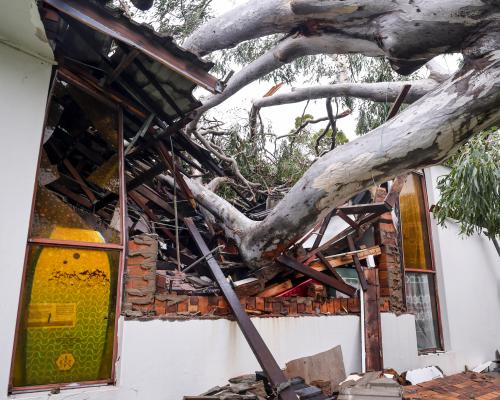
The ICA report highlights that 2025 has already been a costly year. Major disasters such as Cyclone Alfred and widespread flooding in Queensland and New South Wales have triggered almost A$2 billion in insurance claims. Smaller but frequent regional disasters have compounded the problem, adding billions more in unreported losses. Alarmingly, the ICA estimates that half of all weather-related losses remain uninsured, hitting low-income households in flood-prone regions the hardest.
Australia Leads Developed Nations in Weather-Related Losses
When compared globally, Australia’s per capita economic losses from weather disasters outstrip those of France, Germany, and Canada. The ICA’s projections suggest that, if left unaddressed, annual costs could soar to A$40 billion by 2050.
Such figures have raised serious concerns among policymakers, insurers, economists, and community advocates, who now recognize climate resilience as a central pillar of Australia’s economic stability.
The mounting financial exposure underscores how deeply intertwined climate risk has become with fiscal sustainability and investment confidence. Each major event disrupts businesses, erodes infrastructure, and strains public resources, leaving long-term scars on economic performance.
Urgent Calls for Policy Action
To stem these rising losses, the Insurance Council of Australia has urged stronger and more coordinated government action. Key recommendations include:
- Abolishing state insurance levies that artificially inflate premiums.
- Reforming disaster funding models to prioritize prevention over reaction.
- Investing in resilient infrastructure, including levees, drainage systems, and flood defenses.
- Encouraging retrofitting incentives for property owners in vulnerable zones.
The ICA also stresses the importance of modern land-use planning to restrict construction in high-risk areas. Without such steps, experts warn that economic losses will continue escalating, creating financial strain not only for households but also for the national budget.
Public Finances Under Pressure
This growing climate cost comes as Australia grapples with other macroeconomic challenges—sluggish productivity, persistent inflation, and the capital demands of transitioning to a low-carbon economy. The additional fiscal burden from repeated disasters threatens to limit the government’s ability to invest in other critical sectors like health, education, and renewable energy.
When disasters strike, governments often step in with emergency grants, relief packages, and reconstruction funding. While necessary, these expenditures divert resources from long-term productivity-enhancing investments. Economists warn that if weather-related spending continues to rise, budget flexibility could shrink, leaving less room to address emerging challenges.
The Insurance Market Under Strain
The insurance sector finds itself at the heart of this crisis. As claims surge, insurers have become increasingly hesitant to underwrite properties in high-risk zones, particularly in floodplains and bushfire-prone regions. Premiums are climbing steeply, and in some cases, coverage is being withdrawn altogether.
This trend creates a dangerous feedback loop: as fewer properties are insured, more households remain financially exposed. When disasters occur, uninsured losses rise, prompting even higher premiums and widening inequality.
The ICA has warned that without intervention, parts of Australia could become effectively uninsurable by 2035.
Exploring Innovative Risk-Sharing Solutions
In response, both state and federal governments are experimenting with new models to spread financial risk. These include:
- Catastrophe bonds to attract global investors into funding recovery mechanisms.
- Parametric insurance, where payouts are triggered automatically when certain thresholds (e.g., rainfall or wind speed) are reached.
- Public-private risk pools, designed to share losses between insurers and governments.
However, implementation has been uneven. Some states are moving faster than others, creating inconsistencies in coverage and risk pricing. Experts argue that national coordination is vital for these reforms to deliver measurable results.
Who Should Pay for Climate Adaptation?
A central debate now surrounds the allocation of adaptation costs. The ICA argues that climate resilience cannot rely solely on households or private insurers. Instead, it calls for greater public investment in durable, climate-ready infrastructure—roads, levees, bridges, and early warning systems.
Without state intervention, the private sector may struggle to scale adaptation efforts quickly enough to match the accelerating risk.
Some state governments have already introduced modest measures such as flood mapping updates, revised zoning laws, and grants for homeowners to retrofit older properties. Yet, across Australia, large data gaps persist, making it difficult to plan effectively. Many local councils still lack reliable climate risk models to inform zoning and insurance decisions.
Economic Channels of Impact
Extreme weather affects the economy through multiple interconnected channels:
- Direct physical damage to homes, factories, and transport networks leads to reconstruction costs and productivity loss.
- Agricultural disruptions reduce crop yields and livestock productivity, fueling food inflation and export volatility.
- Insurance premium hikes reduce disposable income and strain business budgets.
- Public debt pressures intensify as governments fund recovery and adaptation measures.
- Investment uncertainty discourages capital inflows into vulnerable regions, slowing regional development.
If annual damages climb toward A$40 billion by 2050, analysts estimate that Australia’s GDP growth could slow by up to 0.4 percentage points per year, reflecting both lost output and reduced investment confidence.
The Case for a National Climate Resilience Strategy
The ICA has renewed its call for national leadership on climate adaptation. It proposes a cross-government framework that integrates:
- Comprehensive climate data infrastructure, allowing better risk modeling.
- Risk-based insurance pricing tied to verified resilience standards.
- Coordinated planning reforms to guide construction and infrastructure investment.
Economists and industry leaders agree that only a cohesive national approach can prevent escalating fiscal and insurance crises. Fragmented efforts, they argue, risk creating duplication, inefficiency, and uneven protection across regions.
A Core Economic Challenge, Not Just an Environmental One
The rising cost of extreme weather has evolved from an environmental issue into a fundamental economic challenge. It now shapes investment decisions, budget allocations, and household financial stability. Without bold, coordinated action, climate costs could undermine Australia’s competitiveness and deepen inequality.
For Australia, the path forward is clear but demanding: combine stronger governance, resilient infrastructure investment, and equitable risk-sharing to safeguard both prosperity and social stability in a warming world.