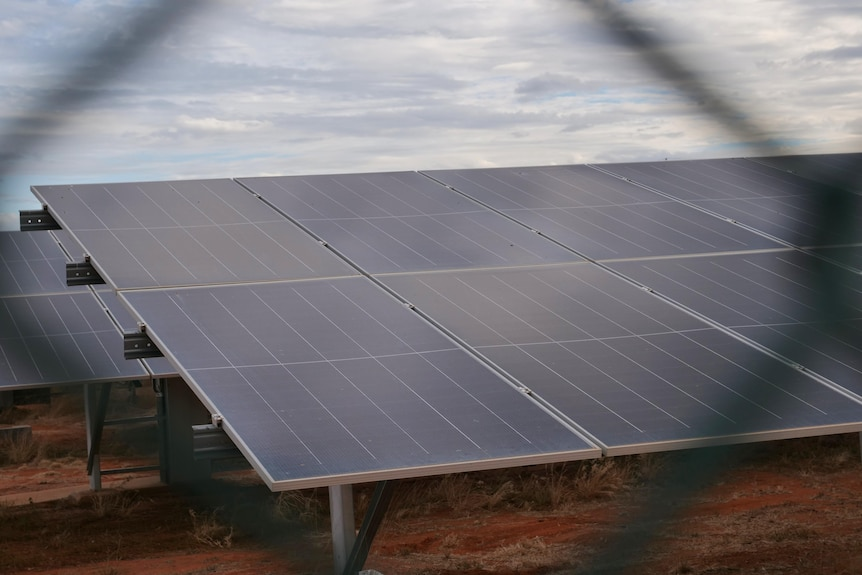
Windorah solar farm is expected to cut the remote Queensland town’s diesel use by more than half, giving the outback community a stronger and cleaner local power system.
The 850-kilowatt solar project, backed by a one-megawatt battery storage system, has been built to support Windorah’s isolated electricity grid. The town, home to about 100 people, sits roughly 1,200 kilometers west of Brisbane and depends on diesel generation because it is not connected to the main power network.
Ergon Energy senior engineer Kein Jones said the new system could power the entire community for days, and potentially weeks, when electricity demand is low and sunny winter conditions allow strong solar output.
The project is also expected to save about 150,000 liters of diesel a year. That matters in a region where fuel must be trucked long distances and roads can be cut by floods for weeks at a time.
Windorah Solar Farm Replaces Failed Earlier Project
The Windorah solar farm marks a second attempt to make better use of the town’s intense outback sun.
In 2009, Windorah became known for an experimental solar array built from large metal dishes that resembled sunflowers. The structures used mirrors to concentrate sunlight onto small solar panels and produce electricity.
But the system became expensive to maintain and less competitive as conventional flat-plate solar panels became cheaper through mass production. Over time, the old solar dishes became more of a local landmark than a practical energy solution.
Ergon is now replacing that failed system with nearly 2,000 fixed solar panels installed across the red-dirt site. Jones said the new flat-plate solar farm should generate about five times as much electricity as the old array.
That improvement reflects how much solar technology has changed over the past two decades. What was once experimental and costly has become cheaper, simpler and more widely deployed.
Battery Storage Adds Resilience for Flood-Prone Town
The battery system is central to the project because it allows Windorah to store electricity generated during the day and use it when solar output falls.
For a town that can become isolated during major floods, that storage could improve energy security. Diesel will still remain part of the local system, but Ergon expects the solar and battery setup to reduce how often generators need to run.
Jones said diesel stored for the town’s generators should last twice as long because fuel use will be cut by about half. That could lower the risk of supply shortages when trucks cannot reach the community.
Resilience is a major issue for outback towns. When floodwaters cut roads, communities may have limited access to fuel, food and other essential supplies. Reducing diesel dependence can therefore provide practical benefits beyond emissions cuts.
Publican Marilyn Simpson, a lifelong Windorah resident, said the town already depends on local generation and values a consistent power supply. She said the new system could make the community more self-reliant, especially because it is not connected to the main electricity grid.
Fuel Savings Will Not Cut Local Power Bills
Although the project will reduce diesel consumption, locals are not expected to see direct savings on their power bills.
Simpson said some residents had assumed lower diesel use would translate into lower electricity costs. Instead, she described the project as a business saving for Ergon rather than a direct household benefit.
The reason lies in Queensland’s regional electricity pricing system. Outside the south-east corner of the state, the Queensland Competition Authority sets a uniform electricity price offer. That rate is generally linked to broader market pricing rather than the specific cost of power generation in each remote community.
The state government subsidizes rural electricity costs so regional customers pay rates similar to urban customers. As a result, local savings from renewable energy are more likely to reduce the public subsidy paid to Ergon than lower individual household bills.
That distinction may shape how residents view the project. The community gains greater fuel security and a cleaner local power system, but not necessarily cheaper electricity.
Remote Queensland Towns Watch the Rollout
The Windorah project forms part of a wider Ergon program to reduce diesel reliance in remote Queensland communities.
Barcoo Shire Mayor Sally O’Neil said other towns in the region, including Jundah, could benefit from similar solar and battery systems. She said several Queensland towns still depend on diesel generators and are waiting for renewable upgrades.
Boulia and Doomadgee are next in line for solar farms supported by batteries under Ergon’s decarbonization program.
The approach is important because many remote towns face the same basic challenge as Windorah. Diesel generation is reliable, but it is expensive, fuel-intensive and vulnerable to supply disruption when roads close.
Solar and battery systems can reduce those risks, especially in communities with strong sun exposure and relatively small power loads. However, diesel backup is still likely to remain necessary to cover poor weather, higher demand and extended low-solar periods.
Outback Energy Shift Moves From Trial to Scale
The new Windorah system shows how remote power projects are moving from experimental technology to more proven renewable infrastructure.
The town’s earlier solar dishes reflected a time when alternative power systems were still being tested in difficult conditions. The new project uses standard solar panels and battery storage, technologies now common across Australia and other energy markets.
That change could make it easier for Ergon and the state government to repeat the model in other communities. Standardized equipment may reduce maintenance problems and make projects easier to operate over the long term.
For Windorah, the clearest benefit will be lower diesel dependence and stronger protection during major floods. For the wider region, the project could become a test case for shifting small isolated grids toward cleaner, more resilient power.
The next issue to watch is how the system performs through seasonal demand changes and flood periods. If the Windorah solar farm delivers the expected fuel savings, it could strengthen the case for similar projects across Queensland’s diesel-reliant outback towns.
Read Also: Queensland Recycling Target Rises as Waste Mounts