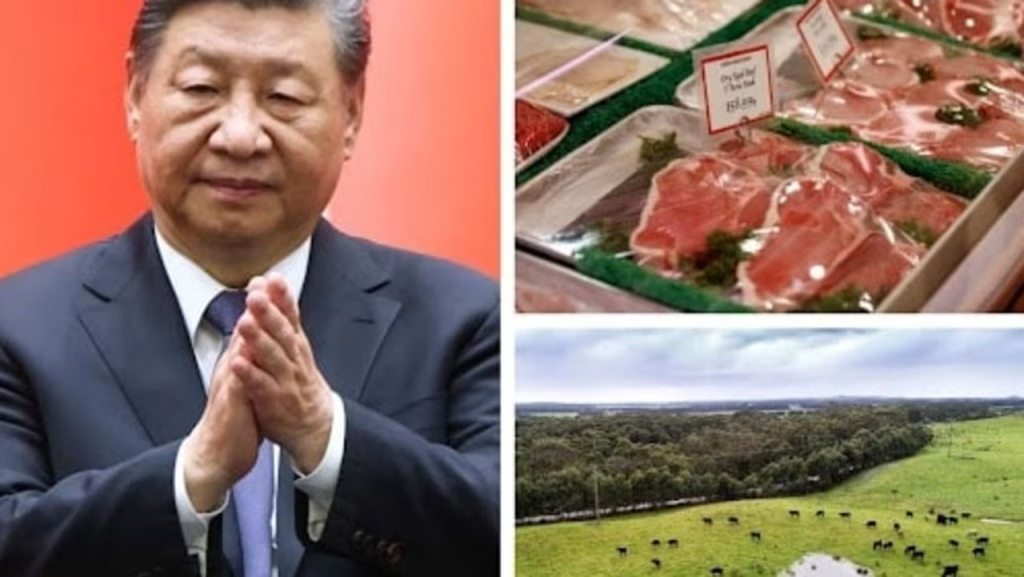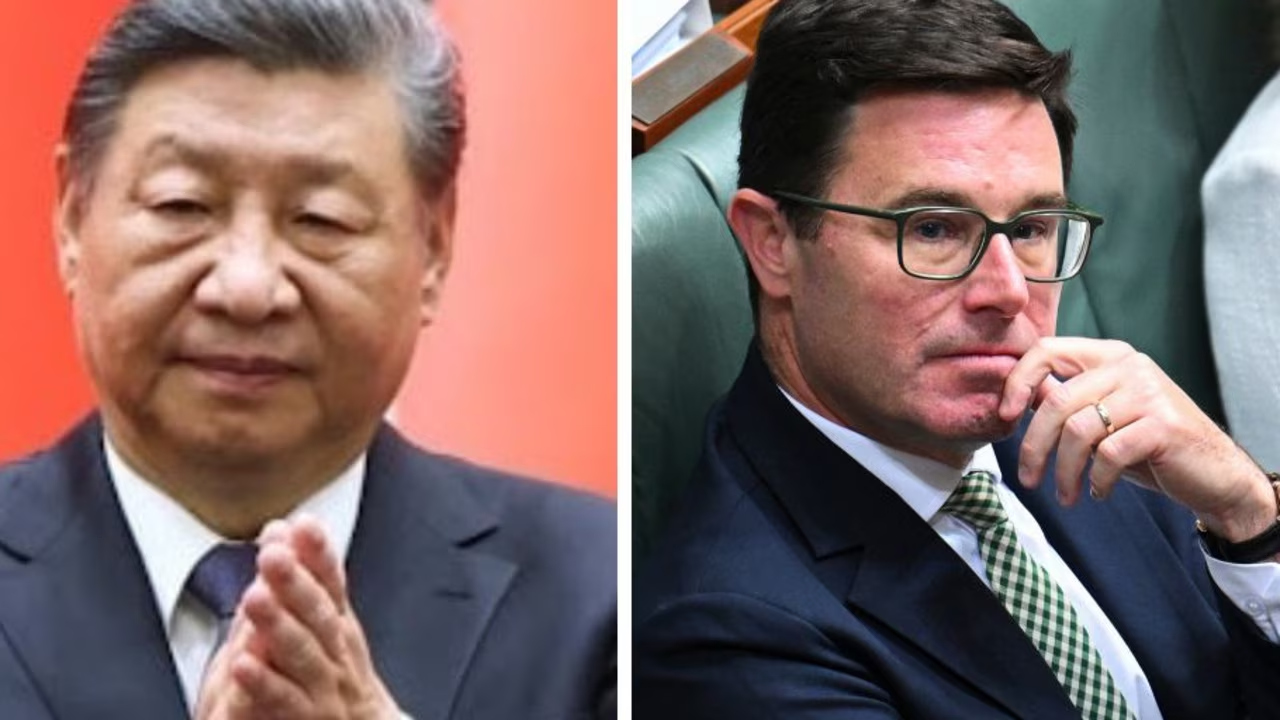
China beef tariffs have sparked sharp backlash across Australia after Beijing confirmed new safeguard measures on beef imports. From January 1, exporters will face a 55 per cent tariff on beef shipped above China’s quota limits. Nationals leader David Littleproud described the decision as a “kick in the guts” for Australian producers. Industry groups warn the tariffs could make exports to China commercially unviable for many cattle farmers.
China’s Ministry of Commerce said the move aims to curb rising import volumes that it claims have seriously harmed domestic producers. For 2026, the quota threshold stands at 2.7 million metric tonnes. The safeguard measures will remain in place for at least three years, with quota levels rising annually. Although the policy applies to all exporters, Australian producers expect significant economic damage.
Why China beef tariffs threaten Australian exports
As of 2024, Australia supplied about 8 per cent of China’s total beef imports. Despite this share, industry bodies estimate the new tariffs could cut Australian exports by roughly one-third. The Australian Meat Industry Council warned the change could cost the sector more than $1bn in lost trade.
Mr Littleproud argued the decision lacks justification. He said Australia does not harm China’s domestic beef sector and pointed instead to large volumes entering the market from South America. In his view, the policy unfairly penalises trusted suppliers while rewarding others that expanded exports rapidly.
Political backlash over China beef tariffs
Speaking publicly, Mr Littleproud said the tariffs would strip billions from the industry’s bottom line. He urged Prime Minister Anthony Albanese and Trade Minister Don Farrell to push for an exemption. Without action, he warned, exports to China would become unviable under current conditions.
Opposition Leader Sussan Ley echoed those concerns. She called the tariffs worrying and urged the government to act decisively. She said Australia’s trade relationship with China remains vital and deserves stronger protection for local producers.
Read Also
Private airstrip estate draws high-end buyers
Melbourne home prices show fresh momentum
Government response and diplomatic engagement
Prime Minister Albanese confirmed officials remain in contact with Chinese counterparts. He stressed China did not single out Australia and described the policy as a broad safeguard decision. He said the government continues to advocate for Australian industry.
Agriculture Minister Julie Collins said the government has already raised concerns at senior ministerial levels. She explained that China set an average import level for all exporters, with tariffs applying only above that level. While acknowledging serious concerns, she reiterated that the policy targets all overseas suppliers.
Industry reaction and lobbying efforts
AMIC described the announcement as extremely disappointing. The group warned the tariffs could disrupt trade flows throughout the safeguard period. Chief executive Tim Ryan said the decision risks damaging long-standing relationships built under the China–Australia Free Trade Agreement.
AMIC and Meat & Livestock Australia participated fully in China’s year-long investigation. They provided submissions, attended hearings, and hosted Chinese investigators in Australia. Throughout the process, they stressed that Australian beef supports Chinese consumer demand rather than harming local production.
What China beef tariffs mean for the industry
If the tariffs remain, Australian exporters may redirect supply to other markets. That shift could alter global beef trade patterns over the coming years. For producers, the uncertainty complicates planning and investment decisions.
Despite the setback, industry leaders say they will continue working with Chinese counterparts. AMIC plans to lobby both governments and push for changes to the measures. While the outlook remains challenging, the sector hopes diplomatic engagement may still limit the long-term damage.