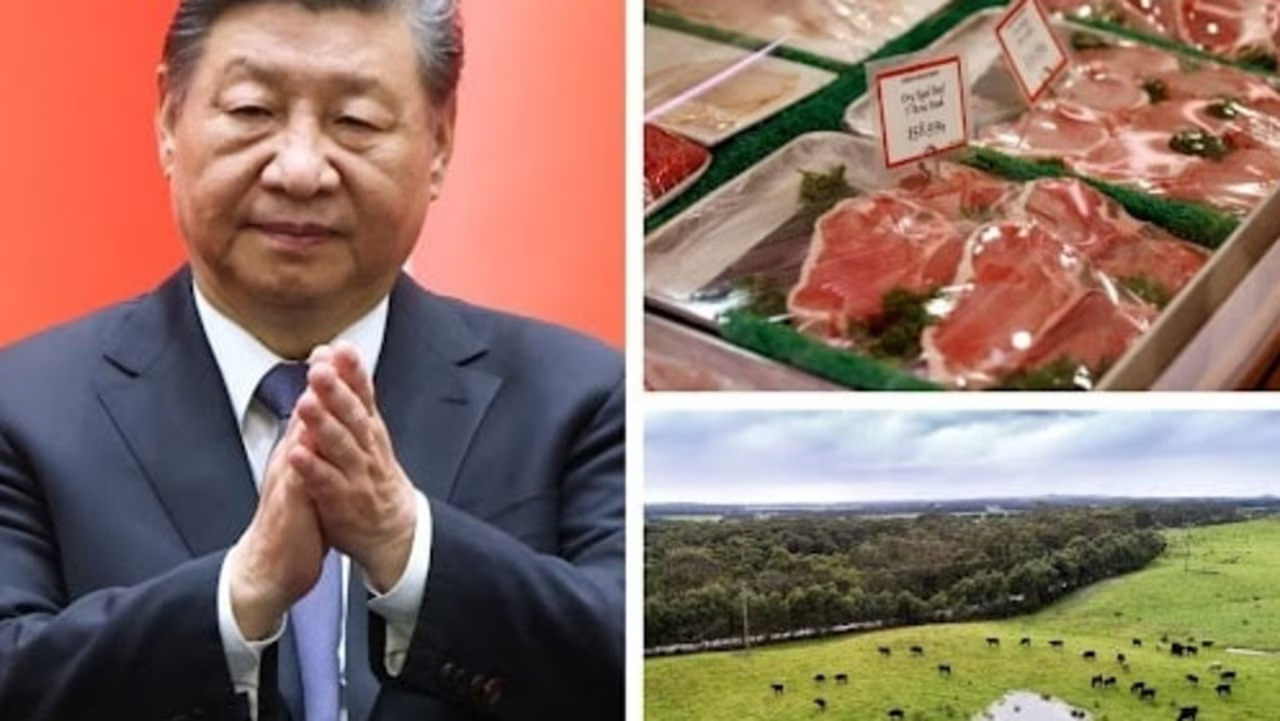
China beef import tariffs have triggered a sharp response from Australia’s meat industry after Beijing confirmed a new safeguard measure imposing steep duties on overseas beef imports. From January 1, 2026, beef shipments exceeding China’s annual quota will face a 55 per cent tariff, a move Australian industry leaders warn could cut exports by around one-third. The policy applies broadly to all exporters and is designed to protect China’s domestic beef sector from rising import volumes.
Australian industry groups say the decision risks disrupting long-established trade relationships and undermining confidence built under the China–Australia Free Trade Agreement. With Australian beef accounting for about 8 per cent of China’s total imports as of 2024, the impact could exceed $A1bn in lost trade value. Industry leaders have confirmed plans to lobby both governments in response.
Why China beef import tariffs were introduced
Chinese authorities say the safeguard measures are necessary to address growing import volumes that have “seriously” harmed domestic producers. Under the new framework, the quota threshold for 2026 is set at 2.7 million metric tonnes. Any imports above that level will attract the 55 per cent tariff.
The safeguard regime will apply for at least three years, with quota levels increasing annually. While the policy does not single out any one country, exporters with significant market share, including Australia, are expected to feel the effects most acutely. Chinese officials argue the approach is consistent with international trade rules and is aimed at stabilising the domestic industry.
Australian industry warns of major export losses
The Australian Meat Industry Council said it was “extremely disappointed” by the announcement, warning the tariffs could significantly reduce exports to China. The peak body estimates Australian beef shipments could fall by about one-third compared with the past year if the measures remain in place.
AMIC chief executive Tim Ryan said the decision unfairly penalises Australia despite its role as a reliable supplier. He argued the policy appears to favour countries that have rapidly increased export volumes to China in recent years. According to Mr Ryan, Australian beef imports have not caused damage to China’s domestic industry and instead help meet consumer demand for safe, high-quality products.
Read Also
Private airstrip estate draws high-end buyers
Melbourne home prices show fresh momentum
Industry cooperation during China’s investigation
Alongside Meat & Livestock Australia, AMIC participated fully in the Chinese government’s year-long investigation that preceded the tariff decision. The organisations provided formal submissions, attended in-person hearings in China, and hosted Chinese investigators in Australia.
During the process, industry representatives repeatedly emphasised Australia’s position as a trusted supplier and its contribution to China’s food security. Mr Ryan said Australian beef plays an important role in meeting consumer demand and maintaining stable supply chains. Despite these efforts, the final outcome has left industry leaders frustrated.
Government response: Australia not singled out
Prime Minister Anthony Albanese confirmed Australian officials are in contact with Chinese counterparts following the announcement. He stressed the policy was not aimed specifically at Australia but applied broadly to all exporters.
“This is not Australia being singled out,” Mr Albanese told reporters, describing the move as a general position adopted by China. He said the government would continue advocating for Australian industry and expressed confidence in the global competitiveness of Australian beef. The Prime Minister added that the sector remains strong as Australia enters 2026.
Opposition voices raise concerns
Opposition Leader Sussan Ley described the new tariffs as worrying and urged stronger engagement with Beijing. She said Australia’s trade relationship with China is important and called on the Prime Minister to leverage his relationship with Chinese leadership to protect local producers.
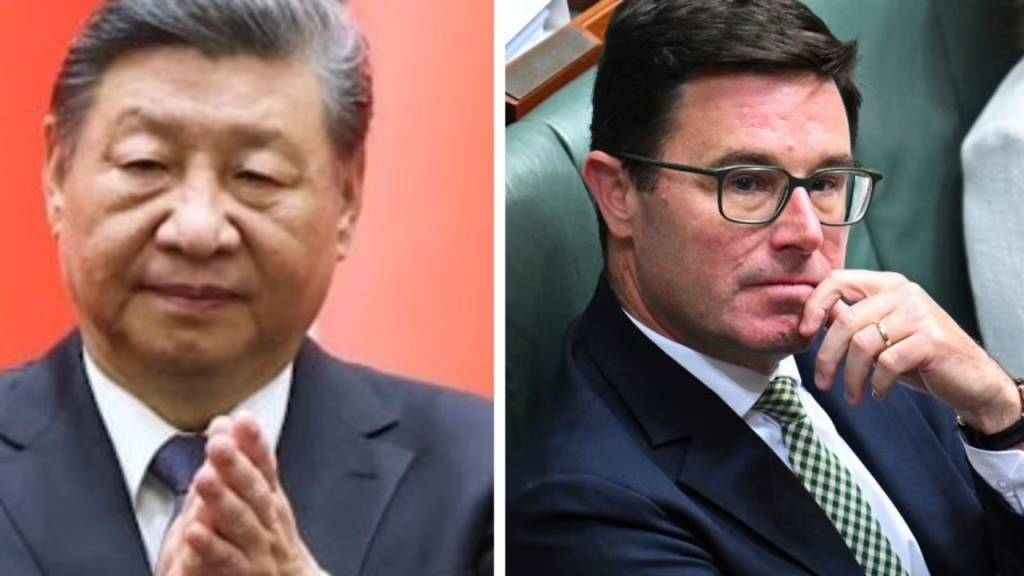
Nationals leader David Littleproud also criticised the decision, calling it devastating for the beef industry. He argued the government must make urgent representations to Chinese authorities and warned the tariffs could have lasting consequences if left unchallenged.
What China beef import tariffs mean for trade flows
If maintained, the safeguard measures could reshape global beef trade flows over the next three years. Australian exporters may seek alternative markets, while Chinese buyers could turn to other suppliers within quota limits.
For Australian producers, the uncertainty complicates planning and investment decisions. At the same time, industry leaders say they will continue working constructively with Chinese counterparts. Despite the immediate setback, AMIC has indicated it remains committed to long-term cooperation and improving industry outcomes on both sides.