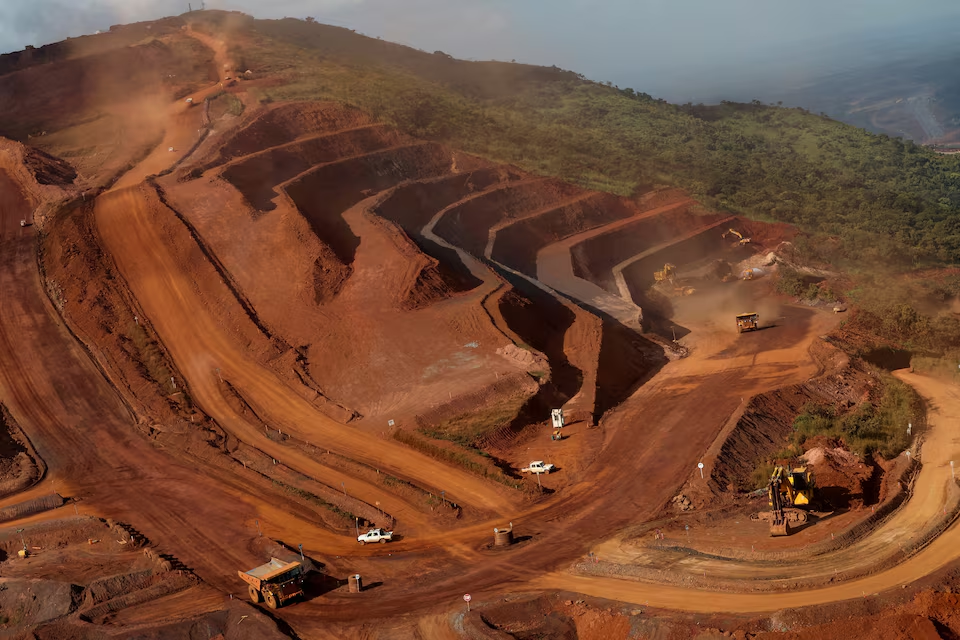
China’s state-owned steel giant Baowu Resources has seized majority control of a key operator in Guinea’s massive Simandou iron ore deposit. The company raised its stake in the Winning Consortium Simandou to fifty-one percent. This move grants Baowu command over the operator of Simandou’s Blocks 1 and 2. Consequently, the consortium is now named Baowu Winning Consortium Simandou (BWCS). This development significantly boosts Beijing’s influence over a critical global resource. It also reshapes supply dynamics for steelmaking materials worldwide.
Guinean authorities approved the transaction in mid-2024. The parties formally completed it this week. BWCS now holds an eighty-five percent share in the local operating company. This consolidation follows the historic first shipments of Simandou iron ore last November. Those shipments ended decades of stalled progress. Therefore, the move underscores China’s long-term commitment to securing premium resources. It reduces reliance on traditional suppliers like Australia and Brazil. Additionally, it deepens China’s substantial footprint in Guinea’s mining sector.
Baowu Secures Strategic Resource Leverage
Baowu’s new control is a strategic win for Chinese resource security. The Simandou deposit contains very high-grade ore. This quality is crucial for efficient, lower-emission steel production. Controlling a primary operator lets China influence production and pricing directly. It also integrates the supply chain from mine to mill. Baowu confirmed its commitment to this major project. The company will focus on competitiveness and local content.
The southern blocks (3 and 4) of Simandou involve a separate joint venture called Simfer. This group includes Rio Tinto and Chinese state-owned Chinalco. Importantly, both consortia share vital infrastructure. They co-built a 650-kilometer railway and a new Atlantic port. By leading the northern bloc, Baowu gains a powerful voice in managing this logistics network. This infrastructure will eventually export up to 120 million metric tons annually. Thus, Guinea will become a top-tier global supplier.
The Impact on Guinea and Global Trade
For Guinea, Baowu’s deeper involvement brings both opportunity and risk. The nation is already the world’s top bauxite exporter. Chinese firms control over seventy percent of that output. The Simandou project promises major royalty and tax revenues. However, increased Chinese ownership concentrates foreign influence. The government must now balance this partnership with national interests. It must also ensure local benefits materialize.
Globally, this shift alters the iron ore landscape. Major producers like Rio Tinto and Vale face a new, state-directed competitor. In time, increased Simandou production could pressure global prices. This would benefit steelmakers but challenge incumbent miners. Conversely, China gains a lever to diversify its supply. It reduces reliance on vulnerable maritime trade routes. This strategic autonomy is central to Beijing’s policy.
Focus on Project Execution and ESG
Baowu’s statement emphasized environmental and social governance standards. It also promised local content promotion. Observers will scrutinize these commitments closely. The Simandou project has a controversial past involving environmental disputes. As the new controller, Baowu must manage these complex risks. Its performance will set a precedent for Chinese mining in Africa.
The project’s massive scale poses ongoing challenges. It includes mines, a long railway, and port facilities. Coordination with the Simfer partnership remains essential for shared infrastructure. Any delays could affect global supply forecasts. Therefore, Baowu’s managerial skill faces a major test. The global industry will watch its progress intently.
A Long-Term Vision for Supply Security
This investment is a cornerstone of China’s industrial strategy. It moves beyond financial stakes to operational control. Securing Simandou iron ore guarantees resources for China’s vast manufacturing sector. For Baowu, owning part of a top-tier mine integrates its supply chain. It also hedges against market price swings. This vertical integration offers a key competitive advantage.
The timing of this stake increase is strategic. It occurred right after the first successful shipments. This sequence suggests a careful plan. Now, Baowu can focus on accelerating production. As global demand for steel continues, Simandou’s output will grow in importance. Baowu’s controlling position ensures China a privileged role in this vital commodity flow for the long term.