A remark that set off political shockwaves
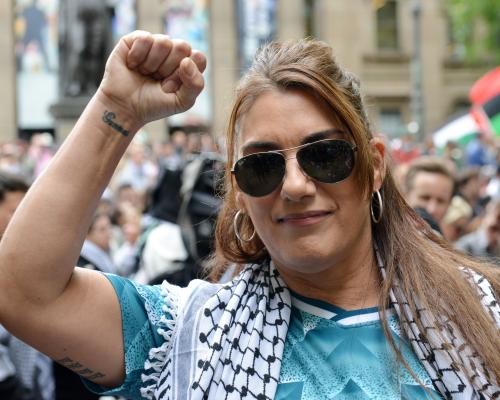
The sparks flew when Senator Lidia Thorpe, speaking at a pro-Palestinian rally in Melbourne, declared:
“If I have to burn down Parliament House to make a point … I am not there to make friends.”
The line drew gasps. What was meant to be fiery rhetoric soon turned into a national storm.
Thorpe later tried to clarify her statement, saying it was a metaphor for political frustration, not a literal threat. Even so, her words triggered a furious reaction across Australia’s political spectrum. Critics accused her of recklessness and poor judgment. Others said the backlash reflected double standards toward outspoken women of color in politics.
The Australian Federal Police (AFP) quickly confirmed that it had opened an investigation. Its National Security Investigations team in Victoria would determine whether Thorpe’s comments breached any law relating to threats or incitement.
Meanwhile, inside Parliament House, calls grew for a formal censure motion or disciplinary action. Questions also arose over how much power the Senate actually has to discipline a sitting member.
Thorpe, a former Greens senator who now sits as an independent, is no stranger to controversy. In late 2024, she was censured by the Senate for disruptive conduct — including heckling King Charles III during his Australian visit. She brushed off the punishment, calling it a “badge of honour.”
Her confrontational style and uncompromising advocacy for Indigenous rights have long polarized both voters and fellow lawmakers. But this latest remark crossed a new line. It raised not just political concerns, but also issues of security and national responsibility.
Sussan Ley demands action
Stepping into the uproar, Opposition Leader Sussan Ley called for immediate and serious intervention.
She wrote an urgent letter to Parliament’s presiding officers — Senate President Sue Lines and House Speaker Milton Dick — demanding that they investigate Thorpe’s remarks under the Parliamentary Precincts Act 1988.
In the letter, Ley argued that Thorpe’s statement posed a risk to national security and social harmony. She warned that violent imagery from an elected senator could be taken literally by “those already inclined toward radical behavior.”
Ley cited intelligence warnings from security agencies that politically motivated violence is rising in Australia. She pointed to recent vandalism of electoral offices, threats against MPs, and even the 2021 fire at Old Parliament House as proof of the potential consequences of such rhetoric.
She stressed that staff and visitors must be able to work in Parliament “without fear or intimidation.”
According to Ley, this is not about silencing political expression. It is about upholding the dignity and safety of the nation’s highest democratic institution. Her demand, she said, is for the Parliament itself to take responsibility for maintaining order and credibility.
Divided reactions across politics
Reactions were swift.
Government ministers, including Tanya Plibersek and Tony Burke, condemned Thorpe’s comments as inappropriate but also urged politicians to lower the temperature of debate. They emphasized that while criticism was justified, overreaction could further inflame divisions.
Several Coalition members took a harder line. Liberal Senator Maria Kovacic said Thorpe should consider whether she “belongs in Parliament at all.” Others backed Ley’s call for formal investigation and possible disciplinary proceedings.
Crossbench and Greens figures were more cautious. Some argued that freedom of political speech must be protected, even when language is provocative. They warned against creating a precedent that punishes metaphorical or passionate expressions used by activists and minority voices.
Within the Senate, talk of a censure motion gained momentum. Yet procedural experts noted that such motions are largely symbolic. They express disapproval but carry no legal consequences such as suspension or expulsion.
Still, the symbolism matters. A formal censure would mark another blow to Thorpe’s standing and could isolate her further from both sides of Parliament.
The legal and institutional angle
The AFP investigation remains central to the controversy. It will determine whether Thorpe’s words constitute a credible threat or incitement to violence. Under Australian law, even metaphorical language can draw scrutiny if it might encourage unlawful action.
At the same time, Ley’s appeal to the Parliamentary Precincts Act introduces a different dimension. The Act grants presiding officers limited authority over conduct within the precincts. However, its power to sanction elected senators is not straightforward.
Legal experts note that Parliament must tread carefully. Overstepping could raise constitutional questions about parliamentary privilege and free expression.
Some commentators caution that excessive punishment could set a dangerous precedent. Strong political language, they say, is part of democratic life. Punishing it too harshly could chill debate or be seen as censorship.
Thorpe’s defense: “A figure of speech”
Senator Thorpe has stood by her explanation. She insists that her words were figurative — an emotional call to action, not a literal threat of arson.
She accused critics of “mock outrage” and said political speech often uses metaphor and symbolism.
Thorpe has long portrayed herself as an outsider challenging colonial systems, and this episode fits that narrative. In her view, the controversy highlights how outspoken Indigenous voices are often disciplined for breaking decorum, while others escape similar scrutiny.
Yet even some of her allies admit that the phrase “burn down Parliament House” was a misstep — one that distracts from her broader message about justice and representation.
Why this matters
This dispute touches several crucial issues for Australian democracy.
1. Free speech vs. institutional safety
The case forces Parliament to balance freedom of expression against the need to protect security and public confidence. If lawmakers are seen to tolerate violent imagery, it could embolden extremist elements. Yet silencing strong voices could also erode open debate.
2. Rising extremism and political violence
Australia’s intelligence agencies have warned about growing polarization and the risk of violence inspired by ideology or conspiracy. In that context, even rhetorical threats carry weight. Ley’s intervention reflects a broader fear that inflammatory speech may have real-world consequences.
3. Parliament’s credibility
The way the Senate handles Thorpe’s case will affect its reputation. If presiding officers appear weak, the public may question Parliament’s ability to police itself. But if they act too harshly, critics will accuse them of censorship or political bias.
4. Partisan strategy
There is also a political calculus. By intervening, Sussan Ley positions the Liberal Party as a defender of national unity and law and order. That narrative could resonate with voters who feel uneasy about radical or divisive politics.
5. Precedent for the future
Whatever decision emerges will shape future expectations for parliamentary conduct. It could define how far elected officials can go in expressing anger, frustration, or dissent.
What happens next
Several developments are being closely watched:
- AFP findings: The police investigation will clarify whether any law was broken.
- Parliament’s response: Senate President Sue Lines and Speaker Milton Dick must decide whether to act under Ley’s request.
- Censure motion: If the Senate moves to censure Thorpe, it will test crossbench solidarity and public sentiment.
- Public opinion: Polling and media framing will influence how the story evolves.
- Thorpe’s next move: Whether she doubles down, apologizes, or reframes her words will determine her political survival.
A test of words and responsibility
At its heart, the controversy is a test of how Australia handles provocative speech in an age of volatility. Thorpe’s defenders call her a passionate truth-teller. Her critics see a reckless politician undermining public trust.
For Sussan Ley, this is about drawing a line — ensuring Parliament upholds both free speech and accountability.
The AFP’s findings and Parliament’s decisions will decide whether this was merely another flare-up in Canberra’s rough-and-tumble politics, or a turning point for how Australia defines the limits of political expression.