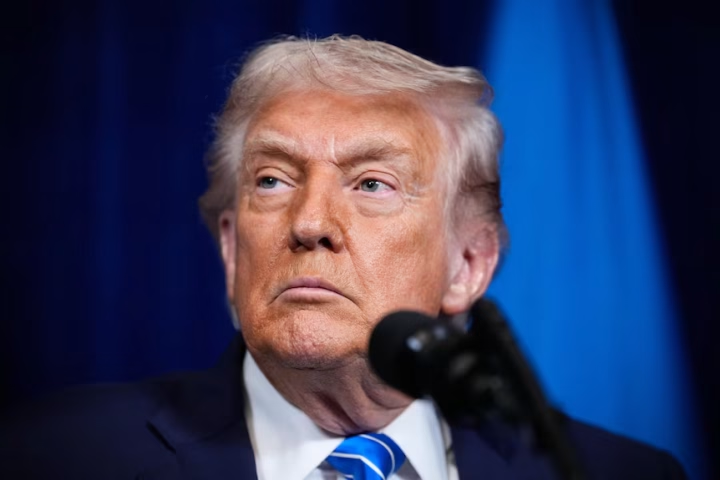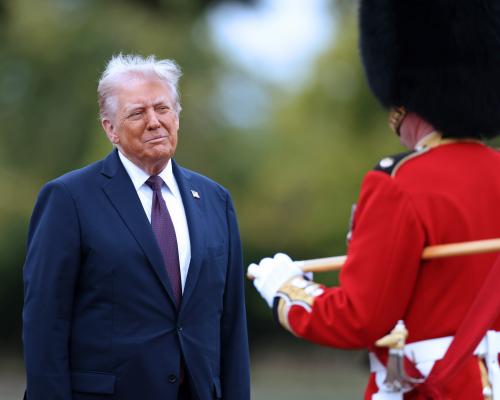
A heated exchange unfolded at the White House when U.S. President Donald Trump sharply rebuked John Lyons, the Americas Editor for ABC’s Four Corners program. Trump accused the Australian journalist of “hurting Australia” with his questions about the president’s personal business interests and alleged financial gains since returning to office.
The tense moment, captured on camera, quickly spread across international media and diplomatic circles. Observers described the encounter as a test of press freedom and a sign of the growing strain between the U.S. and Australia.
What Happened: The Exchange in Brief
As President Trump prepared to depart the White House for an official trip, Lyons asked several questions about his wealth and potential conflicts of interest.
Trump paused, turned toward Lyons, and demanded to know which media outlet he represented. When Lyons replied “ABC Australia,” Trump’s tone changed. He said:
“In my opinion, you are hurting Australia very much right now. You set a very bad tone.”
Trump went on to suggest that such questions could harm diplomatic relations between the United States and Australia. He reminded Lyons that an important meeting with Australian Prime Minister Anthony Albanese was approaching.
When Lyons tried to continue, Trump cut him off sharply, saying: “Quiet.”
After the exchange, Lyons defended his approach. He said his questions were not meant to be provocative but rather to ensure accountability from one of the world’s most powerful leaders. “It’s a journalist’s job to ask tough but fair questions,” he later explained.
Context: Why This Matters
The incident goes beyond a simple clash between a reporter and a political leader. It highlights broader issues surrounding press freedom, diplomacy, and the treatment of foreign correspondents.
1. Timing and Optics
Trump’s remarks came at a sensitive diplomatic moment. He is due to meet Prime Minister Albanese, likely during the United Nations General Assembly in New York.
By criticizing an Australian journalist publicly, Trump risked complicating that upcoming meeting. His comments appeared to link the journalist’s questions directly to Australia’s national reputation.
2. U.S.–Australia Relations Under Pressure
The United States and Australia already face tensions over trade, defense cooperation, and the AUKUS submarine pact. Adding a dispute over media freedom only intensifies those challenges.
Analysts say Trump’s remarks may have been aimed at shaping the media narrative before his meeting with Albanese, signaling that he expects friendlier press coverage from U.S. allies.
3. Media Freedom and Foreign Correspondents
It is unusual for a U.S. president to accuse a foreign journalist of “hurting” their home country. Many observers believe this statement raises concerns about press independence.
Press freedom advocates warn that such rhetoric may embolden governments to restrict foreign reporters or use diplomacy as a reason to limit critical questions.
Reaction and Fallout
Support for Lyons and Pushback Against Trump
Australian officials, opposition leaders, and major media outlets quickly came to Lyons’s defense. They emphasized that journalists must be able to ask difficult questions of any world leader, including allies.
Some political commentators argued that Trump’s attack was a tactic to delegitimize the media. Others said it showed his continued sensitivity toward questions about his finances.
Lyons called Trump’s accusation “absurd.” He said that asking tough questions does not harm Australia but instead strengthens its reputation for independent journalism.
Diplomatic Sensitivities
In the days that followed, ABC reportedly faced restrictions in accessing certain events. During a joint press conference between Trump and U.K. Prime Minister Keir Starmer, ABC was placed in an overflow room rather than the main briefing area. Officials said it was due to space limits, but some observers linked it to the Lyons incident.
British authorities denied any connection, saying the seating arrangements were standard for security and accreditation purposes.
Trump’s Messaging and Spin
The White House quickly circulated clips of the exchange online. Trump’s team framed Lyons as a “foreign fake news loser,” echoing earlier attacks on the media.
This approach fits Trump’s long-standing strategy of discrediting journalists who question him. Analysts say it appeals to his supporters while discouraging further scrutiny.
Trump also used the same moment to confirm his upcoming meeting with Albanese. By doing so, he tied a diplomatic announcement to a media confrontation — a tactic that drew both criticism and fascination.
Broader Implications
1. Press Freedom and Accountability
The exchange underlines the ongoing tension between powerful political leaders and journalists. When a president tells a reporter their questions are damaging to their nation, it can have a chilling effect on press freedom.
Reporters may begin to self-censor to avoid diplomatic backlash, undermining the role of the press as a watchdog.
2. Diplomatic Strategy and Soft Power
Trump’s comment can also be seen through the lens of soft power. By framing media questions as unpatriotic, he appeals to nationalistic sentiment while discouraging dissent. However, such rhetoric can alienate allies and weaken trust between nations.
3. Media Access and Reciprocity
If countries begin to limit foreign journalists in retaliation for tough questions, it may affect American reporters working abroad. Reciprocal treatment could become the new norm, threatening global media cooperation.
4. Domestic Political Narratives
In Australia, the incident has reignited debate about the role of public broadcasters and government funding for journalism. Many see it as a reminder of why independent reporting must remain protected from both domestic and foreign political pressure.
Final Thoughts
The footage of Trump telling John Lyons his questions were “hurting Australia” may seem like a brief viral clip, but its implications run deeper. It reveals how journalistic accountability, diplomacy, and political image management intersect on the global stage.
For journalists, it is a reminder of the courage required to hold world leaders to account — even at the risk of public confrontation. For diplomats, it shows how easily a moment on camera can ripple through official relations.
As Trump prepares to meet Prime Minister Albanese, the exchange remains a vivid example of how a few words at a press briefing can spark international debate — one that touches not only on politics but on the very principles of free expression and transparency.