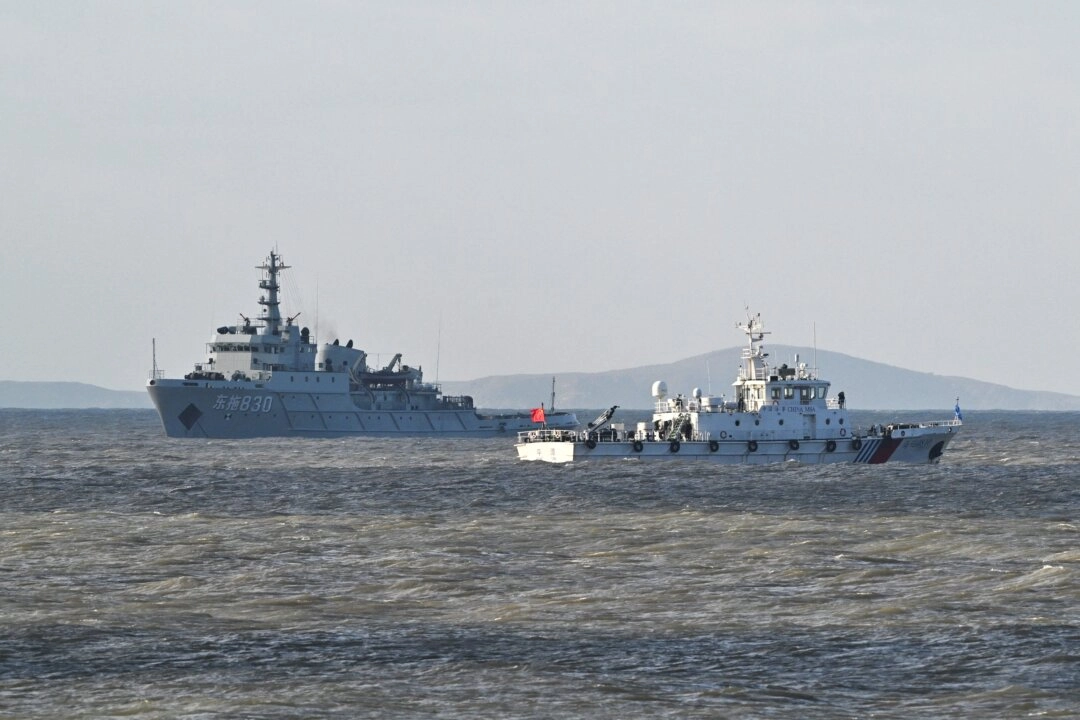
On December 30, 2025, China launched 27 rockets into the waters surrounding Taiwan, marking the second day of a new round of military drills aimed at demonstrating Beijing’s strength and sending a powerful message to Taiwan and its international supporters. The Chinese military’s actions, described as part of an exercise dubbed “Justice Mission 2025,” have escalated tensions in the Taiwan Strait, further straining relations between China, Taiwan, and the United States.
This latest series of live-fire drills has not only intensified the security situation around Taiwan but has also drawn international criticism, with lawmakers from the U.S. and Taiwan calling China’s actions a destabilizing threat to regional peace. The drills, which come on the heels of a significant U.S. arms sale to Taiwan, are seen as a response from China, signaling its dissatisfaction with the growing military cooperation between Taiwan and the U.S.
The Escalating Tensions Between China and Taiwan
Taiwan, an island nation of significant strategic importance, has long been a point of contention between China and the international community. The Chinese Communist Party (CCP) views Taiwan as a breakaway province and has repeatedly expressed its intent to reunify the island with the mainland, by force if necessary. The United States, along with other allies, has supported Taiwan through arms sales and diplomatic backing, heightening tensions in the region.
The latest Chinese military exercises, which began on December 29, 2025, have involved both land-based missile strikes and air-defense drills, focusing on encircling Taiwan. Chinese military aircraft have conducted sorties across the Taiwan Strait, with some even entering Taiwan’s air defense identification zone (ADIZ), a move that further provoked Taiwan’s military response. These activities have been characterized as an attempt to undermine Taiwan’s confidence in its defense capabilities and to challenge international norms concerning freedom of navigation in the Taiwan Strait.
China’s Military Drill: Firing Rockets and Sending a Message
The Chinese military fired 27 rockets into waters north and south of Taiwan on December 30, 2025. According to Taiwan’s defense ministry, the rockets landed within Taiwan’s 24-nautical-mile contiguous zone, marking the closest proximity to Taiwan for any Chinese live-fire exercise. The remaining rockets fell outside Taiwan’s contiguous zone, but the message was clear: China is tightening its military presence around Taiwan in a show of force.
Chinese state media has claimed that these drills were necessary to “restore order” in the region and respond to what Beijing considers provocative actions by Taiwan and its international supporters, particularly the U.S. The Taiwanese military, however, swiftly responded, claiming that the drills were part of China’s ongoing cognitive warfare campaign—aimed not only at military intimidation but also at manipulating public perception about Taiwan’s ability to defend itself.
The Chinese government has also utilized disinformation, claiming to have blockaded key ports in Taiwan, a statement that Taiwan’s Coast Guard quickly debunked. Lieutenant General Hsieh Jih-sheng, Taiwan’s deputy chief of general staff for intelligence, dismissed Beijing’s claims, labeling them as fabricated and part of a larger effort to spread fear.
Taiwan’s Response: Defending Its Sovereignty
Taiwan’s defense ministry reported extensive surveillance of Chinese military activity in the region. Over 130 sorties by Chinese military aircraft were detected, with 90 of those crossing the median line of the Taiwan Strait, entering Taiwan’s air defense identification zone (ADIZ). Additionally, Chinese naval vessels were spotted operating close to Taiwan’s waters, although none breached the territorial sea, which extends 12 nautical miles from Taiwan’s coastline.
Taiwan’s leadership has reiterated its commitment to peace and stability across the Taiwan Strait. President Lai Ching-te criticized China’s ongoing military provocations, calling them counterproductive and harmful to the region’s stability. He emphasized that Taiwan would not seek confrontation but would continue to defend its sovereignty and peace in the Indo-Pacific region.
The Taiwan foreign ministry also condemned China’s “groundless and provocative military activities,” arguing that China’s actions violate international rules and norms and destabilize global shipping and trade routes, particularly in the Taiwan Strait, which is one of the busiest maritime corridors in the world.
The U.S. Arms Sale and China’s Reaction
The timing of China’s military exercises is notable given the recent U.S. arms sale to Taiwan, valued at $11.1 billion. This sale, which includes advanced weaponry such as High Mobility Artillery Rocket Systems (HIMARS), Javelin anti-tank missiles, and self-propelled howitzers, has been a significant point of contention for Beijing. China views these arms sales as a violation of its sovereignty and has made clear its displeasure with Washington’s support for Taiwan.
Chinese Foreign Minister Wang Yi has specifically criticized the “Taiwan independence forces” and the U.S. arms deal, calling the military drills a direct response to what he referred to as “repeated provocations.” The CCP has framed these exercises as a necessary step to protect its territorial integrity and demonstrate its readiness to counter any foreign intervention in Taiwan.
International Concerns: The Growing U.S.-Taiwan Partnership
The U.S. response to China’s latest military actions has been swift and critical. Several U.S. lawmakers, including Senator Todd Young and Representative Greg Stanton, have expressed grave concern over China’s increasingly aggressive stance in the region. Senator Young called China’s actions “unacceptable” and warned that Beijing’s military posturing undermines global security. Representative Stanton, co-chair of the Congressional Taiwan Caucus, highlighted the need for the U.S. to stand firm in its commitment to Taiwan, emphasizing that military exercises aimed at intimidation would not deter U.S. support.
The U.S. and its allies, including Canada and the United Kingdom, have regularly conducted freedom of navigation operations in the Taiwan Strait, asserting the international community’s interest in maintaining open and free waters. The U.S. continues to strengthen its economic and security partnerships with Taiwan, underscoring its support in the face of growing Chinese aggression.
A Dangerous Escalation
China’s military drills around Taiwan are a stark reminder of the escalating tensions in the Taiwan Strait, a region at the crossroads of U.S.-China relations and global security. The recent missile strikes, coupled with a series of provocative military operations, underscore the CCP’s increasing willingness to use force to assert its territorial claims over Taiwan.
For Taiwan, the ongoing military provocations represent not only a direct threat to its security but also a challenge to its sovereignty and independence. As the situation continues to unfold, the international community must remain vigilant and support Taiwan’s efforts to maintain peace and stability in the face of rising Chinese hostility.