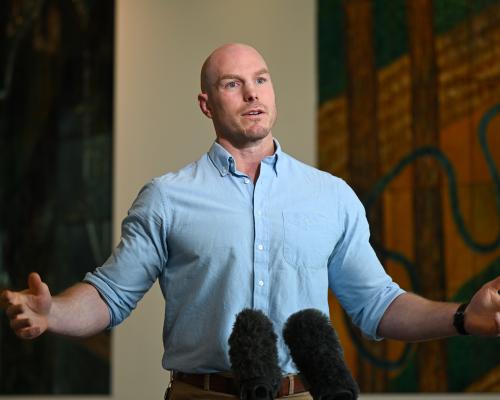
The Australian Parliament Sports Club, once known for its casual matches and friendly camaraderie, has found itself in the middle of a political storm. Independent Senator and former Wallabies captain David Pocock has been **banned—and then reinstated—**after he questioned the club’s ties to the gambling industry
The controversy has sparked a wider debate about corporate influence in Australian politics, transparency, and the ethical boundaries between sport and lobbying.
A Club Caught Between Sport and Politics
For decades, the Parliamentary Sports Club has served as a light-hearted social space. It organizes friendly games between parliamentarians, staffers, journalists, and sometimes lobbyists. The idea was to encourage connection across party lines and reduce the intensity of political divisions.
However, the club also includes corporate sponsors who pay for access. These sponsors—often large companies or industry groups—are given membership privileges, invitations to events, and proximity to policymakers.
In September 2025, the club appeared on Australia’s official lobbyist register, raising eyebrows. This classification meant the club could now fall under rules that apply to registered lobby groups, which prompted journalists and transparency advocates to look closer at its funding sources.
Pocock Raises the Alarm
David Pocock, known for his integrity and environmental activism, saw a problem. During a recent Senate Estimates hearing, he pointed out that the Prime Minister, Anthony Albanese, is listed as the club’s president. Yet, one of its corporate members is Responsible Wagering Australia (RWA)—a peak body representing gambling companies.
Pocock asked bluntly whether the club was allowing gambling interests to gain “backdoor access” to ministers and lawmakers under the pretense of sport.
He raised three main concerns:
- Many MPs may have joined the club without realizing it was on the lobbyist register.
- Sponsors like RWA could use the club to “socially license” their influence, mingling casually with decision-makers.
- The arrangement might breach the spirit, if not the letter, of the ministerial code of conduct.
His comments struck a nerve. The gambling industry has already faced intense criticism in Australia for its political donations, advertising reach, and alleged efforts to water down reform.
The Ban That Sparked a Backlash
Just hours after his remarks, Pocock received a text message from club CEO Andy Turnbull. The message informed him that he was no longer welcome at club events and had been removed from group chats.
Turnbull claimed that Pocock had “politicized” the club, which he said should remain apolitical. There was no explanation of which membership rule Pocock had violated.
The timing made the decision appear retaliatory. Pocock’s membership renewal was pending that week, and his exclusion coincided almost exactly with his public statements.
Pocock’s response was calm but firm. He said that banning someone for raising ethical concerns showed how “deeply normalized” corporate influence had become in Canberra. He refused to rejoin the club until it reviewed its sponsorship structure and made its operations fully transparent.
Prime Minister Steps In
The issue quickly reached the Prime Minister’s office. Albanese initially dismissed the idea that playing sport could equate to lobbying as “absurd.” However, he added that the club should be inclusive and that no one should be excluded for raising questions.
Albanese later clarified that he holds the title of President but has no role in the club’s operations and has not attended any events in 2025. Still, his comments put pressure on the club’s leadership.
Within a day, Turnbull reversed his stance. He said that if the Prime Minister wanted Pocock reinstated, “who am I to argue?” He invited Pocock to return and promised to review membership and sponsorship policies.
Crossbenchers Unite Behind Pocock
The ban outraged many of Pocock’s fellow independent MPs, who saw it as punishment for speaking the truth.
- Dr. Sophie Scamps announced her resignation from the club, calling the ban “beyond ridiculous.”
- Allegra Spender followed, labeling it an “absolute disgrace.”
- Monique Ryan, another crossbencher, had already quit the club earlier over gambling links.
- Kate Chaney added that it was “completely ridiculous” to punish someone for raising factual concerns.
Their actions turned a club dispute into a political flashpoint about ethics and soft power in Australian politics.
Pocock Holds His Ground
Even after the reinstatement offer, Pocock refused to rejoin immediately. He said he would only consider it once the club launched a transparent review of its corporate sponsors.
He wants clear, enforceable rules that prevent industries with high conflict-of-interest potential, such as gambling or tobacco, from buying social access to politicians. His goal, he says, is not to attack the club but to ensure it upholds public trust.
“This isn’t about sport,” Pocock told reporters. “It’s about integrity. Australians deserve to know that corporate money isn’t shaping policy conversations—whether in Parliament or on the soccer field.”
A Broader Question: Where Does Influence End?
Pocock’s case touches on a bigger issue—the gray zone between networking and lobbying. In politics, not every influence takes the form of direct persuasion or donation. Sometimes, familiarity itself becomes power.
When lobby groups or corporations share informal spaces with policymakers—such as clubs, charity galas, or sporting events—the environment can soften resistance and make access easier.
Pocock’s critics argue he overreacted and turned an innocent club into a political battlefield. But his supporters say the opposite: that his stand exposed how normalized soft lobbying has become.
Political commentator Dr. Michelle Grattan observed that this incident “highlights the thin line between social connection and influence in Canberra’s ecosystem.”
Reforming the System
The episode could have lasting consequences. Ethics experts have already called for new guidelines regulating sponsorship and corporate membership in parliamentary-affiliated organizations.
Possible reforms include:
- Transparency reports listing all sponsors and their benefits.
- Mandatory conflict-of-interest disclosures for all members.
- Stricter oversight by an independent body to ensure compliance with lobbying laws.
Some MPs are also calling for the Parliamentary Sports Club to be removed from the lobbyist register entirely or for it to be restructured as a nonprofit association with no corporate members.
The Bigger Picture: Gambling and Governance
The gambling industry remains a politically sensitive topic. Recent parliamentary inquiries, including the Murphy Review, have urged tougher advertising limits, stricter affordability checks, and stronger consumer protection. Yet progress has been slow.
Pocock’s confrontation with the club has reignited public attention on these recommendations. Many Australians feel that reform has stalled because gambling companies exert too much informal power behind the scenes.
As one independent MP put it, “When even a sports club becomes a lobbying platform, something is broken.”
Conclusion: A Symbol of Modern Politics
David Pocock’s stand may seem like a minor skirmish over a membership ban, but it carries symbolic weight. It exposes how blurred the line between politics, leisure, and lobbying has become.
In refusing to stay silent, Pocock has forced Parliament—and the public—to question what kind of access money should buy. Whether the club reforms or not, his stand has already achieved something vital: it has made influence visible again.