WA net zero cost estimates have sharpened the debate over how much Western Australia must invest in energy projects to reach net zero by 2050.
New analysis by Deloitte suggests an average of $8.6 billion will need to be spent each year on Western Australian energy projects if the state is to meet the national net-zero target. The figure highlights the scale of investment required in renewable generation, transmission, storage, electrification and industrial decarbonisation over the next quarter-century.
For Western Australia, the challenge is unusually complex. The state has one of the world’s most resource-intensive economies, large mining and gas industries, remote energy users, long-distance infrastructure needs and growing demand from industrial projects. Reaching net zero is therefore not only a climate policy issue. It is also an infrastructure, investment, energy security and industrial competitiveness issue.
The $8.6 billion annual figure gives the debate a clear financial frame. It shows that the transition will require sustained capital spending, not one-off announcements. It also raises questions about who pays, which projects move first and how governments, investors, industry and households share the cost.
Western Australia has the natural resources to become a clean energy powerhouse, including strong wind and solar potential, critical minerals, export infrastructure and industrial land. But the Deloitte estimate shows that opportunity will require major capital deployment at speed.
Why the $8.6b Annual Figure Matters
The $8.6 billion annual figure matters because it turns the net-zero debate from a broad target into a measurable investment task.
Net zero by 2050 is often discussed as a long-term ambition. But long-term targets can hide the urgency of near-term investment. Energy infrastructure takes years to plan, approve, finance and build. Transmission lines, renewable energy zones, batteries, hydrogen facilities, industrial upgrades and grid connections cannot be delivered overnight.
That means Western Australia cannot wait until the 2040s to accelerate investment. The state needs a pipeline of projects that can be delivered steadily across the next two decades.
An annual price tag also helps investors and policymakers understand the scale of the funding challenge. If WA needs an average of $8.6 billion a year, the transition will require a mix of private capital, public investment, policy support and long-term certainty.
The number also highlights the cost of delay. If investment falls behind in the short term, later spending may need to rise sharply to close the gap. Delayed action can make the transition more expensive, more rushed and more disruptive.
Western Australia’s Energy Transition Challenge
Western Australia faces a different transition challenge from many other parts of Australia.
The state has a large landmass, remote communities, isolated electricity systems and major industrial loads linked to mining, oil, gas, minerals processing and heavy industry. Many of these activities require large amounts of reliable energy.
The South West Interconnected System serves Perth and much of the south-west, but many mining and industrial operations rely on separate power systems, gas generation, diesel or private energy infrastructure. Decarbonising these systems is more complicated than simply adding renewable energy to a single national grid.
WA also has major export industries that are exposed to global climate pressure. Customers, financiers and trading partners are increasingly focused on emissions. That means energy investment is not only about meeting domestic targets. It is also about protecting market access and long-term competitiveness.
For the state’s mining sector, clean energy investment could become a competitive advantage. Iron ore, lithium, nickel, rare earths and other minerals are central to the global energy transition. But buyers may increasingly prefer lower-emission supply chains.
Renewables Need Faster Deployment
The main pathway to lower emissions in Western Australia is likely to involve a much faster rollout of renewable energy.
Solar and wind generation can reduce reliance on fossil fuels in electricity production. But renewables also require supporting infrastructure. Batteries, pumped hydro where feasible, gas backup, grid upgrades, demand management and transmission investment all become important as renewable penetration rises.
The challenge is not only building renewable projects. It is connecting them to where energy is needed. Western Australia’s industrial users are often located far from major population centres, which makes grid planning more complex.
A faster renewable rollout also requires planning approvals, land access, environmental assessments, Indigenous engagement, financing and construction capacity. These practical issues can slow projects even when investment interest exists.
That is why the transition cannot rely only on technology cost declines. It needs coordinated delivery.
Transmission and Grid Investment Will Be Critical
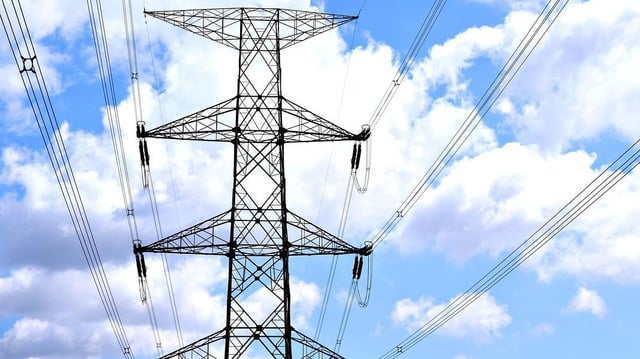
Transmission is one of the biggest issues in any large-scale energy transition. Renewable energy projects are only useful if the power can reach homes, businesses and industrial users.
Western Australia will need major grid investment to connect new renewable generation and support rising electricity demand from electrification. This may include new transmission corridors, stronger distribution networks, modern grid controls and storage systems.
The state’s geography makes the task difficult. Long distances increase costs. Remote projects need reliable connections. Industrial users require high-quality power. Communities also expect affordable and secure electricity.
Without enough grid investment, renewable projects can be delayed or underused. Developers may be ready to build generation, but if transmission is not available, projects cannot reach full value.
This makes grid planning central to the $8.6 billion annual investment challenge. The transition is not just about producing clean power. It is about moving it efficiently and reliably.
Industry Will Carry a Large Part of the Burden
Western Australia’s industrial base means companies will play a major role in the transition.
Mining, gas, minerals processing and manufacturing businesses will need to reduce operational emissions. This may involve electrifying equipment, replacing diesel, using renewable power, improving efficiency, cutting methane emissions and exploring lower-carbon fuels.
Some industrial processes are harder to decarbonise than others. Heavy machinery, high-temperature processing and remote operations may require technologies that are still developing or remain expensive.
That is why policy certainty matters. Companies are more likely to invest when they understand the rules, timelines and incentives. Unclear targets or changing regulations can delay capital decisions.
The $8.6 billion annual figure suggests the private sector will need to mobilise large amounts of capital. Government cannot fund the entire transition alone. But government policy can help unlock private investment by reducing uncertainty.
Gas Remains Part of the Debate
Gas remains one of the most contested parts of Western Australia’s net-zero pathway.
Supporters argue that gas can help maintain energy security while renewable generation expands, especially for industrial users and backup electricity supply. They also point to WA’s major role as a gas exporter and the economic importance of LNG projects.
Critics argue that new gas development risks locking in emissions and delaying the shift to cleaner energy. They warn that relying too heavily on gas could make it harder to meet long-term climate targets.
The debate is likely to continue because WA’s economy is deeply connected to gas. Any net-zero plan must address how gas demand, gas exports, domestic energy security and emissions reduction fit together.
The Deloitte investment estimate does not remove that policy tension. Instead, it shows that whatever role gas plays, the state still needs a large buildout of clean energy infrastructure.
Net Zero Is Also an Economic Opportunity
The cost of net zero is large, but the investment could also create major economic opportunities.
Western Australia has strong advantages in the clean energy economy. It has large land availability, high-quality renewable resources, mining expertise, export infrastructure and critical minerals used in batteries, electric vehicles and renewable technologies.
If the state invests early and strategically, it could attract new industries such as green metals, clean fuels, battery materials, renewable hydrogen, low-carbon minerals processing and advanced manufacturing.
This is why the $8.6 billion figure should not be seen only as a cost. Much of the spending would go into productive assets: power stations, transmission lines, storage systems, industrial upgrades and new energy facilities.
Those assets could support jobs, exports, regional development and long-term competitiveness.
The challenge is making sure the investment is efficient, timely and aligned with real market demand.
Policy Certainty Is Essential
Large energy projects depend on policy certainty. Investors need confidence that rules will remain stable long enough for projects to generate returns.
For Western Australia, that means clear direction on emissions targets, planning approvals, grid access, industrial decarbonisation, land use, environmental regulation and project timelines.
Uncertainty can raise financing costs. It can also delay final investment decisions. In a capital-intensive transition, delays matter because they push costs into the future and create pressure on later project delivery.
The state also needs coordination with federal policy. Australia’s net-zero target is national, but many of the most important energy and industrial decisions happen at state level. If federal and state policy settings are misaligned, investment can become harder.
A credible net-zero pathway needs both ambition and implementation detail.
What It Means for Households
Most of the $8.6 billion annual investment would likely be directed toward large energy and industrial projects, but households will still feel the transition.
Consumers may benefit from cleaner power, improved energy efficiency and new technologies such as rooftop solar, batteries and electric vehicles. But they may also face cost pressures if infrastructure investment flows through to power prices.
Managing affordability will therefore be a major political issue. Governments will need to balance investment needs with household cost-of-living concerns.
This is especially important in a state where summer heat, energy demand and housing costs are already major concerns for many residents.
The transition must be designed so households are not left carrying unfair costs while large industrial users receive the main benefits.
What It Means for Investors
For investors, the Deloitte estimate points to a large pipeline of potential opportunities in Western Australia’s energy sector.
Renewable energy developers, grid companies, battery operators, engineering firms, construction contractors, technology suppliers and industrial service providers could all benefit from the transition.
Infrastructure investors may also find opportunities in long-life assets with stable revenue models, especially where government policy supports clean energy delivery.
However, investors will also be cautious. Large projects face permitting risk, construction cost inflation, grid delays, revenue uncertainty and political debate. Not every project will succeed.
The winners are likely to be projects with strong locations, reliable offtake agreements, clear approvals, experienced sponsors and alignment with government planning.
The Risk of Falling Behind
If Western Australia does not accelerate energy investment, it risks falling behind the 2050 target.
That risk is not only environmental. It could affect industry, exports, investment attraction and market reputation. Global customers are increasingly examining supply-chain emissions, and capital markets are paying closer attention to transition plans.
A slow transition could make some WA exports more carbon-intensive than competitors. It could also expose businesses to higher future costs if policy tightens suddenly.
On the other hand, a poorly planned transition could create reliability risks or unnecessary cost increases. The state therefore needs speed, but it also needs careful planning.
The real challenge is sequencing. WA must build enough clean energy infrastructure quickly while keeping power reliable and industry competitive.
Why 2050 Is Closer Than It Looks
The year 2050 may sound distant, but for energy infrastructure it is close.
A major transmission line can take years to approve and build. A renewable energy hub can take years to move from planning to operation. Industrial equipment has long replacement cycles. Mines, gas facilities and processing plants make investment decisions years in advance.
That means decisions made in the 2020s and early 2030s will shape whether WA is on track by 2050.
Waiting too long could create a compressed transition, where projects must be delivered at unrealistic speed. That can increase costs, strain supply chains and create community resistance.
The $8.6 billion annual figure is therefore a warning about timing. The investment challenge is not only large. It is immediate.
Conclusion
WA net zero cost estimates have given Western Australia a clearer picture of the investment scale required to meet the 2050 target. Deloitte analysis suggests the state may need to spend an average of $8.6 billion a year on energy projects to reach net zero.
That figure shows the transition is not a simple policy slogan. It is a major infrastructure program involving renewable power, transmission, storage, electrification, industrial upgrades and long-term planning.
Western Australia has major advantages, including renewable resources, critical minerals, industrial capability and export links. But it also has serious challenges, including remote energy demand, heavy industry, gas dependence and the need for reliable power across vast distances.
The coming years will decide whether WA can turn the net-zero task into an economic opportunity or whether delayed investment makes the transition harder and more expensive.
The message from the analysis is clear: reaching net zero by 2050 will require sustained spending, clear policy, private capital and faster project delivery. For Western Australia, the energy transition is no longer a distant ambition. It is an investment race already under way.