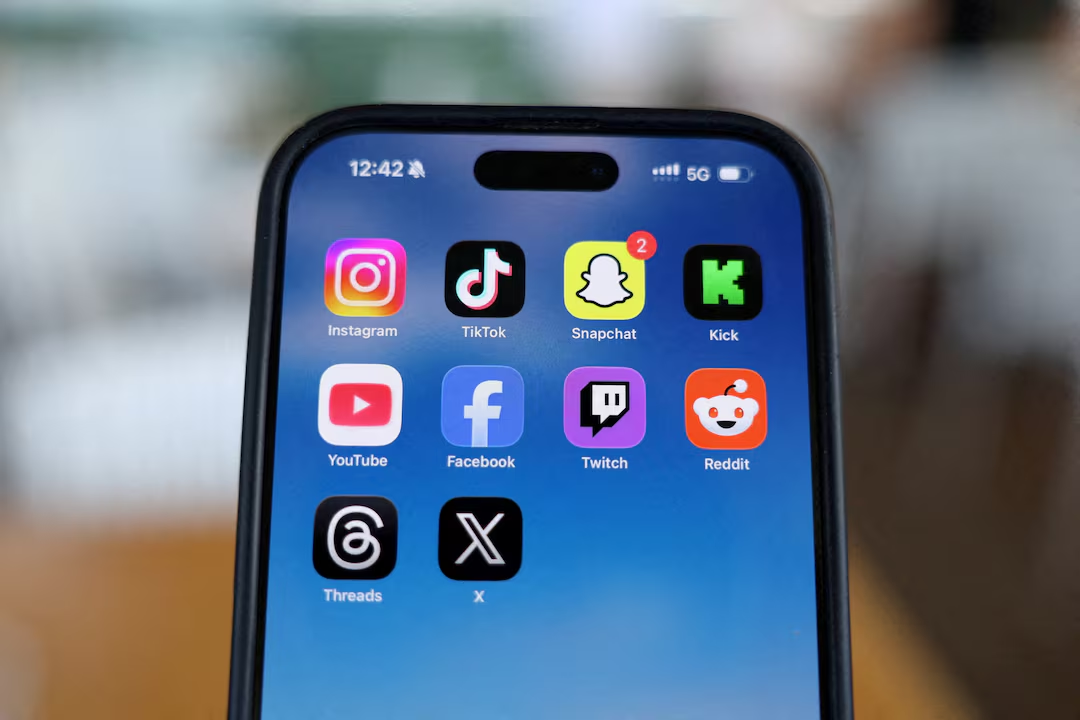
An ally of Indian Prime Minister Narendra Modi has proposed legislation for a sweeping social media ban targeting teenagers. Lawmaker L.S.K. Devarayalu’s bill seeks to prohibit users under sixteen from having social media accounts. This initiative places India, a vital market for companies like Meta and YouTube, into a fierce global debate. Consequently, the proposal examines the impact of platforms on youth mental health and data sovereignty. The move follows similar regulatory actions in Australia and France, signaling a worldwide regulatory shift.
Devarayalu argues that Indian children are becoming addicted to social platforms. He also contends the country is a major data source for foreign AI development. Therefore, he believes a social media ban is necessary for protection and national interest. His private member’s bill would force platforms to verify user ages and disable accounts for underage users. Although not yet government policy, the bill influences parliamentary debate and reflects growing political concern. The Indian government’s chief economic adviser recently endorsed age-based access limits, highlighting official attention to this issue.
The Proposed Legislation’s Core Mandates
The drafted Social Media (Age Restrictions and Online Safety) Bill contains strict provisions. It states no person under sixteen shall create or maintain a social media account. Platforms must then identify and disable such accounts. Devarayalu emphasizes that the compliance onus must rest entirely with the companies. This approach mirrors enforcement strategies in other nations. The bill’s fifteen pages also likely address online safety protocols, though the full text remains non-public. This legislative push represents a direct challenge to global tech firms operating in India.
India currently lacks a minimum age law for social media access. Terms of service from companies like Meta set their own age limits, often at thirteen, but enforcement is inconsistent. The proposed law would supersede these corporate policies with a unified national standard. Implementing such a social media ban would require robust age-verification technology. However, this raises significant privacy concerns regarding data collection from minors and adults alike. The technical and ethical hurdles are substantial.
Global Context and Precedents
India’s proposal joins a wave of international regulatory action. Australia recently enacted the world’s first ban for children under sixteen. France’s National Assembly also backed a ban for those under fifteen. Meanwhile, Britain, Denmark, and Greece are actively studying similar measures. This global trend underscores widespread anxiety about social media’s effects on youth development, from mental health to academic performance. Each nation is grappling with balancing protection against freedom and practicality.
Technology companies generally oppose blanket bans. Meta has stated it supports laws requiring parental oversight. The company also warns that bans might push teens toward less regulated, potentially more dangerous platforms. Alphabet, the parent company of YouTube, and X have not commented on the Indian proposal. Their opposition in other jurisdictions focuses on enforcement challenges and perceived overreach. The industry prefers self-regulation and built-in parental controls. However, lawmakers globally are increasingly skeptical of these voluntary measures.
India’s Unique Market and Data Concerns
India presents a unique case due to its massive digital population. The country has over 750 million smartphone users and about a billion internet users. It is a critical growth market for every major social media platform. Devarayalu’s argument extends beyond child welfare into economic nationalism. He alleges Indian users are “unpaid data providers” for foreign AI. This data, he says, generates strategic benefits captured elsewhere. Therefore, a social media ban for teens is framed as both protective and economically strategic.
The data sovereignty angle resonates with India’s broader tech policy direction. The government has previously championed data localization rules and supported domestic digital platforms. This proposal aligns with that philosophy of asserting greater control over the digital ecosystem. Regulating youth access could be a first step toward more stringent data governance for all users. Consequently, the stakes for international tech firms are exceptionally high in this market. Their response will likely involve significant lobbying and potential legal challenges.
Implementation Challenges and Public Reaction
Enforcing a social media ban in India poses monumental difficulties. Age verification would require collecting government ID or biometric data, raising severe privacy alarms. Many families in rural areas also share devices, complicating user identification. Furthermore, critics argue such bans are easily circumvented by tech-savvy teens using VPNs or false information. This could render the law ineffective for its target audience while burdening legitimate users. The debate will inevitably center on feasibility and unintended consequences.
Public reaction is mixed. Many parents and child advocates welcome stricter controls, citing online harassment and addictive design. Conversely, free-speech advocates and digital rights groups warn of censorship and reduced access to information. Educational uses of social media for collaboration and learning present another complication. A blanket ban might hinder beneficial online activities. The parliamentary process will need to weigh these competing concerns carefully. Devarayalu’s bill, while not guaranteed to pass, ensures the topic receives prominent national discussion.
Political Significance and Future Outlook
Devarayalu belongs to the Telugu Desam Party, a crucial ally in Modi’s coalition government. This gives his proposal more weight than a typical private member’s bill. It signals that influential political factions are prioritizing this issue. The government’s own economic adviser has echoed the need for age limits, suggesting alignment within the ruling establishment. Therefore, some form of heightened regulation for young users appears increasingly likely. The final policy may differ from an outright ban, perhaps mandating stricter parental controls or time limits.
The global debate is accelerating, and India’s position will be influential. As the world’s largest democracy and a tech hub, its policy choices could set a precedent for other developing nations. The coming months will involve intense consultation between lawmakers, tech executives, and civil society. The outcome will shape how a generation of Indian youth interacts with the digital world. It will also define the operational landscape for social media giants in one of their most important markets.