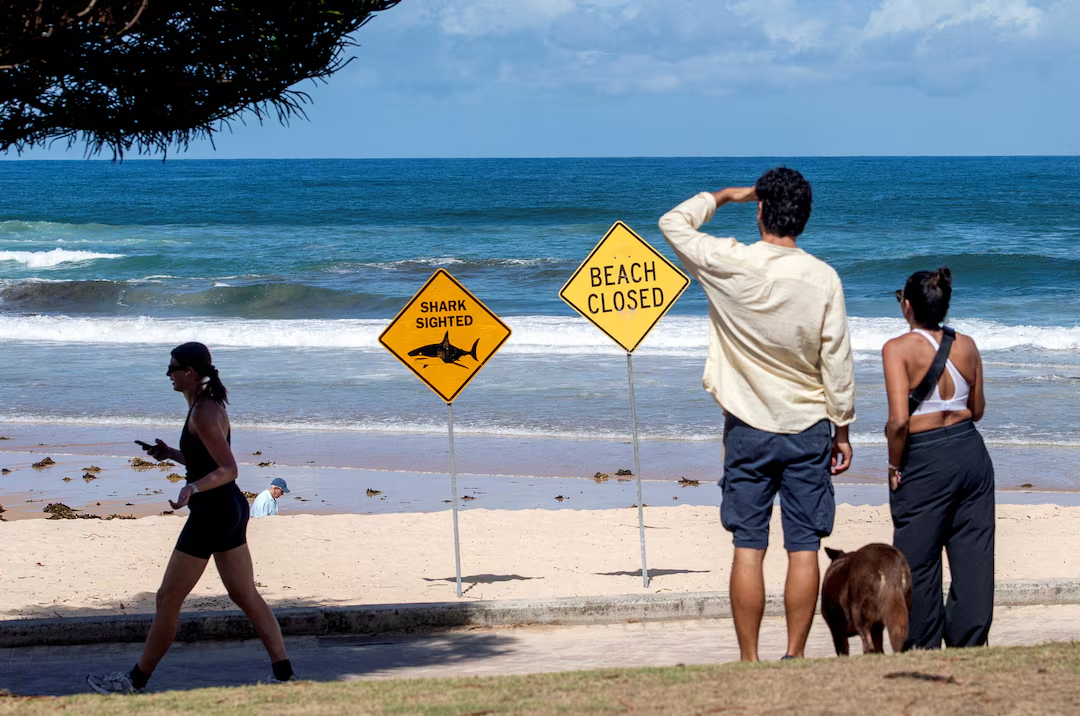
The Sydney community gathered at Bondi Beach on Sunday to honour a boy killed in a tragic shark attack. Nico Antic, age twelve, died in hospital six days after the incident in Sydney Harbour. This shark attack, occurring near Vaucluse on January 18, has deeply affected the coastal city. Consequently, hundreds of surfers and paddle boarders formed a solemn circle in the ocean during a traditional “paddle-out” ceremony. The event highlighted both communal grief and the persistent risks of Australia’s coastline.
Local surf lifesavers, school friends, and relatives participated in the tribute. Aerial footage showed the large, silent gathering on the water. This ceremony follows a traumatic month for New South Wales beaches. Authorities closed dozens of beaches, including in Sydney, after four shark attacks occurred in just two days during January. Heavy rains had murked the coastal waters, creating conditions that experts say attract sharks closer to shore. The community now balances mourning with heightened safety concerns.
The Incident and Immediate Aftermath
Nico Antic was with friends when they jumped off rocks into the harbour. A shark then bit him, causing severe injuries to both his legs. Friends quickly pulled him from the water. Emergency services rushed him to a hospital where he fought for his life for six days. His death marks the first fatal shark attack in Sydney Harbour in decades. Moreover, it has reignited a complex debate about marine safety, shark management, and human coexistence with ocean predators.
The harbour is a famous waterway for swimming and recreation. However, it is also a known habitat for bull sharks, especially after heavy rain. Runoff reduces salinity and visibility, drawing sharks further inland. Local officials immediately increased patrols and deployed drumlines after the attack. They also issued widespread beach closures as a precaution. These actions reflect the challenging protocol following a serious shark attack, aiming to protect the public while assessing the threat.
A Community Responds With Tradition
The paddle-out at Bondi is a profound surfing tradition to honour lives lost at sea. Participants paddle beyond the breakers to form a floating circle. They often share memories, toss flowers, and observe a moment of silence. This ritual provides collective solace for the water community. For Nico’s family, the large turnout was a visible expression of public support. It demonstrated how a shark attack reverberates far beyond the immediate victims, touching all who share a connection to the ocean.
Local surf lifesaving clubs played a key role in organizing the event. These clubs are the frontline guardians of Australian beach safety. Their involvement bridges professional duty and personal commemoration. Meanwhile, school friends of Nico attended, many learning about marine risk in the most painful way. The ceremony did not seek answers or assign blame. Instead, it offered a space for shared mourning and respect. This response underscores a community’s resilience in the face of a rare but devastating event.
Context of Shark Encounters in Australia
Australia averages around twenty shark attacks nationally each year. Fewer than three of these typically prove fatal. These numbers are statistically low compared to other coastal dangers, like drownings. However, each incident triggers intense media focus and public fear. Last September, a surfer died after a large shark attacked at Sydney’s Long Reef Beach. That event, followed by January’s cluster of attacks, creates a perception of increasing frequency.
Marine biologists urge perspective. They note that shark populations are stable or recovering due to conservation efforts. Meanwhile, the human population entering the water continues to grow. More people engaging in ocean recreation naturally leads to more potential encounters. Climate patterns also play a role, as heavy rainfall and warmer waters can influence shark movement and behavior. Therefore, the current situation results from a confluence of environmental and social factors, not a sudden surge in shark aggression.
Balancing Safety With Conservation
The recent attacks pressure authorities to implement stronger safety measures. Options include more drone surveillance, increased netting, and personal deterrent technologies. However, each measure faces scrutiny. Nets and drumlines can entangle other marine life, causing ecological harm. Drones are effective but expensive and weather-dependent. Community education remains a critical, yet sometimes overlooked, tool. Swimmers must understand risk factors like murky water, dawn and dusk swimming, and the presence of baitfish.
Governments walk a fine line between public safety and environmental protection. Shark conservation is vital for healthy ocean ecosystems. Killing sharks as a preventive measure is increasingly unpopular and scientifically questionable. Consequently, the focus is shifting to mitigation and early detection. For instance, Sydney has expanded its shark listening station network and its “SharkSmart” app alerts. The goal is coexistence, not eradication. This balanced approach acknowledges the ocean as a shared environment.
A Lasting Impact on Coastal Culture
Nico Antic’s death will leave a lasting mark on Sydney’s coastal community. It serves as a sad reminder of the ocean’s inherent and unpredictable power. Beaches are places of joy and leisure, but they also command respect. The paddle-out ceremony at Bondi provided a powerful, collective moment for healing. Moving forward, the conversation will continue about how best to enjoy and protect both people and marine life.
The family has asked for privacy but also for greater public awareness. Their tragedy may ultimately drive improved safety protocols and more informed public behavior. While nothing can undo the loss, the community’s response shows a strong network of support. Australian beach culture, built on a love for the ocean, will endure. However, it will now carry the memory of a young boy whose life ended in its waters.