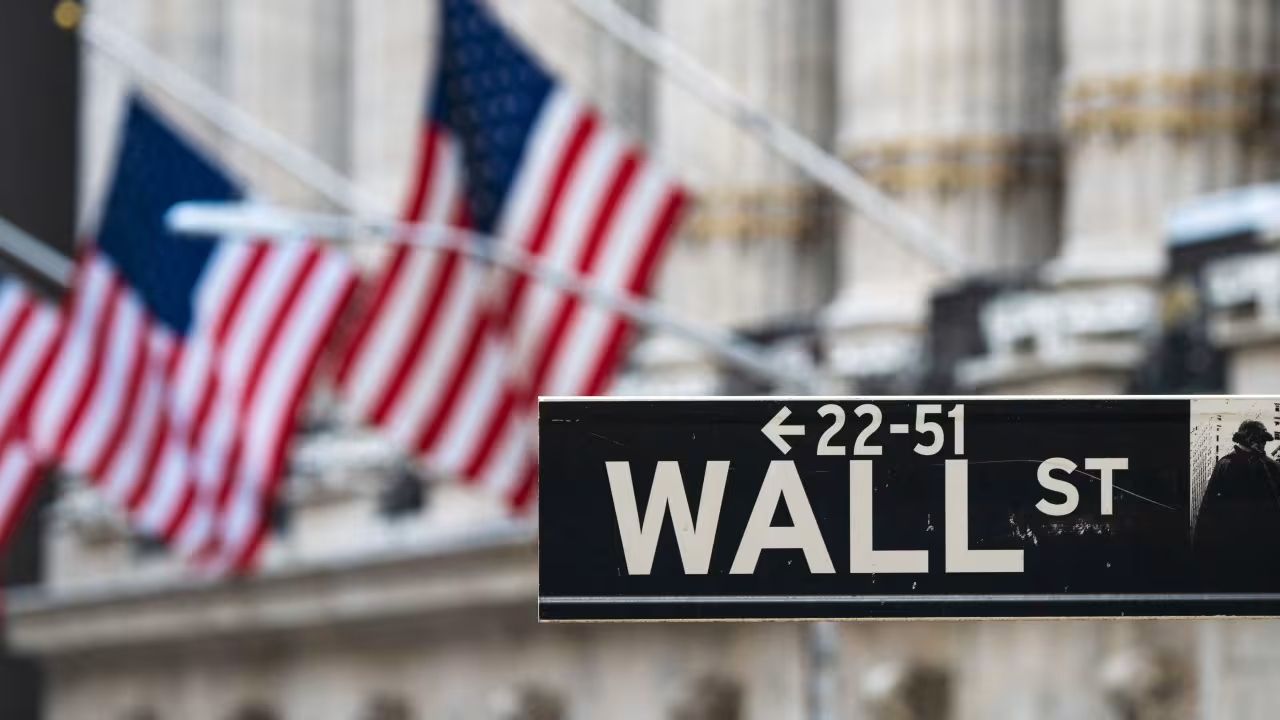
Global markets entered December on a cautious note as U.S. stock index futures drifted lower in pre-market trading following a broad sell-off that hit equities and cryptocurrencies to close out November. Futures tied to the Dow Jones Industrial Average, S&P 500, and Nasdaq Composite showed slight declines, reflecting investor uncertainty as traders reassessed interest rate expectations, inflation risks, and the strength of the holiday economy.
The weak start comes after all three major indexes experienced a pullback on Friday, snapping a multi-week rally fueled by optimism that the Federal Reserve could begin cutting interest rates in early 2026. That momentum cooled sharply after economic data suggested inflation remains sticky, leaving investors concerned that rate cuts could be delayed longer than anticipated.
Futures Slide as Investors Digest Friday’s Losses
In early Monday trading, Dow futures were down modestly as investors tried to gauge the week’s direction following a choppy session on Wall Street. The S&P 500 and Nasdaq futures mirrored the cautious sentiment, slipping slightly amid concerns that tech stocks — which have powered much of this year’s market gains — could face continued pressure if borrowing costs remain elevated.
Market analysts noted that even a small decline in futures signals a change in mood from the bullish sentiment that dominated November, when easing bond yields lifted risk appetite and pushed stocks higher across sectors. The futures movement suggests traders are taking a more defensive posture heading into the first full trading week of December.
Bitcoin Drops Sharply as Crypto Volatility Returns
Adding to the broader market anxiety was the sudden drop in Bitcoin, which fell sharply over the weekend, wiping out billions in market capitalization. The world’s largest cryptocurrency had been climbing steadily, fueled by expectations of a potential spot Bitcoin ETF approval in the United States. However, the abrupt correction reminded investors of crypto’s persistent volatility and its tendency to amplify risk-off sentiment.
The decline in Bitcoin spilled over into crypto-linked equities, including mining companies and blockchain-related technology stocks, contributing to the broader downturn in tech-heavy indices like the Nasdaq.
Market Uncertainty Fueled by Economic Signals
Friday’s economic data played a major role in cooling enthusiasm. A stronger-than-expected manufacturing report hinted that inflationary forces remain more resilient than previously believed. Bond yields ticked higher in response, putting renewed pressure on interest-sensitive sectors.
Investors are now turning their attention to this week’s slate of economic events, including updated job market data, comments from Federal Reserve officials, and new inflation indicators. Together, these could influence expectations about the Fed’s rate path heading into 2026.
In the bond market, the yield on the 10-year U.S. Treasury rose slightly, reflecting shifting expectations about monetary policy. Higher yields tend to weigh on high-growth tech stocks, which rely heavily on future earnings.
Tech Sector Under Watch as Nasdaq Struggles
Technology stocks ended last week with notable weakness, with several mega-cap names slipping after weeks of strong performance. Analysts argue that tech investors are now more sensitive to small changes in yields, making the Nasdaq particularly vulnerable to rate-related swings.
The pullback in futures suggests traders are bracing for further volatility in the sector. Some analysts warn that the December rally investors hoped for may not materialize unless inflation data cools significantly over the next two weeks.
Despite the uncertainty, long-term sentiment toward tech remains largely positive, with many investors focusing on artificial intelligence, cloud computing, and enterprise software as key drivers of future earnings.
Retail and Consumer Stocks Face Holiday Spending Questions
Another storyline weighing on markets is the mixed outlook for holiday consumer spending. While early reports indicate strong Black Friday and Cyber Monday numbers, analysts caution that spending could taper off as high interest rates and inflation continue to strain household budgets.
Retail stocks were mixed in early trading, with some major brands seeing modest declines in futures. Investors will be watching closely for updated sales data as December progresses.
Wall Street Prepares for a Pivotal Month
December is historically one of the strongest months for U.S. markets — but it is also shaping up to be one of the most unpredictable. The combination of inflation concerns, Fed policy uncertainty, crypto volatility, and questions about holiday spending all set the stage for a potentially volatile end to the year.
Market strategists say that while the long-term outlook remains stable, investors should expect short-term turbulence as markets process fresh economic signals and adjust expectations for early 2026.
For now, futures drifting lower illustrate the cautious stance traders are taking as the month begins. Whether this marks a temporary cooling or the start of a deeper pullback remains to be seen — but the week ahead will be critical in determining the market’s direction.